
Philippe Rochat
Others in Mind
I hold that to be ignored and rejected by others means psychological death. Around page 225 in the book, I illustrate this idea by what I understand to be the tragic life story of abstract expressionist and action painter Jackson Pollock.Pollock is an influential artist who is recognized as one of the major tenors on the mid-20th Century North American art scene. In the 1940s and 1950s he was at the origins of a new movement and a radically new style in painting by which he tried to leave on the canvas direct traces of inner feelings via gestures of pure vitality. Pollock died after producing a series of large paintings that he covered with energetic drips of paints, his most famous paintings or “drip paintings.” Obviously, this new style was revolutionary and highly controversial, derided by most, but admired by a few clairvoyant, avant-garde connoisseurs.Pollock was from the rural South of the United States. Unlikely, he left his hometown, driven by his art to live in a very different community of artists and gallery owners in New York City where things were hopping and happening. During his lifetime and unlike many other highly successful artists, Pollock got very famous and received much recognition in terms of money and public exposure, for better or worse. He had a serious drinking problem that got worse and eventually killed him at the pinnacle of success and recognition. Life magazine had a cover story on him and a film documented his art. His work was shown in major museums and galleries. He was highly regarded and supported by rich collectors and respected art critics. So what happened? I will submit that it is all about the issue of authenticity. With success comes expectations and social pressures, the risk of disappointing others and the feeling to have maybe reached a ceiling. This is what probably killed Pollock.Others in Mind deals with a universal and overarching psychological phenomenon that all people should relate to and should be intrigued by. This phenomenon is self-consciousness as constitutional element of the human psyche. I have tried to answer where self-consciousness does come from, and what consequences it has on the way we experience our life.
Editor: Erind Pajo
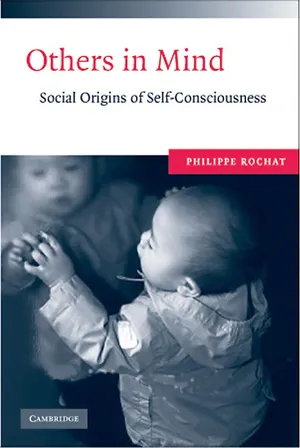
Others in Mind
Philippe Rochat Others in Mind: Social Origins of Self-Consciousness Cambridge University Press264 pages, 9 x 6 inches ISBN 978 0521729659
Available here →November 25, 2009
20091125-philippe-rochat-on-others-mind-social-origins-self-3
A close-up
The rest of this thread
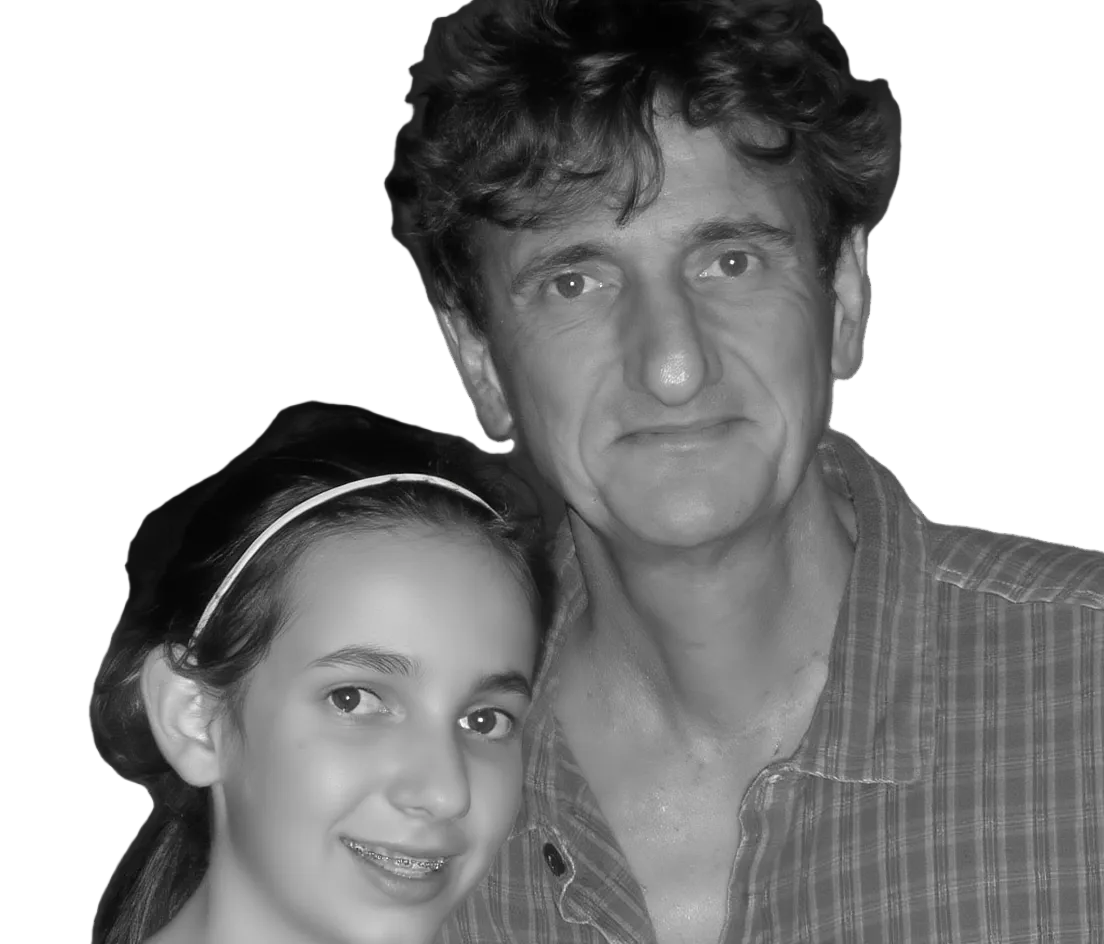
Philippe Rochat with his daughter Cléo
Philippe Rochat
Philippe Rochat was born and raised in Geneva, Switzerland, trained by Jean Piaget and his collaborators, and received his Ph.D. from the University of Geneva in 1984. After a series of postdoctoral positions at Brown, the University of Pennsylvania, Johns Hopkins, and the University of Massachusetts, in the early 1990s he joined the Faculty at Emory University in Atlanta, where he continues to be a professor of psychology. Rochat has been a John Simon Guggenheim fellow, single-authored three books, edited two, co-edited one, and written close to one hundred scholarly articles on infant and child development. His 2001 book The Infant World, published by Harvard University Press, was translated into Japanese, Chinese, French, Spanish and Danish. His current research is on early learning, the development of social cognition and the emergence of a moral sense during the preschool years in children from all over the world, who grow up and are raised in highly contrasted cultural environments, as well as highly contrasted socio-economic circumstances.
Pull this thread
Self-consciousness grows out of the fear of being rejected.
Know something the rest of us don't?
Most threads on Rorotoko begin with our invitation. Any thread can begin with a proposal: you write it with the same prompts every thread answers, and we review it.
Propose a thread →