
Philippe Rochat
Others in Mind
Others in Mind is a book about self-consciousness: how it originates and how it shapes our lives. Self-consciousness is arguably the most important and revealing of all psychological issues. Why are we so prone to guilt and embarrassment? Why do we care so much about how others see us, about our reputation? What are the origins of such afflictions? The book deals with the issue of self-consciousness as a unique feature of the human psychological condition.
It is because we are members of a species that evolved the unique propensity to reflect upon the self as object of thoughts—and one that is potentially evaluated by others. But, the argument goes, this propensity comes from a basic fear: the fear of rejection, of being socially “banned” and ostracized.
From this simple premise, I look at young children and their development, but also at many other intriguing human propensities, to see what they have to tell us about the social origins and nature of human self-consciousness.
The main idea I develop in the book is that human psychic life is predominantly determined by what we imagine others perceive of us. We exist and gauge the worth of our existence primarily through the eyes of others. More importantly, others also determine whether I am right to feel safe, in particular, safe of not being rejected by them. Feeling safe is part of the “good life” and it is inseparable from the feeling of being affiliated. The argument I propose is that it all depends on the recognition and acknowledgment of self by others.
Editor: Erind Pajo
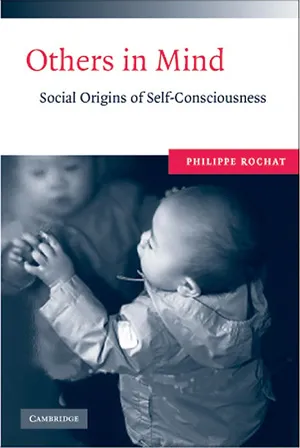
Others in Mind
Philippe Rochat Others in Mind: Social Origins of Self-Consciousness Cambridge University Press 264 pages, 9 x 6 inches ISBN 978 0521729659
Available here →November 25, 2009
20091125-philippe-rochat-on-others-mind-social-origins-self-1-1
In a nutshell
The rest of this thread
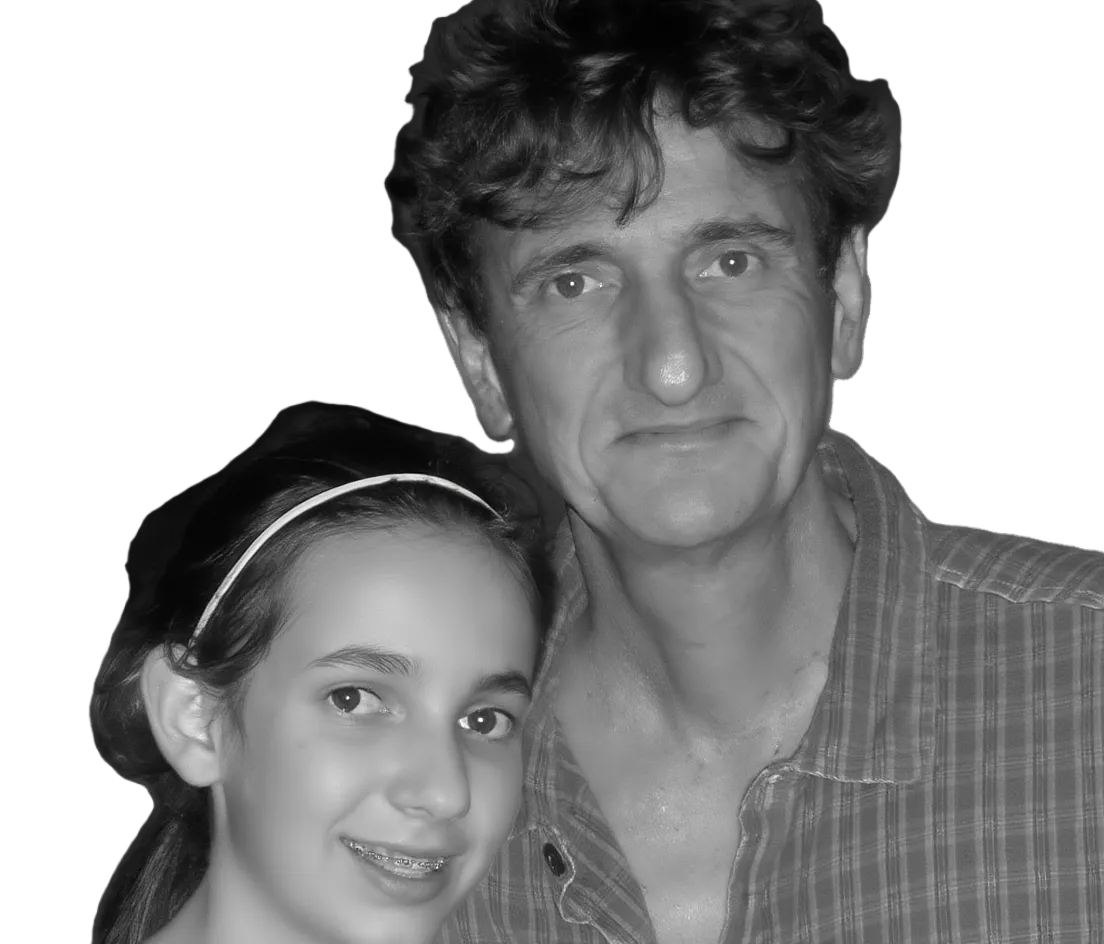
Philippe Rochat with his daughter Cléo
Philippe Rochat
Philippe Rochat was born and raised in Geneva, Switzerland, trained by Jean Piaget and his collaborators, and received his Ph.D. from the University of Geneva in 1984. After a series of postdoctoral positions at Brown, the University of Pennsylvania, Johns Hopkins, and the University of Massachusetts, in the early 1990s he joined the Faculty at Emory University in Atlanta, where he continues to be a professor of psychology. Rochat has been a John Simon Guggenheim fellow, single-authored three books, edited two, co-edited one, and written close to one hundred scholarly articles on infant and child development. His 2001 book The Infant World, published by Harvard University Press, was translated into Japanese, Chinese, French, Spanish and Danish. His current research is on early learning, the development of social cognition and the emergence of a moral sense during the preschool years in children from all over the world, who grow up and are raised in highly contrasted cultural environments, as well as highly contrasted socio-economic circumstances.
Pull this thread
pulls againstpulls alongside
Self-consciousness grows out of the fear of being rejected, and to be ignored is psychological death.
Against CE · The Night Café encodes Van Gogh's sense of life's meaning, clue by clue, resting on a parable from Luke. On: A person has an inner authentic self that can be uncovered by looking inward
Against NW · Even architecture specialists cannot say whether Le Corbusier was married, and what they think they know is wrong. On: A person has an inner authentic self that can be uncovered by looking inward
Alongside JW · The spy is the representative figure in the genealogy of modernity. On: A person has an inner authentic self that can be uncovered by looking inward
Alongside RL · There is no such thing as an identity, only a jumble of self-identifications with raw appetites underneath. On: A person has an inner authentic self that can be uncovered by looking inward
Alongside VS · Fashion is significant precisely because it is superficial, and psychoanalytic concepts are the right instruments for reading clothes. On: A person has an inner authentic self that can be uncovered by looking inward
Alongside MG · Einstein's sixteen months in Prague were no way station, and they durably marked his philosophy of science, Zionism and politics. On: A person has an inner authentic self that can be uncovered by looking inward
Know something the rest of us don't?
Most threads on Rorotoko begin with our invitation. Any thread can begin with a proposal: you write it with the same prompts every thread answers, and we review it.
Propose a thread →