
Thomas Wheatland
The Frankfurt School in Exile
In a letter of June 29, 1940, Max Horkheimer eloquently developed one of the metaphors that became central to the history of Critical Theory in America. Writing to the actress and screenwriter Salka Viertel, Horkheimer despaired, “In view of everything that is engulfing Europe and perhaps the whole world our present work is of course essentially destined to being passed on through the night that is approaching: a kind of message in a bottle.”
This trope of the message in a bottle, the Flaschenpost, has been adopted by many of the historians and scholars of Critical Theory and has helped to reinforce the illusion of the Frankfurt School’s “splendid isolation” in the United States. The traditional account further proclaims that if Critical Theory was cast (like a message in a bottle) into a dark and angry sea during the 1930s and 1940s, it was spectacularly found and uncorked on the beaches of the U.S. by New Leftists, hippies, and flower children in the 1960s. The image of the message in a bottle underplays the interactions between Critical Theory and American intellectual life during the Frankfurt School’s years in exile, and it simultaneously helps to overplay the relationship between the Horkheimer Circle’s legacy and the American New Left.
That is why this metaphor of the Flaschenpost, as much as I find it poetic and powerful, needs to be broken and discarded.
A vast literature about both the Frankfurt School and its individual members exists and continues to grow. Nonetheless, as I began my own research, there remained substantial questions about the actual encounters that took place between members of the Frankfurt School and the American scholars who had contacts with the exiled Institute for Social Research. While both Martin Jay and Rolf Wiggershaus touched on this topic in both of their books, it was not a major focus for either. Thus, the theme of exile appeared to me as a vantage point that could perhaps help me to see Critical Theory, as well as the intellectual history of the United States, in a new way.
The realities of exile for a scholar are challenging enough, but the fact that the Frankfurt School arrived in the midst of the Great Depression made their situation more hazardous. Horkheimer could be ruthless with some of his associates, but he also proved to be a slick and successful operator. How strange to see these famous critics of advanced capitalist society and the culture industry being forced to participate and accommodate themselves to both in order to survive. Or perhaps it wasn’t particularly strange at all; perhaps they could only see these socio-cultural developments not by simply viewing them from the margins of American society, but by traveling into the belly of the beast.
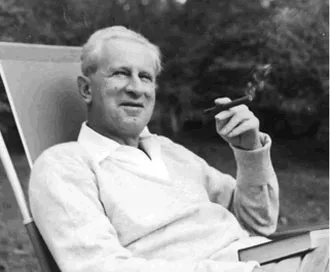
Herbert Marcuse, 1955
Editor: Erind Pajo

The Frankfurt School in Exile
Thomas Wheatland The Frankfurt School in Exile University of Minnesota Press 416 pages, 9 x 6 inches ISBN 978 0816653676
Available here →December 2, 2009
20091202-wheatland-thomas-on-the-frankfurt-school-in-exile-2
The wide angle
The rest of this thread

Thomas Wheatland
Thomas Wheatland was born and raised in Portland, Maine. He attended Brown University, Harvard University, and received his Ph.D. in history from Boston College. Wheatland worked in academic publishing at Harvard University Press for several years but returned to his first love, which is teaching. His sub-disciplinary focus is Modern German Intellectual History, but he teaches a wide variety of courses in Modern European and Modern German History at Assumption College in Worcester, Massachusetts. He has published several articles and book chapters on the history of the Frankfurt School. Wheatland currently lives in Cambridge, Massachusetts with his wife and two sons.
Pull this thread
Critical Theory took hold in America in the seminar room, not the streets of 1968.
Know something the rest of us don't?
Most threads on Rorotoko begin with our invitation. Any thread can begin with a proposal: you write it with the same prompts every thread answers, and we review it.
Propose a thread →