
Thomas Wheatland
The Frankfurt School in Exile
In the wake of 1968, Herbert Marcuse and, by extension, his former colleagues from the Frankfurt School became forever linked with the student protests of that era. While most of the members and former members of the Horkheimer Circle had a deeply problematic relationship with the New Left, Herbert Marcuse’s enthusiastic support of the student movement solidified the connection between the Frankfurt School and student rebels. The press of the late 1960s heralded Marcuse as the “guru” of student rebellion. The evidence among the writings of American student leaders, however, presents a more problematic picture.Marcuse and his critics were right about the difficulties faced by his readers in the United States. Most were not familiar with the style of rhetoric or the Germanic modes of thought that lay behind his writings for the New Left. At the same time, the student journals and underground newspapers from the era suggest a pattern of reception that is markedly different from what has traditionally been assumed.When examining materials such as New Left Notes, Ramparts, and the wide array of underground newspapers linked to the counterculture, one is struck by how infrequently Marcuse’s name or ideas appear before the dramatic events of 1968. After the spring of 1968, when Marcuse actively sought to inspire and ally himself with the New Left, there is slightly more discussion, but still not as much as the popular press led people to believe. To some extent, Marcuse’s thought struggled to take root within a movement that progressively embraced increasingly extreme actions and enthusiastically touted its own anti-intellectualism. Marcuse’s most substantial audience were graduate students and scholars sympathetic to many of the ambitions of the New Left. Marcuse and the Frankfurt School reminded them of the importance of social theory, the power of the culture industry, and the dangers of authoritarianism. Such admirers of the Horkheimer Circle emphasized these aspects of Critical Theory to criticize the rise of extremism that had arisen both in reaction to the student movement and within the student movement itself.Critical Theory flourished amid the ruins of the American New Left after its shocking implosion. This reception of Critical Theory was not in the streets, but rather in the seminar room, a place where Critical Theory has since flourished, but also receded largely from public view.My book aims to challenge what I consider to be some pervasive views about the Frankfurt School during its period of exile in the United States and to reevaluate the implications of this time in America.First, like Jay and Wiggershaus before me, The Frankfurt School in Exile challenges the myth of a homogenous Horkheimer Circle by complicating the picture of Critical Theory and its theorists. By focusing on the Frankfurt School in exile, we glimpse Critical Theory at a moment of crisis and transformation, an era during which competing visions for the future of the institute and its intellectual program were openly debated. Second, my study dispels the common idea that the critical theorists isolated themselves in the United States, documenting the numerous contacts that emerged between members of the Horkheimer Circle and networks of American scholars and public intellectuals. Third, my project evaluates the impacts that American exile had on the Frankfurt School, as well as the influences that these critical theorists had on various communities of American thinkers.Recently, intellectual history has been in crisis. It began with the widespread rise of social history; intellectual history increasingly was perceived by social historians as old-fashioned and elitist. Further problems arose as some leading intellectual historians began to take French theory more seriously. As a result, intellectual history became a brief lightening rod among historians for the culture wars of the 1980s and 1990s. Writing in the wake of all of this, I hope that this book will offer a new path for intellectual historians—and more importantly one that will be appreciated by my fellow social historians. In the aftermath of last fall’s financial crisis, the timing seems right for a Marcuse (and Critical Theory) renaissance. But his ideas regarding the “new sensibility” must be rescued from his celebrity and his reputation as the “guru” of 1968. Only by re-examining Critical Theory’s academic reception during the 1960s can the Frankfurt School be rediscovered by the wide audience to whom it was addressed.
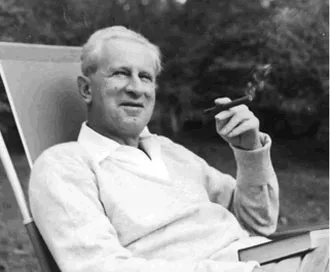
Herbert Marcuse, 1955
Editor: Erind Pajo

The Frankfurt School in Exile
Thomas Wheatland The Frankfurt School in Exile University of Minnesota Press416 pages, 9 x 6 inches ISBN 978 0816653676
Available here →December 2, 2009
20091202-wheatland-thomas-on-the-frankfurt-school-in-exile-3
A close-up
The rest of this thread

Thomas Wheatland
Thomas Wheatland was born and raised in Portland, Maine. He attended Brown University, Harvard University, and received his Ph.D. in history from Boston College. Wheatland worked in academic publishing at Harvard University Press for several years but returned to his first love, which is teaching. His sub-disciplinary focus is Modern German Intellectual History, but he teaches a wide variety of courses in Modern European and Modern German History at Assumption College in Worcester, Massachusetts. He has published several articles and book chapters on the history of the Frankfurt School. Wheatland currently lives in Cambridge, Massachusetts with his wife and two sons.
Pull this thread
Critical Theory's real American reception came after the New Left imploded, in the seminar room.
Know something the rest of us don't?
Most threads on Rorotoko begin with our invitation. Any thread can begin with a proposal: you write it with the same prompts every thread answers, and we review it.
Propose a thread →