
Joseph Margolis
The Arts and the Definition of the Human
Looking at paintings and reading books, I suggest, are abilities to “penetrate,” culturally informed and culturally transformed by our mastery of language and our sense of the practices and history of some formative home society. They are learned skills adjusted to our distinctive interests regarding artworks, not simply the same as our perfectly ordinary ability to see and read. In my opinion, prevailing theories of philosophies of art have not sufficiently grasped the full complexity of this condition, especially in the Anglo-American philosophical literature.
I examine a number of prominent accounts of how we perceive paintings and understand literature drawn from the best-known, current philosophical theorists of art, and demonstrate how prevailing views actually produce insuperable paradox and contradiction. I began, quite early in my career, with the profound puzzles posed by what we call interpreting artworks. I realized that interpreting artworks must be very closely related to interpreting the language, behavior, history, social practices, and the careers of human beings. It is even akin to the anthropological study of physical phenomena: for instance, attempting to determine the “meaning” of the rock formation of the Olduvi Gorge in dating the fossil remains of early man.
I was at once struck by the failure of prevailing views to come to terms with the radical informality, open-endedness, and tolerance for divergent and even incompatible and incommensurable interpretive options that critical practices seem to support; hence, also, with the failure of much of current philosophy to formulate a congruent conception of human “nature,” intelligence and reason, culture, history, and, most importantly, what sort of being the human self must be to have mastered the kinds of artistic and interpretive puzzles I pose, both here and elsewhere.
So the present book addresses, in an accessible way, an essential piece of the general question that ramifies through the whole of the human world: namely, what is the nature of a human being and how does he function in the physical and cultural world he inhabits? Here, I've restricted myself to certain intuitively familiar puzzles regarding what we claim we see in viewing art and what we claim to understand in reading literature. The running argument of the book focuses on the easily isolated questions of seeing and understanding (artworks); the opening and closing materials provide a fairly brief but wide-ranging account of “the definition of the human,” informing my answers to the questions posed.
Editor: Erind Pajo
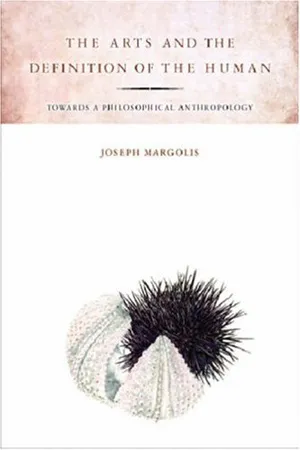
The Arts and the Definition of the Human
Joseph Margolis The Arts and the Definition of the Human: Toward a Philosophical Anthropology Stanford University Press 200 pages, 9 x 6 inches ISBN 978 0804759540 ISBN 978 0804759533
Available here →January 11, 2010
20100111-joseph-margolis-on-arts-definition-human-philosophical-anthropolog-2
The wide angle
The rest of this thread
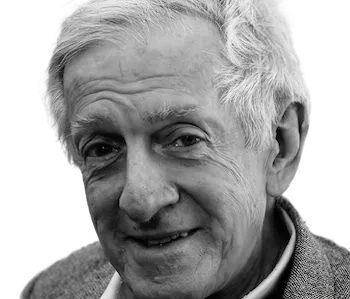
Joseph Margolis
Joseph Margolis is currently Laura H. Carnell Professor of Philosophy at Temple University. He has completed sixty years of university teaching and has taught very widely throughout the United States, Canada, and other parts of the world, including South Africa, New Zealand, and Sweden. He’s published almost forty books ranging over nearly all the principal specialties of philosophy. Most recently, he completed a trio of books on American philosophy in the second half of the 20th century, with special emphasis on the past and future of pragmatism within the Eurocentric tradition.
Pull this thread
You cannot explain how anyone sees a painting or understands a novel without first settling what a self is.
Know something the rest of us don't?
Most threads on Rorotoko begin with our invitation. Any thread can begin with a proposal: you write it with the same prompts every thread answers, and we review it.
Propose a thread →