
Andrew G. Walder
Fractured Rebellion
The red guards’ violence against their victims was shocking, and this is how they are rightly remembered. It turns out, however, that they were not all mindlessly violent. In fact, a very vocal group of students from China’s best high schools spoke out strongly and repeatedly against the “gangster-ish” behavior of the movement in the summer of 1966. They argued for more restrained and disciplined behavior, and certain Communist leaders who were trying to steer the students onto a less violent path gave them a lot of support.
The problem with this is that Mao himself saw complaints about violence as unnecessarily restricting “the masses.” He wanted things to get more chaotic. But the students who opposed violence wouldn’t give up, and eventually challenged the radical officials under Mao who were urging the students forward. They ended up being persecuted by their red guard opponents who enthusiastically called for “dictatorship” over these “class enemies”—who were then arrested and imprisoned. It was only as detailed reports of the mounting death toll in the capital reached Mao—red guards murdered more than a thousand people during the first month—that he told his subordinates to stop making such a fuss.
What is most galling is that those very students who protested violence were then blamed for all the violence of the red guard movement up to that point in time. This is all described in Chapter 5, which shows how utterly cynical and nasty the politics of the period could be, and how confusing and dangerous it could be for students, especially red guards who were relatively well-meaning.In working on the Kyoto Protocol negotiations, I often encountered the view that, if the Protocol’s compliance committee cannot impose “binding” sanctions on violators, then this means that the Protocol itself is not legally binding. Such a view is certainly understandable. How can a norm be legally binding if the legal consequences for its violation aren’t binding? Isn’t this like saying that stealing is illegal, but the jail sentences imposed against violators are optional?To try to make sense of these puzzles, I explore the nature of international norms and their relation to behavior. I then analyze what it means to characterize a norm as “legal” or “binding” and examine other important dimensions along which international environmental norms vary.
The Cultural Revolution was certainly a crucial turning point in China—and a defining event in 20th century history. We really know very little that is well-grounded about this complex period, and much of what we think we know is either a caricature of actual history or just plain wrong.In fact, as I researched for this book, I realized how poorly I understood China’s Cultural Revolution, even though I have been reading and writing about it for some years.Research and publication on the Cultural Revolution is suppressed in China; for the time being, most of this work will have to be carried on outside.So my book will not be the last word on the subject. But I hope it will convince others to look carefully at the materials that are now available.
Editor: Erind Pajo
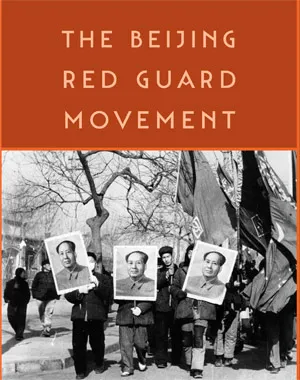
Fractured Rebellion
Andrew Walder Fractured Rebellion: The Beijing Red Guard Movement Harvard University Press376 pages, 9 1/2 x 6 1/2 inches ISBN 978 0674035034
Available here →April 16, 2010
20100416-walder-andrew-fractured-rebellion-beijing-red-guard-movement-3
A close-up
The rest of this thread

Andrew G. Walder
Andrew Walder is currently the Denise O’Leary and Kent Thiry Professor in the School of Humanities and Sciences at Stanford University. He previously taught at Columbia University, Harvard University, and the Hong Kong University of Science and Technology. He began studying Chinese politics as a student in the early 1970s, and has long specialized in research on Mao-era China, focusing on social transformation and political conflict after Mao. He is now writing a comprehensive social and political history of the Mao period.
Pull this thread
Beijing's red guard factions came from the same politically reliable families and fought because China's leaders were divided.
Know something the rest of us don't?
Most threads on Rorotoko begin with our invitation. Any thread can begin with a proposal: you write it with the same prompts every thread answers, and we review it.
Propose a thread →