
Andrew G. Walder
Fractured Rebellion
I’m challenging a way of thinking about politics common in fields like sociology and political science—the one in which people have interests based on their jobs, their levels of education, their political affiliations, and their future prospects. When political circumstances change, giving them opportunities to advance themselves, raise grievances, or force them to defend what they have, they will band together to advance or defend their interests with others who are similar to them.
This is exactly what past accounts of China’s red guards have claimed. In this view, students chose sides based on who their parents were, whether they were already student leaders or party members, because the Cultural Revolution gave them the opportunity to express these interests for the first time. So in this view the students fought against one another, spinning out of control, because they had fundamentally different social positions and different interests.
I used to believe this, and wrote a good deal about China’s Cultural Revolution in this vein.
But when I started to read carefully the many accounts written by students in Beijing at the time these events took place, I realized that the facts just didn’t fit. Students who led both sides of the struggle came from the same backgrounds. They were divided into antagonistic groups because they became drawn into divisions among China’s leaders, each side thinking that they were doing what Mao Zedong wanted and expected, but not realizing, at first, that they were in fact being drawn into a leadership conflict. In the book, I try to spell out as clearly as I can how this complex process played out. People’s choices in confusing historical circumstances aren’t as clear as social scientists sometimes think.
Editor: Erind Pajo
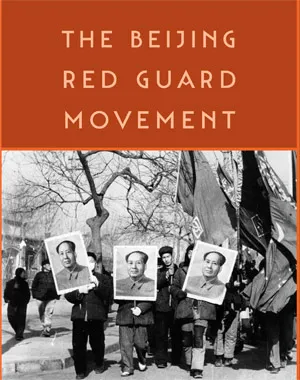
Fractured Rebellion
Andrew Walder Fractured Rebellion: The Beijing Red Guard Movement Harvard University Press 376 pages, 9 1/2 x 6 1/2 inches ISBN 978 0674035034
Available here →April 16, 2010
20100416-walder-andrew-fractured-rebellion-beijing-red-guard-movement-2
The wide angle
The rest of this thread

Andrew G. Walder
Andrew Walder is currently the Denise O’Leary and Kent Thiry Professor in the School of Humanities and Sciences at Stanford University. He previously taught at Columbia University, Harvard University, and the Hong Kong University of Science and Technology. He began studying Chinese politics as a student in the early 1970s, and has long specialized in research on Mao-era China, focusing on social transformation and political conflict after Mao. He is now writing a comprehensive social and political history of the Mao period.
Pull this thread
Beijing's red guards fought because China's leaders were divided, not because their social interests differed.
Know something the rest of us don't?
Most threads on Rorotoko begin with our invitation. Any thread can begin with a proposal: you write it with the same prompts every thread answers, and we review it.
Propose a thread →