
Claude S. Fischer
Made in America
I would like to highlight just two passages.
The first is from the start of Chapter 2:In early 1865, Abraham Lincoln was the most powerful man in the Western Hemisphere. He was also a man whose grandfather had been killed by Indians. He saw his infant brother die, he lost his mother when he was ten and his older sister when he was nineteen, and he grieved when Ann Rutledge—perhaps his sweetheart, perhaps just a friend—died of typhoid. He buried two of his four sons before they had reached the age of twelve and a third when he reached eighteen. He had a wife who was emotionally unstable, suffered depression himself, and would die prematurely and violently. This Job-like litany was perhaps severe even in the nineteenth century, but its like was familiar to Lincoln’s contemporaries. For example, most parents of that era buried at least one child, an experience that mercifully few American parents faced a century later. Life was precarious.
Over the centuries, American life became much less precarious. The threat of arbitrary and unpredictable calamities from illness or injury or economic misfortune abated. Being able to count on food, shelter, and safety from one day to the next helped more Americans gain confidence in their own power and a sense of self-reliance. More Americans made plans, charted their careers, scheduled their childbearing, designed their children’s education, arranged their retirements. Greater physical and economic security probably lowered Americans’ feelings of anxiety. In myth, the past appears to be seemingly unproblematic, but the prospect of, for example, a crop-destroying blight probably once frightened Americans more than the specter of a job layoff does today.
The historical expansion of security was unevenly distributed. In some eras, for example, when medicine began to seriously improve, richer Americans gained much more than poorer ones did. In other eras, for example, when public health measures took effect, the poorer gained the most, because their conditions had been so bad. Such qualifications in mind, we can still say that modern Americans lived with far more security and predictability than their ancestors did, even than their presidents did. Whether Americans’ feelings of security kept pace is a more complex question.
And this one is from the start of Chapter 6:Sometime in the 1850s, Abraham Lincoln gave his wife a copy of a popular advice book he had closely studied, Mary G. Chandler’s The Elements of Character. Early in the book, Mary Todd Lincoln would have read, “Weak and helpless as we may be in the affairs of this life, there is, however, one thing over which we have entire control ... one thing left which misfortune cannot touch, which God is ever seeking to aid us in building up, and over which He permits us to hold absolute control; and this is Character. For this, and for this alone, we are entirely responsible.” Building character, constructing a better self for which one is “entirely responsible,” has for centuries been an American project. Later generations used the term character less and psychological jargon more, but the construction project was much the same. In 2007, for example, entrepreneurs of “positive psychology” offered to teach people to “understand how our thoughts drive our feelings and our actions ... [to] utilize a concrete set of skills to think more accurately . . . [and] apply these skills ... to become more resilient, productive, and successful.” Mary G. Chandler would have approved.
Over the generations, more Americans participated in more such self-conscious self-improvement. Slowly shedding an old-world fatalism, they saw greater possibilities to control the world and themselves. With new knowledge, new technologies, and more options, planning and calculation could be increasingly effective. Critically, self-construction involved examining and molding one’s emotions. Middle-class Americans learned and taught their children to check feelings of aggression and to nurture feelings of sympathy and affection. Greater self-control, self-determination, and self-absorption and the “entire responsibility” for one’s character may have carried psychic costs in worry and regret. The Lincolns certainly were tortured souls.
Often our discussions about the issues of today rest on vague and even false understandings of yesterday. I hope that this book might enrich and perhaps complicate readers’ understandings of the American past. And I sure hope that journalists—and academics, please—would stop automatically using phrases like “in our ever more mobile modern society;” it just is not so!
We should appreciate, for example, the great physical and economic insecurity earlier generations faced, that the most early Americans were “unchurched”—anything but theologically as Christian as Americans are today, and that the lust for baubles and bangles is a long-standing American state of mind. We should also appreciate that the coming of material security—albeit still shaky at times—relied greatly on our collective efforts as Americans, through our governments, to build that security.
The world-views of literate, twenty-first-century Americans are rooted in a variety of conventional assumptions about our social history. These assumptions are part of what might be called the “modernity story”—that modern life (and post-modern life even more) entails the disintegration of a stable, cohesive, intimate “world we have lost”—replaced by a rootless, fragmented, and cold new social order. This is a powerful story line, and omnipresent in western culture. We often use it to make sense of the world around us. But it is mostly wrong.
I hope this book will offer you some insight into the nature of “modernity,” American style.
Editor: Erind Pajo
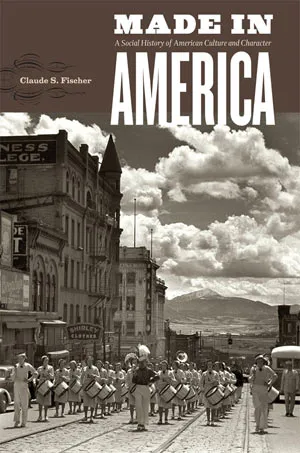
Made in America
Claude S. Fischer Made in America: A Social History of American Culture and Character University of Chicago Press 528 pages, 6 x 9 ¼ inches ISBN 978 0226251431
Available here →April 26, 2010
20100426-fischer-claude-on-made-in-america-social-history-culture-character-3
A close-up
The rest of this thread
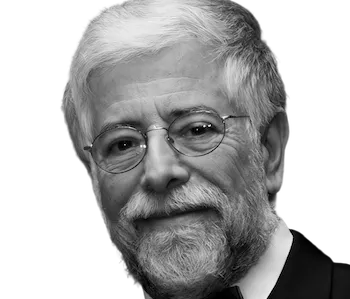
Claude S. Fischer
Claude S. Fischer is Professor of Sociology at the University of California, Berkeley. Besides Made in America, featured in his Rorotoko interview, and the theme of his blog, Fischer is also the author of America Calling: A Social History of the Telephone to 1940 (1992), Century of Difference: How America Changed in the Last One Hundred Years (with Michael Hout, 2006), and other books on urbanism, social networks, and economic inequality. Fischer is also the founding editor of Contexts, the American Sociological Association’s magazine for the general reader.
Pull this thread
Americans today are not more mobile, less religious or more consumerist than their ancestors, and what changed is security.
Know something the rest of us don't?
Most threads on Rorotoko begin with our invitation. Any thread can begin with a proposal: you write it with the same prompts every thread answers, and we review it.
Propose a thread →