
Bruce Thomas Boehrer
Animal Characters
Animal Characters studies the place of nonhuman animals in Renaissance writing.
Between 1400 and 1700, written and visual records tell us, Europeans began to experience the animal world in new ways. Animal Characters uses these records to describe the changing fortunes of five breeds of animal—horses, parrots, cats, turkeys, and sheep—as they lived, died, and were written about in the early modern period.
My book follows the fate of these beasts through the work of the age’s greatest authors—Shakespeare, Milton, Cervantes, Ariosto, Rabelais, and more—as well as through husbandry manuals and exploration narratives, paintings and cookbooks, public processions and private menageries. In the process, it recounts how these breeds of animal changed, both literally and figuratively, at the dawn of the modern age.
When it comes to social roles and associations, the animals I’ve chosen to study appear against different historical backgrounds and for different reasons. Exotic and expensive, parrots serve as high-prestige commodities in the early modern period’s growing luxury trade, and as such they were either kept in private zoological collections or as rare companion animals. Cats, on the other hand, figure in common households, where they serve as vermin-catchers before they gain acceptance as pets. The turkey starts out as an exotic and expensive food animal that is gradually domesticated across Europe over the course of the sixteenth and seventeenth centuries. The sheep, valued both for its wool and its flesh, gains additional symbolic status through its association with Christian sacrifice. The horse, prized for various reasons and bred with various purposes in mind, gradually loses its supreme importance as an instrument of warfare.
But whether the beasts in question are associated with privilege or poverty, and whether they are used for food or clothing or companionship or haulage, they all develop over the course of the Renaissance, changing their meaning, their uses, and more generally their character in the process.
Editor: Erind Pajo
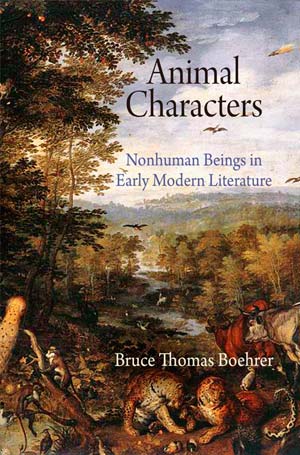
Animal Characters
Bruce Thomas Boehrer Animal Characters: Nonhuman Beings in Early Modern Literature University of Pennsylvania Press 256 pages ISBN 978 0812242492
Available here →June 28, 2010
20100628-boehrer-bruce-on-animal-character-nonhuman-being-modern-literature-1-1
In a nutshell
The rest of this thread
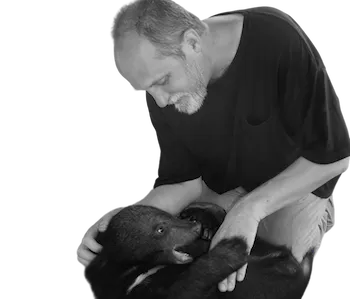
Bruce Thomas Boehrer
Bruce Boehrer is Bertram H. Davis Professor of English and 2009-11 Frances Cushing Ervin Professor of English at Florida State University. Besides Animal Characters, featured in his Rorotoko interview, he is also the author of four other books, including Shakespeare among the Animals (Palgrave, 2002) and Parrot Culture (Penn, 2004), and editor of A Cultural History of Animals in the Renaissance (Berg, 2007). From 1999 to 2008 he served as founding Editor and later Co-Editor of the Journal for Early Modern Cultural Studies. He lives in Florida with his wife, the environmental artist Linda Hall.
Pull this thread
Once Descartes made consciousness uniquely human, literature dropped sentient beasts and built the novel to display human subjectivity.
Know something the rest of us don't?
Most threads on Rorotoko begin with our invitation. Any thread can begin with a proposal: you write it with the same prompts every thread answers, and we review it.
Propose a thread →