
Melinda Blau
Consequential Strangers
In chapter 2, “The View From Above,” I write that social networks are like traffic jams.
You can easily see the cars that surround you—your intimates. However, it takes a helicopter to view your entire entourage—your “social convoy.” So take a moment and mentally position yourself above the road. You can see yourself motoring along the highway of life, accompanied by your loved ones, your closest friends, and the various acquaintances you pick up along the way. A handful of people travel alongside you for miles and miles, perhaps for the whole journey. The peripheral people, neither family nor close friends—your consequential strangers—are often there for a particular segment of the trip and tend to serve specific needs. They might help you through rough passages, lead you to important resources such as information or others who can help, or provide comic relief when it’s most needed. Because your convoy changes as you change, some travelers drop back for a while or fall so far behind that you barely see them in your rearview mirror. Some members of your convoy, such as coworkers or fellow volunteers, also know each other. They form a distinct “cluster”—a group within your convoy. Imagine them riding together in a minivan.
Bringing people into your convoy when you need them is a key coping mechanism in a complex world. Chapter 7, “The Future of Consequential Strangers,” highlights a story of how communities are created in response to challenge.
When his son Billy was born, Jim Hourihan remembers the nurse whisking the baby out of the delivery room. “He was gray and not breathing right. Christine knew something was wrong, but no one said anything. By accident, I saw ‘Down Syndrome’ on a paper I had to sign, and I ran out after the doctor.” Although in the years to come, the family would come to view Billy as a gift, a child who would inspire an unexpected sense of grace and acceptance of others, Hourihan admits, “It was like a funeral for the first few days.” The “turning point,” he recalls, occurred a few months later when he, Christine, and several members of their extended clan attended a “buddy walk” in Plainfield, New Jersey. They had learned about the event through the National Down Syndrome Society, which cosponsors hundreds of annual buddy walks to raise money and awareness. “It was a comfort for us to talk to parents who’ve been there, and to see older kids having fun, playing baseball,” Hourihan recalls. “But there was no group in Bergen County, where we live. So my mother said, ‘Let’s start one.’”The societal drift today favors interdependence. We are able to connect in forms—and at speeds—that our forebears could never have imagined. Researchers in many scientific disciplines affirm that we are “social animals,” not merely directed by our individual minds, but also by our relationships.
What I hope readers will gain from reading Consequential Strangers is summed up in the book’s final pages:Each of the people you connect with gives you something different. When we view our lives through this wider lens, we see how far our connections extend. We watch the cast of players who walk on and off our center stage, which gives us both a sense of belonging and a sense of promise. We can get things done because we’re not alone. We can help and heal others and be taken care of as well. We can discover ideas and experiences that are “beyond our familiar.”
Editor: Erind Pajo
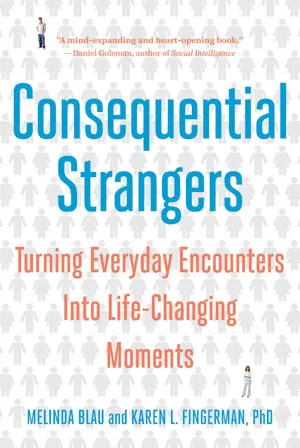
Consequential Strangers
Melinda Blau and Karen L. Fingerman, Ph DConsequential Strangers: Turning Everyday Connections Into Life-Changing Moments W. W. Norton 304 pages, 8 1/4 x 5 1/2 inches ISBN 978 0393338454
Available here →August 23, 2010
20100823-blau-melinda-on-consequential-strangers-turn-everyday-connections-3
A close-up
The rest of this thread
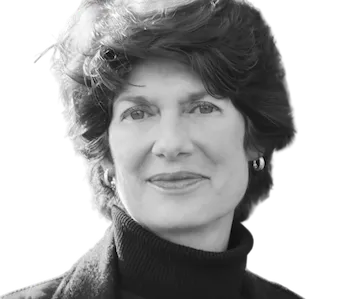
Susan Kravitz
Melinda Blau
Journalist Melinda Blau has written thirteen books, including the best-selling Baby Whisperer series, and more than eighty magazine articles. Her work has appeared on the Op-Ed page of the New York Times and in New York, American Health, The Utne Reader, and The Psychotherapy Networker. Among other awards, her “New Family” column in Child earned “Excellence in Media” from the Association of Marriage and Family Therapy and “Best in Category (Magazine)” in the American Legion Auxiliary’s Heart of America competition. She currently blogs for Psychology Today, Shareable, and More magazines as well as her own websites, consequentialstrangers.com and motheru.com.
Pull this thread
The diversity of a person's network, not its size, predicts health, recovery, longevity and success.
Know something the rest of us don't?
Most threads on Rorotoko begin with our invitation. Any thread can begin with a proposal: you write it with the same prompts every thread answers, and we review it.
Propose a thread →