
Norman M. Naimark
Stalin’s Genocides
This study grew out of a long-term preoccupation with the history of genocide and the way Stalin and his crimes should be viewed in the context of that history.
More often than not, Soviet mass killing in the 1930s is left out of the our picture of the history of genocide, because its victims were Soviet citizens themselves, rather than “other” nationalities, ethnic, racial, or religious groups, though they too suffered in Stalin’s “repressions” of the 1930s.
There is an understandable reticence among both scholars and journalists to apply a term designed primarily to describe the Holocaust, the mass murder of the Jews by the Nazis, to the murder of Soviet citizens in the 1930s. Related to this issue is the problem that the 1948 United Nations Convention on the Prevention and Punishment of the Crime of Genocide looked back to the specific Nazi racial crimes of World War II as those to be punished by the international community as genocide. Social and political groups, which were included in the original drafts of the convention, were eventually excised from the genocide language primarily because of Soviet lobbying.
Academics are also sometimes reluctant to talk about Soviet mass killing of the 1930s as genocide. Part of the reason for this is the assertion that Stalin’s actions in this period had a “rational” explanation connected to external threats to the country that eventually resulted in the coming of the war. The need to modernize the Soviet Union, in this view, required Stalin to take drastic measures to prepare the country for war.
To be sure, Stalin used “war scare” propaganda to justify his murderous actions. But I argue that external threats were magnified way out of proportion to the actual danger to the Soviet Union; in fact Stalin drastically weakened the ability of the country to face the real threat of Hitler’s aggression.
In this context, the book examines explicitly the similarities of Stalin’s crimes with those of Hitler. Communist-inspired genocide, in short, should be part of our understanding of the historical phenomenon of mass murder.
I have also been fascinated by the new archival materials that have been brought to light about Stalin himself—his biography, his mentality, and his willingness to use mass killing to achieve his aims. Newly published documents from the Soviet party and Central Committee archives provide us with interesting insights into his character and the methods that Stalin used to seize control of the party and impose his will on his comrades. The book includes a chapter on “The Making of a Genocidaire.”
Editor: Erind Pajo

Stalin’s Genocides
Norman Naimark Stalin’s Genocides Princeton University Press 168 pages, 5½ x 8½ inches ISBN 978 0691147840
Available here →November 3, 2010
20101103-naimark-norman-on-stalin-genocides-2
The wide angle
The rest of this thread
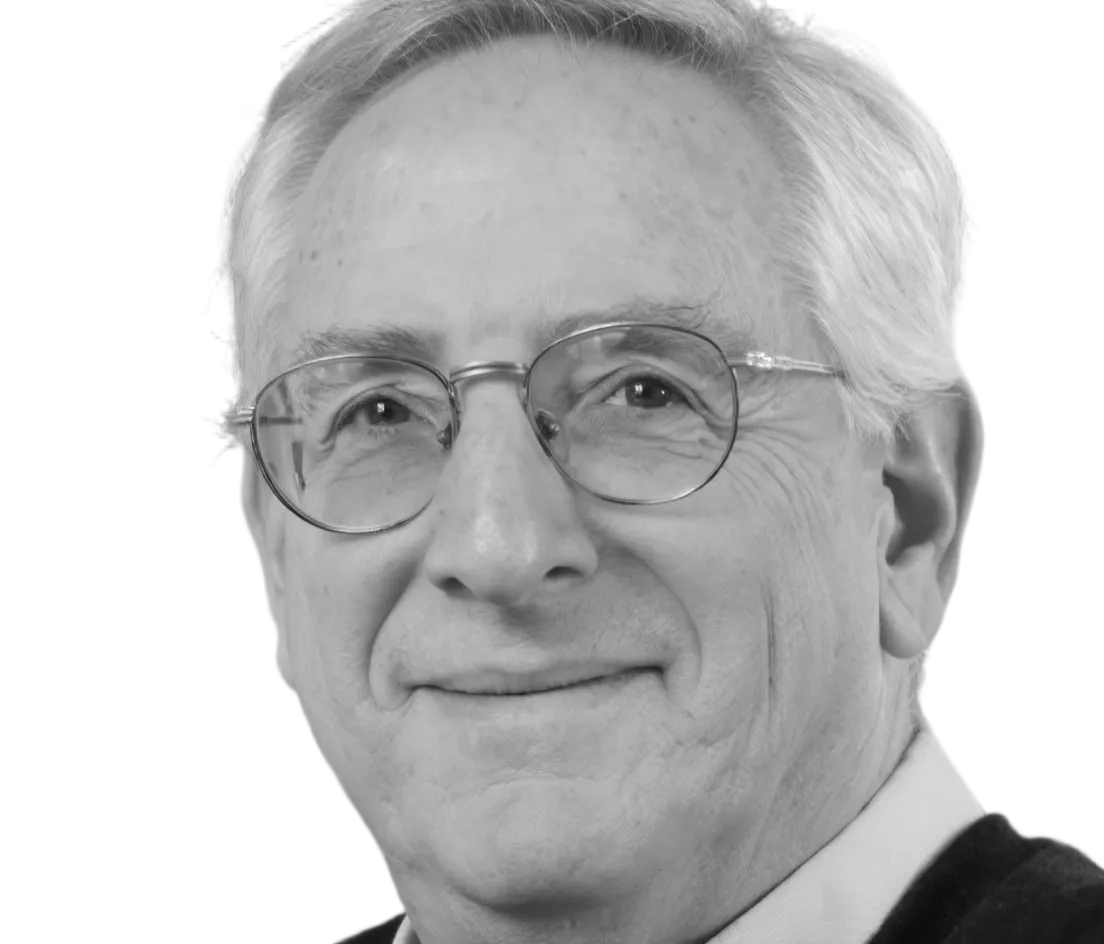
Norman M. Naimark
Norman M. Naimark is Robert and Florence McDonnell Professor of East European Studies in the History Department of Stanford University. He is also Senior Fellow of the Hoover Institution and the Freeman-Spogli Institute for International Studies. He came to Stanford 1988 after sixteen years as Professor of History at Boston University and Research Fellow of the Russian Research Center at Harvard. Besides Stalin’s Genocides, featured in his Rorotoko interview, Naimark is the author of The Russians in Germany (Harvard 1995) and Fires of Hatred (Harvard 2001), among other books. Most recently, he has co-edited The Lost Politburo Transcripts (Yale 2009) and A Question of Genocide (Oxford forthcoming).
Pull this thread
Stalin's mass killings of the 1930s were genocide, and the definition should cover social and political groups.
Know something the rest of us don't?
Most threads on Rorotoko begin with our invitation. Any thread can begin with a proposal: you write it with the same prompts every thread answers, and we review it.
Propose a thread →