
Seo-Young Chu
Do Metaphors Dream of Literal Sleep? A Science-Fictional Theory of Representation
In the introduction I make what is probably the book’s most counterintuitive claim—that science fiction and lyric poetry are intimately interconnected.
From page 11 to page 63 of Do Metaphors Dream, I try to give the reader a sense of the astonishing wealth of evidence substantiating the likenesses between science fiction and lyric poetry. To demonstrate the systematic nature of lyric’s omnipresence in science fiction, I’ve arranged the evidence taxonomically and attempted to make the collection of examples as comprehensive as possible.
The texts encompass film, concept art, drama, short stories, novels, and more. Chronologically they span four centuries. Authors range from those established in the “western canon” (e.g., Swift, Shelley, Orwell) to those not yet canonized (e.g., Nalo Hopkinson, Ted Chiang). They include both writers of “hard” science fiction (e.g., Greg Bear, Arthur C. Clarke, and other rigorously scientific novelists) and writers of “soft” science fiction (e.g., Ray Bradbury, Margaret Atwood, and others whose science fiction is inspired more by the social than by the natural sciences). Moreover, the authors include not only prose stylists celebrated for their lyricism (e.g., Samuel Delany, China Miéville, Michael Cunningham) but also writers who are not often considered lyrical stylists (e.g., Larry Niven, Isaac Asimov).
Even if the introduction does not succeed in convincing the reader of the inherent lyricism of science fiction, the catalogue from page 11 to page 63 can be used as a kind of annotated bibliography inciting the reader to check out books, films, and other texts that he or she might otherwise have overlooked.
The introduction is also where I outline the five chapters of the book. From page 69 to page 73, I provide detailed abstracts of all five chapters. Readers can use these abstracts to determine which chapter(s) will resonate with their own interests: a scholar of transnational studies, for instance, will easily identify chapters one and four as especially relevant, while a roboticist will gravitate toward chapter five.
I hope that this book will foster dialogue between those who read/write/study poetry and those who read/write/study science fiction. I hope that this book will encourage readers to approach poems as works of science fiction. (Why not read Dickinson’s “I felt a Funeral, in my Brain” as a science-fictional narrative?)I hope that the aforementioned catalogue of instances of lyricism in science fiction will eventually find itself reincarnated as a searchable online database to which numerous contributors could add new entries or update information. Despite my attempts at inclusiveness, the catalogue right now is painfully incomplete. Most of the authors cited are Anglophone. Moreover, certain types of media are underrepresented. If I could rewrite the introduction, I would add videogames such as Mass Effect, DOOM, BioShock, Halo, and Metroid, not to mention scenes from The X-Files, Doctor Who, Fringe, The Twilight Zone, Buffy the Vampire Slayer, Supernatural, Star Trek: TNG …The list is never-ending, and an online database would have the capacity not only to contain ever-proliferating entries but also to store audiovisual clips and high-resolution images. I hope that this book will promote the use of science fiction as a language for exploring everyday existence. Since all reality is to some degree elusive, all representation is to some degree science-fictional. What most call “realism” is actually a low-intensity variety of science fiction, one that requires little energy to accomplish its representational work insofar as its referents (e.g., softballs) are readily susceptible to representation. What most call “science fiction” is actually a high-intensity variety of realism, one that requires astronomical levels of energy to accomplish its work insofar as its referents (e.g., catastrophic trauma) defy simple representation. The continuum shared by “realism” and “science fiction” parallels the continuum shared by all referents—from wind-up clocks and nickels to quantum-logic clocks and financial derivatives. In a world where the referents constituting everyday reality grow increasingly resistant to representation (the global, for instance, is more elusive than the local; Korean American identity is more elusive than Korean identity), science fiction becomes an increasingly suitable language for handling “mundane” reality. Do Metaphors Dream of Literal Sleep? is a fragment of a hypothetical mega-book containing an infinite number of chapters corresponding to the infinite sum of referents that compose reality. I hope that at least a few readers will want to help complete the immensely larger book of which Do Metaphors Dream is but one piece.
Editor: Erind Pajo
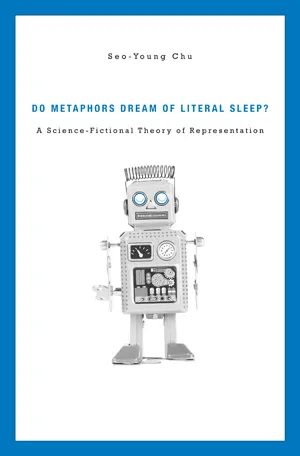
Do Metaphors Dream of Literal Sleep? A Science-Fictional Theory of Representation
Seo-Young Chu Do Metaphors Dream of Literal Sleep? A Science-Fictional Theory of Representation Harvard University Press 316 pages, 6 x 9 1/2 inches ISBN 978 0674055179
Available here →June 20, 2011
20110620-chu-seo-young-do-metaphors-dream-literal-sleep-science-fictional-3
A close-up
The rest of this thread
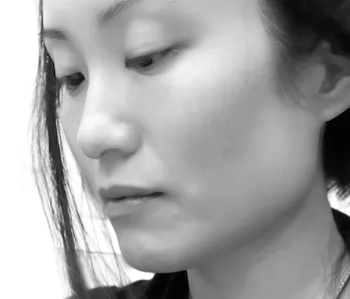
N. Lee
Seo-Young Chu
Seo-Young Chu is Assistant Professor of English at Queens College, City University of New York. Besides Do Metaphors Dream of Literal Sleep?, featured in her Rorotoko interview, Chu’s publications include essays on postethnic science fiction, nineteenth-century mesmerism, and the place of mathematics in Emily Dickinson’s poetry. Chu is currently writing a book tentatively titled “Science-Fictional North Korea.”
Pull this thread
Science fiction refers to reality, and what people call realism is low-intensity science fiction working on easy referents.
Know something the rest of us don't?
Most threads on Rorotoko begin with our invitation. Any thread can begin with a proposal: you write it with the same prompts every thread answers, and we review it.
Propose a thread →