
Brent R. Stockwell
The Quest for the Cure
In 1957, during a cleanup of his lab at the pharmaceutical company Roche, Leo Sternbach discovered an old flask containing a chemical he had synthesized previously, but discarded for lack of interest. On a lark, he decided to have it tested for its anti-anxiety potential, a therapeutic area he had become interested in.
The chemical, of an unknown identity, turned out to have striking anti-anxiety activity, superior to the existing marketed drugs of that era. Within three years, Sternbach was able to figure out the identity of the chemical and have it approved for use in patients—a remarkable success, considering that drug development nowadays takes 10 to 15 years.
This chemical was the first of the benzodiazepines, a class of drugs with a specific shape and structure that is powerful for treating anxiety. Some years later, Ben Evans and his colleagues at Merck discovered that benzodiazepine derivatives were also effective in treating other diseases and in interacting with other types of proteins. He suggested that this class of molecules is “privileged,” in the sense that it is especially effective at interacting with proteins and altering the course of disease.
Other privileged molecular structures have since been discovered, and these molecules might be the key to addressing the undruggable proteins. Since these privileged compounds are so effective at interacting with numerous classes of proteins, they may be effective starting point to look for new drugs against the supposedly undruggable protein targets. Only a small number of researchers have focused on the undruggable proteins—it is an understudied area. I would like to see a concerted effort by the biomedical community to address this grand challenge of our time.
In addition, there is an opportunity to educate students at every level about this fundamental scientific problem that has direct practical implications. By introducing the challenges associated with creating new medicines to curricula, we could teach students key aspects of chemistry, biology, pharmacology and medicine, and hopefully stimulate the best minds to struggle with, and solve, this problem of the undruggable proteins.
The future of medicine is balanced on the fulcrum of the undruggable proteins. Depending on the outcome of investigations, we either face a bleak future filled with incurable diseases, or a bounty of transformative new medicines. I am optimistic that with a devoted effort, the research community will eventually solve the challenge of the undruggable proteins and the incurable diseases they control.
Editor: Erind Pajo

The Quest for the Cure
Brent Stockwell The Quest for the Cure: The Science and Stories Behind the Next Generation of Medicines Columbia University Press284 pages, 6 x 9 inches ISBN- 978 0231152129
Available here →July 25, 2011
20110725-stockwell-brent-on-quest-for-cure-science-next-generation-medicine-3
A close-up
The rest of this thread
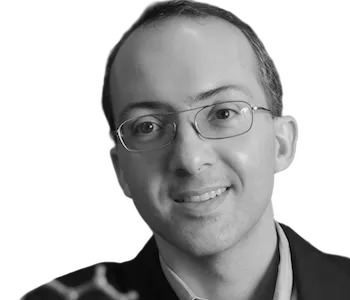
Brent R. Stockwell
Brent R. Stockwell is Associate Professor at Columbia University and an Early Career Scientist of the Howard Hughes Medical Institute. He has received numerous awards, including a BWF Career Award at the Scientific Interface, and a Beckman Young Investigator Award. He has published 54 scientific papers, is an inventor on 10 issued U.S. patents, has given 52 invited presentations around the world, and has received 32 research grants for over $10 million.
Pull this thread
Drug approvals are falling because we are running out of proteins a small molecule can bind to.
Know something the rest of us don't?
Most threads on Rorotoko begin with our invitation. Any thread can begin with a proposal: you write it with the same prompts every thread answers, and we review it.
Propose a thread →