
Wendy Steiner
The Real Real Thing
Since The Real Real Thing covers a lot of ground, readers casually dipping into it might form very different ideas about what sort of book it is. If they happened on the discussion of Genesis in which God is the first model, they might see this as a work of historical scholarship. If they began with the chapter on Warhol and Dylan as artist celebrities, or the one on the interactive politics of Hairspray, they might assume they were dealing with a pop culture study. A quick dip into the section on bioethics and bio art might suggest a futuristic orientation, the one on women artists-models might sound like feminist art history, and the one on the art of the Disappeared might indicate politically engaged theory.I would not be sorry if The Real Real Thing elicited any of these interpretations, since it is an attempt to show how myth, philosophy, pop culture, technology, politics, and ethics come together in the figure of the model in contemporary art.I have two wishes for readers of this book.First, I hope the model provides a useful focus for them in approaching the diversity of contemporary culture. Second, I hope readers will emerge from this book with an alternative to the negative view of media so commonly espoused by intellectuals.The advent of computers, the Internet, bioengineering, and the other astounding technologies of our day is at least as disorienting as the advent of the printing press or photography was in centuries past. Media revolutions require a vast amount of cultural processing, and artists are among those most actively contributing to this effort. Through the idea of the model, artists in our day are showing us not only the dangers of new technologies, but their extraordinary humanistic potential.The Real Real Thing dramatizes this contrast of views through a quip by Susan Sontag and a novelistic interchange by Christopher Bram.Susan Sontag reacted in disgust at the American soldiers’ posing beside their torture victims in the Abu Ghraib photographs. If the seventeenth-century empiricist Bishop George Berkeley could declare, esse est percipi, “to be is to be perceived,” Sontag sees modeling as the percipi of the media-saturated, those driven to objectify and be objectified, to experience authenticity only in the act of presenting themselves to public view: “To live is also to pose.”Those who gaze on the model are just as frequently declared the passive ones. “The people” in contemporary democracies have been reduced to viewers of their leaders’ “appearances.” According to the political scientist Jeffrey Edward Green, “The relationship between actor and spectator, in its current form, threatens the political equality prized by democracy.”But if, for some, the culture of the gaze is a disgrace, for a surprising number of artists, filmmakers, and writers, it is nothing of the kind.In Christopher Bram’s novel Gods and Monsters, for example, the protagonist James Whale poses for a fellow art student. “’What I don’t like is I sit and you draw,’ he says. ‘Not fair, John. Not democratic.’” Obligingly, John undresses, too, and both men pose and draw each other. “Whale is relieved, pleased. They have corrected the balance of things, made themselves equals. One of the joys of art is that it introduces a new hierarchy into the world.”It is not an exaggeration to say that the introduction of new hierarchies into the world—in gender, race, and artistic experience—has been a defining imperative in recent art.This episode reframes Sontag’s dictum as follows: “to live is also to communicate,” and its goals are the democratic values of equality and empathy. I would be pleased if the reader of The Real Real Thing came away with an appreciation of this ethical potential in our perplexing new identity as models.
Editor: Erind Pajo
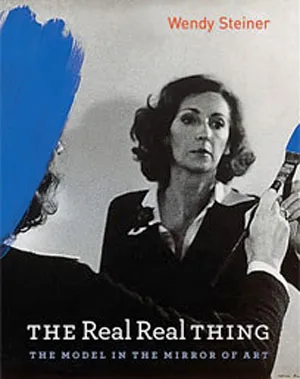
The Real Real Thing
Wendy Steiner The Real Real Thing: The Model in the Mirror of Art University of Chicago Press240 pages, 7 x 10 inches ISBN 978 0226772196
Available here →August 3, 2011
20110803-steiner-wendy-the-real-real-thing-model-mirror-art-3
A close-up
The rest of this thread
Michael Ahearn
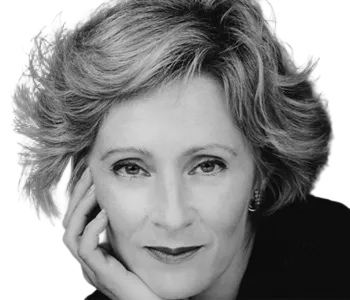
Wendy Steiner
Wendy Steiner, a Canadian, is the Richard L. Fisher Professor of English at the University of Pennsylvania, where she was Founding Director of the Penn Humanities Forum and past Chair of the English Department. Besides The Real Real Thing, featured in her Rorotoko interview, her many books include Venus in Exile and The Scandal of Pleasure, named as one of the 100 best books by the New York Times (1996). Steiner has created librettos and multi-media productions for two operas, The Loathly Lady (2009) and Biennale (in process), and co-created a real-time music visualization, Traces on the Farther Side (2011).
Pull this thread
Posing is a form of communication, and the model is the central figure of twenty-first-century art.
Know something the rest of us don't?
Most threads on Rorotoko begin with our invitation. Any thread can begin with a proposal: you write it with the same prompts every thread answers, and we review it.
Propose a thread →