
Wendy Brown
Walled States, Waning Sovereignty
The 1989 fall of the Berlin Wall was an internationally celebrated event, and was also the occasion for numerous proclamations, across the political spectrum, of a dawning unbordered world. Yet, since that date, more than two dozen new walls have been built at or near nation-state boundaries. Many more nation-state walls are in the planning stages.
Why? Why are walls proliferating in an era of unprecedented global connectedness and the emergence of postnational constellations such as the European Union? And why these visible, physical barricades of concrete, steel, and barbed wire when threats to the nation today are so often miniaturized, clandestine, dispersed, or networked?
What are these walls doing, pretending to do, projecting or symbolizing?
Walled States, Waning Sovereignty locates the recent spate of wall building in the context of waning nation-state sovereignty. I specify this context as a “post-Westphalian,” epoch, one in which nation-states remain important world actors but their sovereign capacities are eroded by a host of transnational flows—people, capital, ideas, goods, violence, and political and religious fealty.
The contemporary proliferation of walls, I argue, is both a symptom of and specific reaction to this condition—but it does not solve the problem generating it. The book draws on classical and contemporary political theories of state sovereignty in order to understand how state power and national identity persist amid its decline. I examine both state needs for legitimacy and the popular desires that incite contemporary wall building.
The new walls—dividing India from Bangladesh, Israel from Palestine, South Africa from Zimbabwe, Sunni from Shi’ite, North America from Mexico, Central and South America—consecrate the broken and porous status of boundaries they would seem to contest.
They also signify the ungovernability by law of a range of forces unleashed by globalization.
Often, these walls amount to little more than expensive theatrical props: they are frequently breached, they frequently intensify the problems they aim to address, and often blur the distinction between law and lawlessness they are intended to represent.
But if today's walls fail to resolve the conflicts between globalization and national identity, they nonetheless project a striking visual image of sovereign power. The new walls address human desires for sovereign order, for containment and protection in a world increasingly without these provisions. Walls also respond to the wish for political horizons and collective identity even as horizons recede and national identity is diluted in an ever more globally integrated and miscegenated world.
Editor: Erind Pajo
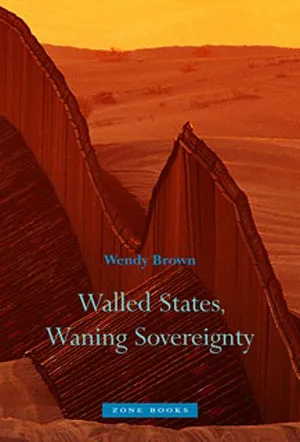
Walled States, Waning Sovereignty
Wendy Brown Walled States, Waning Sovereignty Zone Books 167 pages, 6 x 9 inches ISBN: 978 1935408086 Cover design by Julie Fry
Available here →September 15, 2011
20110915-brown-wendy-on-walled-states-waning-sovereignty-1-1
In a nutshell
The rest of this thread
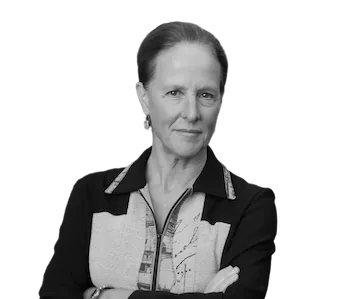
Wendy Brown
Wendy Brown is Class of 1936 Professor of Political Science at the University of California, Berkeley where she is also affiliated with the Department of Rhetoric and the interdisciplinary graduate programs in Critical Theory and in Women, Gender and Sexuality. Her work has been translated into more than fifteen languages.Besides Walled States, Waning Sovereignty, featured in her Rorotoko interview, her books include Is Critique Secular? (co-authored, 2010), Regulating Aversion: Tolerance in the Age of Empire and Identity (2006), Edgework (2005), Left Legalism/Left Critique (co-edited, 2002), Politics Out of History (2001), States of Injury: Power and Freedom in Late Modernity (1995), and Manhood and Politics (1989).
Pull this thread
Border walls are not working barriers but performances of a sovereignty that is draining away.
Know something the rest of us don't?
Most threads on Rorotoko begin with our invitation. Any thread can begin with a proposal: you write it with the same prompts every thread answers, and we review it.
Propose a thread →