
Wendy Brown
Walled States, Waning Sovereignty
The first few pages of Chapter One take the reader on a visual and textual tour of some of the new walls:Of the new walls striating the globe… best known are the United States-built behemoth along its southern border and the Israeli-built wall snaking through the West Bank, two projects that share technology, subcontracting, and also reference each other for legitimacy. But there are many others. Post-apartheid South Africa features a complex internal maze of walls and checkpoints and maintains a controversial electrified security barrier on its Zimbabwe border. Saudi Arabia recently finished constructing a ten-foot-high concrete post structure along its border with Yemen, which will be followed by a wall at the Iraq border (which in turn Saudis say may be followed by walling their whole country). To deter refugees from its poorer neighbors, to stake its side in a land dispute, and to suppress the movement of Islamic guerillas and weapons across its Pakistan border, cruder barriers have been built by India to wall out Pakistan, Bangladesh, and Burma and to wall in disputed Kashmir territory. The crudeness should not deceive: India has mined the land space between double layers of barbed and concertina wire along the Indo-Kashmir border. Also in the context of a land dispute but officially built in the name of interdicting “Islamic terrorists,” Uzbekistan fenced out Kyrgyzstan in 1999 and Afghanistan in 2001 but Turkmenistan is now fencing out Uzbekistan. Botswana initiated the building of an electric fence along its border with Zimbabwe in 2003, ostensibly to stop the spread of foot-and-mouth disease among livestock but aimed at interdicting Zimbabwe humans as well. In response to the south Thailand insurgency and to deter illegal immigration and smuggling, Thailand and Malaysia have cooperated to build a concrete and steel border wall. There is the wall between Egypt and Gaza, brought to the world’s attention when it was breached in January 2008 by Gazans seeking food, fuel and other domestic goods. Iran is walling out Pakistan. Brunei is walling out immigrants and smugglers coming from Limbang. China is walling out North Korea to stem the tide of Korean refugees, but, parallel to one section of this wall, North Korea is also walling out China.
There are also walls within walls: Gated communities in the United States have sprung up everywhere but are especially plentiful in southwestern cities near the wall with Mexico...This is not a book that aims to shape policy (except perhaps, to reveal the absurdity of investing so much money, labor, materials, and hope in nation-state wall building at this juncture in history).
Rather, it is a critical investigation of the relationship of sovereignty and walling in our time. My purpose is to open up this relationship for readers: to reveal features of walling and the clamor for walling that aren’t on the evening news.
In contrast to arguments for and against walls based on their political acceptability or technical efficacy, I am offering a less literal way of “reading” border walls and the contemporary desire for them.
I also hope to invite readers into the project of thinking theoretically and politically about the problem of waning nation-state sovereignty. What happens when this 300-year old political form is fading but has not yet been replaced? What kind of global inter-regnum are we in? What kinds of political anxieties and fears are generated by this condition and what reactive political formations issue from such anxieties and fears?
To this end, the last chapter makes a turn to psychoanalysis, and more specifically, to psychoanalytic theories of “defense formation” and of sovereign religious power. I draw some speculative links between the conditions producing psychic defense formations and desires for barricaded nations in an increasingly unhorizoned and porous political landscape. I also consider the possible overlap between conditions generating desires for an all-powerful protective deity (the desire for religion) and those generating desires for walled nations.
All of these speculations are open-ended and non-empirical. My aim is to provoke reader reflections on some of the political predicaments of our time, not to close my inquiry with a strong or definitive position.
Editor: Erind Pajo
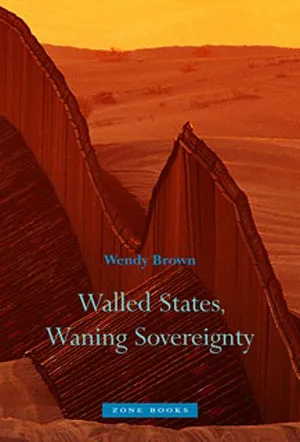
Walled States, Waning Sovereignty
Wendy Brown Walled States, Waning Sovereignty Zone Books 167 pages, 6 x 9 inches ISBN: 978 1935408086 Cover design by Julie Fry
Available here →September 15, 2011
20110915-brown-wendy-on-walled-states-waning-sovereignty-3
A close-up
The rest of this thread
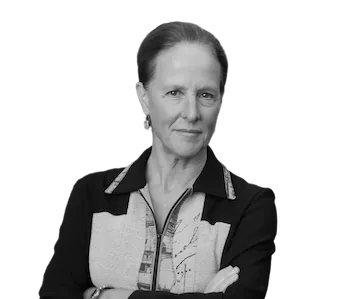
Wendy Brown
Wendy Brown is Class of 1936 Professor of Political Science at the University of California, Berkeley where she is also affiliated with the Department of Rhetoric and the interdisciplinary graduate programs in Critical Theory and in Women, Gender and Sexuality. Her work has been translated into more than fifteen languages.Besides Walled States, Waning Sovereignty, featured in her Rorotoko interview, her books include Is Critique Secular? (co-authored, 2010), Regulating Aversion: Tolerance in the Age of Empire and Identity (2006), Edgework (2005), Left Legalism/Left Critique (co-edited, 2002), Politics Out of History (2001), States of Injury: Power and Freedom in Late Modernity (1995), and Manhood and Politics (1989).
Pull this thread
Border walls built since 1989 are theatrical props performing a sovereignty that is draining away.
Know something the rest of us don't?
Most threads on Rorotoko begin with our invitation. Any thread can begin with a proposal: you write it with the same prompts every thread answers, and we review it.
Propose a thread →