
Carolyn Bronstein
Battling Pornography
Some readers will be familiar with the better-known aspects of the feminist anti-pornography movement, particularly efforts led by Andrea Dworkin and Catharine MacKinnon in the mid-1980s to pass new legislation. This duo sought to introduce ordinances, first in Minneapolis and then in Indianapolis, that defined pornography as a violation of women’s civil rights and made it actionable under the law.
Fewer readers, however, will know about the earliest years of movement activity, especially the efforts of grassroots groups like Women Against Violence Against Women (WAVAW) to combat violent and sexist media content, especially advertising.
If a prospective reader were to pick up Battling Pornography in a bookstore, I hope that the book would fall open to page 93. This is where I begin to tell the story of feminists’ encounter with the 1976 advertising campaign for the Rolling Stones’ album, Black and Blue. The campaign centerpiece was a billboard that featured a bound and bruised woman.
At 14 by 48 feet, high above Sunset Boulevard in Los Angeles, the billboard dominated the skyline. The woman wore a lacy white bodice, artfully ripped to display her breasts. Her hands were tied with ropes, immobilized above her head, and her bruised legs were spread apart. She straddled an image of the Stones, with her pubic bone positioned just above Mick Jagger’s head. Her head was thrown back, eyes closed, and her mouth hung open in an expression of pure sexual arousal, as if the rough treatment had wakened her desire and now she wanted more. The ad copy celebrated the mythic connection between sex and violence, reinforcing the dangerous idea that women get excited when things get a little rough: “I’m Black and Blue from the Rolling Stones and I Love It!”
To anyone familiar with the music of the Stones, this blatant sexism was not surprising. On tour in 1975, Jagger rode a twenty-foot-long inflatable stage prop shaped like a penis while singing Starfucker, a song about the pleasure he derived from sex with girl groupies. (Note to Maroon 5’s Adam Levine: Try that move like Jagger.) Karen Durbin, editor-in-chief of the Village Voice in the mid-1970s, went on the road with the band and found herself isolated and “engulfed by an all-male world” where women were regarded primarily as eye candy and one-night stands.
The Los Angeles-area feminists who formed WAVAW were outraged by the Black and Blue promotion. They thought that the campaign made light of male violence, especially battering. They feared that linking such violence with a chic rock-and-roll band like the Rolling Stones gave battering a stamp of social approval. In a news release, the activists explained how the billboard made women feel. “We carry in ourselves a deep fear of rape. When we would drive down the Sunset Strip and see the myth about our lust for sexual abuse advertised, our fear and outrage was deepened,” the group warned. “We are not Black and Blue and we do not love it when we are.”
Anyone who opens to page 93 and keeps reading will find out how this story turns out. I can promise that the efforts of WAVAW to call attention to sexist violence in media will surprise you—and quite likely inspire you.
Where are we on the pornography question? Should Americans reopen a national conversation about the proper place of pornography in our society, and how we think such material might affect human sexuality?
Will the creation of the new .xxx adult content internet domain (which is designed to bar images of child pornography and make it easier for people who seek sexually explicit material to find it and keep those who do not at a comfortable distance) do enough to reduce the feeling that we are wallowing in an endless sea of mechanistic, silicone-enhanced images?
The vast dissemination of pornography through the internet is said to be liberating for sexual minorities who might otherwise have trouble finding one another as well as erotic materials that feature their preferred practices. But, for many others, the prevalence of pornography contributes to a gloomy and dehumanized view of sexuality.
In Battling Pornography, I trace the efforts of American women in the 1970s and 1980s to call national attention to the dangers of media images that conflated violence and sexuality. Over time, they shifted their attention to pornography and argued that the constant depiction of women as sexual objects robbed them of their humanity and denied them full civil rights. The conflicts and debates among feminists in this period, who were split between anti-porn and pro-sex positions, as well as between feminists and civil libertarians, were intensely personal and bitter.
In the 1980s, the feminist effort to do something concrete about the pornography problem brought up widespread fears of government censorship and restrictions on sexual freedom. Opponents of anti-pornography feminism argued that labeling a certain class of sexual images as exploitative endorsed a conservative sexual worldview that privileged some forms of sex, especially heterosexual and procreative, over others. Since that time, many social critics have been loathe to raise the pornography question, rightly fearing that its mere mention brings the taint of these charges.
A hope that I have with regard to Battling Pornography is the possibility of reinvigorating these debates without raising the specter of censorship or sexual conservatism.
We have not solved the initial problem that feminists identified regarding sexually violent media depictions, and the role that media play in teaching young women and men about their sexuality and gender norms. And, pornography in the internet age is a reality of social life—not one that can or should be eradicated, certainly, but one that can be discussed rationally.
The book offers a critical evaluation of the feminist pornography debates and shows how the turn toward legal solutions distracted attention from the core questions—still relevant today—about media effects and gender. Perhaps reading it will help steer those debates back on track and allow us to reconsider the fundamental question of whether pornography disseminates at least some messages that are harmful for both women and men.
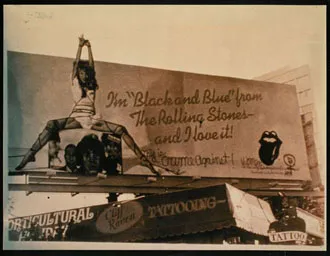
Photo courtesy of Northeastern University Libraries, Archives and Special Collections
Editor: Erind Pajo

Battling Pornography
Carolyn Bronstein Battling Pornography: The American Feminist Anti-Pornography Movement, 1976-1986 Cambridge University Press 280 pages, 6 x 9 inches ISBN 978 1 107 40039 9
Available here →September 26, 2011
20110926-carolyn-bronstein-on-battling-pornography-american-feminist-anti-pornography-movement-1976-1986-3
A close-up
The rest of this thread

Carolyn Bronstein
Carolyn Bronstein is Associate Professor of Media Studies in the College of Communication at DePaul University. Her research investigates questions of media representation and social responsibility, with an emphasis on gender, and her work has been published in such journals as Violence Against Women, Camera Obscura, and Journalism & Mass Communication Quarterly. Bronstein is the author of Battling Pornography: The American Feminist Anti-Pornography Movement, 1976-1986, published by Cambridge University Press.
Pull this thread
Feminist leaders turned the campaign against sexual violence in media toward pornography to buy press coverage and public support.
Know something the rest of us don't?
Most threads on Rorotoko begin with our invitation. Any thread can begin with a proposal: you write it with the same prompts every thread answers, and we review it.
Propose a thread →