
Teofilo F. Ruiz
The Terror of History
This book is mostly inspired by almost forty years of teaching, by experiencing a loss of faith in my 20s and my understanding of the whole sweep of western history from Mesopotamia to the present.
Students who have formulated many of these issues in their incessant questioning about the world and, most of all, about their place in this world have, inspired me first to write and then, reluctantly, to publish this book. I say reluctantly because as a professional historian I have long feared that this was not the kind of book—personal, filled with questions and doubts—that professional historians usually write.
But we are, as authors and as human beings, a combination of many different things.
One of the objects of this book is to show the reader, and to grasp myself through its writing, the different layers of culture to which I have been exposed over my many years in academia and as an avid reader of fiction, mostly nineteenth-century fiction, from my adolescence onwards.
There is of course a whole collection of writers and artists (often in what may seem a strange combination) who have inspired this book and many of the questions raised in it. In rough chronological order, these authors range from the epic of Gilgamesh to Plato, St. Francis of Assisi, Boccaccio, the Marquis de Sade, Victor Hugo, Michel de Certeau, Walter Benjamin, Aldous Huxley, George Orwell, and others.
In art, Goya’s so-called “Dark Paintings,” (of which “Saturn Devouring His Children,” serves as the cover for this book) have had a tremendous imprint on my way of thinking about the past and the future.
And then, of course, the poets who I quote profusely in the last chapter and in the conclusion to the book, beginning with the early and mid nineteenth-century poets to James Thompson’s devastating vision.
But in the end, my students, my classes, my sense of a world in which injustice and inequality rule were the main locomotives for the writing of The Terror of History.
Editor: Erind Pajo

The Terror of History
Teofilo F. Ruiz The Terror of History: On the Uncertainties of Life in Western Civilization Princeton University Press 200 pages, 5 1/2 x 8 1/2 inches ISBN 978 0691124131
Available here →November 9, 2011
20111109-ruiz-teofilo-on-the-terror-of-history-2
The wide angle
The rest of this thread
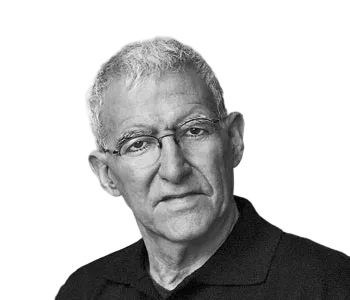
Teofilo F. Ruiz
Teofilo F. Ruiz received his Ph.D. from Princeton in 1974. He has published or has forthcoming fourteen books and more than seventy articles. He has received numerous awards and fellowships from the National Endowment for the Humanities, the Institute for Advanced Study at Princeton, the Mellon and Guggenheim Foundations. In 1994-95, he was selected as one of the Outstanding teachers in the United States by the Carnegie Foundation, and as the Distinguished Teacher at UCLA in 2009-10. One of his books, Crisis and Continuity, was selected for the Premio del Rey Award by the American Historical Association. Ruiz is presently a Distinguished Professor of History and of Spanish and Portuguese at UCLA.
Pull this thread
Religion, sensual experience and art are the West's three escapes from history, and none is superior to the others.
Know something the rest of us don't?
Most threads on Rorotoko begin with our invitation. Any thread can begin with a proposal: you write it with the same prompts every thread answers, and we review it.
Propose a thread →