
Teofilo F. Ruiz
The Terror of History
Although I insist that no particular way of making meaning is superior to the other—they are after all cultural constructs—I am most fond of the last chapter and the conclusion.In both I attempt to show how the pursuit of knowledge and the beautiful serves also as a form of escaping history. Since, in writing this book, I too am engaging in a process of making meaning of the world around me, these last pages resonate more with my beliefs (or, more accurate, lack of belief) than other parts of the book.I am also particularly fond of pages 93 and 94, where I discuss love and love-making (two things that are, strangely, conceived as different in the western world) as one of the best alternatives to the “terror of history.” Although, as I freely admit, I have never been able to give myself entirely to the world of the senses, I am also willing to admit to the power of the flesh in erasing time and history.Commenting on the Japanese film In The Realm of the Senses, where the characters engage in a deadly pursuit of sexuality carried out to the extreme, I wrote:While most of us will not take sexual encounters to this fatal conclusion, it is clear that most of us have been, even if fleetingly, there at one time or another. That is, at a point in which the physicality of the act seems to throw a veil over other parts of our lives. In the moment, the moments, in which there is no thought, no reason, no god, no history.What I would wish for this book is for those who read it to understand that it is a personal reflection, my reflection.But I also wish readers to bring themselves into the book and to reflect on history, on their individual and collective histories.As I mention in the book, the truth is that history has no agency. History does not do anything. We do. If we wish to survive as a species, if we wish for a future that is not as laden with troubles as our past and present have been and are, then we must act.While denying the validity of progress, my take is not an entirely pessimistic one. We can only move forward as full humans when we take our masks—as Nietzsche suggested—off. Or, when we come to accept that what gives meaning to our lives has been constructed, invented. And that the inventions and formulas we call history are often constructed for the benefit of the few and the burden of the many.Nonetheless, in spite of this cruel reality, there is beauty in the world. There is meaning in the world that transcends our often futile efforts to make sense of the world as “we have found it.”Francis Bacon is attributed with saying: “thou shall know the truth, and the truth shall make you free.” I do not think that many of us today would admit to the idea that there is a Truth with a capital T, or that there is real freedom of the self. There are, I fear, many truths formulated in the myriad contexts of our lives and cultures. Or, perhaps, there is no truth at all.In the end, finding the truth is far less important or possible than seeking the truth. Thus, I wish the reader to find his or her own way of asking these questions for themselves, and perhaps to come to a better understanding of these problems that I have had done in this book.I would be most grateful for your comments, suggestions, and criticism. The search does not end here.
Editor: Erind Pajo

The Terror of History
Teofilo F. Ruiz The Terror of History: On the Uncertainties of Life in Western Civilization Princeton University Press200 pages, 5 1/2 x 8 1/2 inches ISBN 978 0691124131
Available here →November 9, 2011
20111109-ruiz-teofilo-on-the-terror-of-history-3
A close-up
The rest of this thread
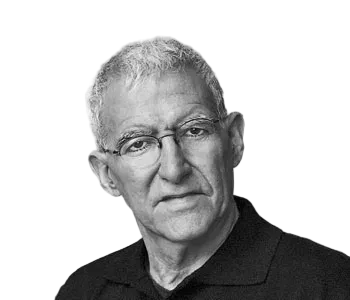
Teofilo F. Ruiz
Teofilo F. Ruiz received his Ph.D. from Princeton in 1974. He has published or has forthcoming fourteen books and more than seventy articles. He has received numerous awards and fellowships from the National Endowment for the Humanities, the Institute for Advanced Study at Princeton, the Mellon and Guggenheim Foundations. In 1994-95, he was selected as one of the Outstanding teachers in the United States by the Carnegie Foundation, and as the Distinguished Teacher at UCLA in 2009-10. One of his books, Crisis and Continuity, was selected for the Premio del Rey Award by the American Historical Association. Ruiz is presently a Distinguished Professor of History and of Spanish and Portuguese at UCLA.
Pull this thread
Religion, sensual experience and art are the West's three escapes from history, and none is superior to the others.
Know something the rest of us don't?
Most threads on Rorotoko begin with our invitation. Any thread can begin with a proposal: you write it with the same prompts every thread answers, and we review it.
Propose a thread →