
Owen Flanagan
The Bodhisattva’s Brain
Many secular humanists are attracted to Buddhism because there is no creator God and thus it seems “spiritual but not religious.” In addition, there is much hype about the good effects of Buddhist meditation on mood, health, and well-being. I set myself the task of asking first, whether the beliefs of classical Buddhism, karma, rebirth, and immaterialism about mind are optional. Could one be a Buddhist if one subtracts the beliefs in karma and rebirth? Second, I asked whether there is in fact any good evidence about the claims that Buddhists are happier than most other people, Catholics, atheists, Confucians.
The first half of the book is devoted to the question of whether and how one might study happiness. Is happiness something in-the-head that can be assessed by fMRI? Does Buddhism promise happiness? If so, what kind? The second half of the book takes up the question of what Buddhism would look like if one subtracted the hocus pocus about karma and rebirth. Can there be such a thing? This is “Buddhism Naturalized.”
Editor: Erind Pajo
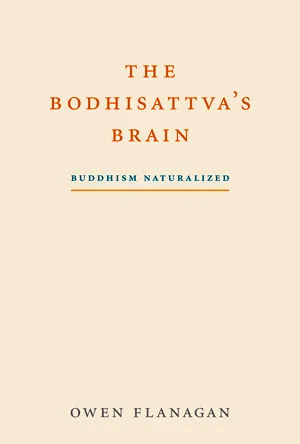
The Bodhisattva’s Brain
Owen Flanagan The Bodhisattva’s Brain: Buddhism Naturalized The MIT Press 272 pages, 6 x 9 inches ISBN 978 0262016049
Available here →December 5, 2011
20111205-flanagan-owen-on-bodhisattva-brain-1-1
In a nutshell
The rest of this thread
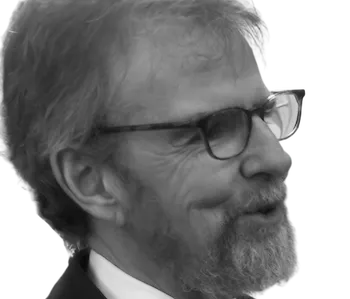
Owen Flanagan
Owen Flanagan is James B. Duke Professor and Professor of Psychology and Neuroscience at Duke University. He works in philosophy of mind, ethics, and comparative philosophy. Besides The Bodhisattva’s Brain, featured on Rorotoko, he is the author of Varieties of Moral Personality (Harvard 1991) and other books.
Pull this thread
Subtract karma, rebirth and nirvana from Buddhism and a serious philosophy remains, fit for secularists.
Know something the rest of us don't?
Most threads on Rorotoko begin with our invitation. Any thread can begin with a proposal: you write it with the same prompts every thread answers, and we review it.
Propose a thread →