
Tonio Andrade
Lost Colony
In 1997, Jared Diamond published his wonderful book, Guns, Germs, and Steel, which asked why it was that some societies become rich and powerful and others don’t.
His explanation was geographical—it depended on where those societies were located and what ecological resources they had available to them. Eurasians (that is the people of Europe and Asia) were unusually blessed just because of where they lived, and so they developed techniques and technologies that enabled them to expand around the world.
It’s a great book, but it leaves open an important question: why did Europeans rather than other Eurasians become so powerful on the world stage in modern times—i.e., after around 1500? After all, Asians—most notably the Chinese—had been world leaders in science and technology for centuries.
What accounted for the sudden leap in European power vis-à-vis Asia in recent centuries?
Historians and sociologists have been vehemently debating this question, but with little progress.
It seemed to me that one way to help answer it was to look at warfare between Europeans and Chinese. So I did. And the war that I describe in this book is a fascinating and exciting one.
It really is an “untold story”—the first ever major conflict between western European and Chinese forces, and the last one until the famous Opium War of the 1800s.
The Chinese lost the Opium War. They won the Sino-Dutch War. Why? How? Technology, weather, and leadership.
Editor: Erind Pajo
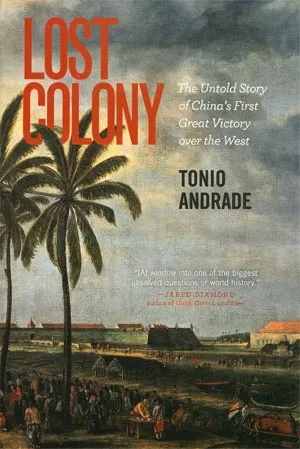
Lost Colony
Tonio Andrade Lost Colony: The Untold Story of China's First Great Victory over the West Princeton University Press 456 pages, 6 x 9 inches ISBN 978 0691144559
Available here →December 9, 2011
20111209-andrade-tonio-on-lost-colony-china-victory-over-west-1-1
In a nutshell
The rest of this thread
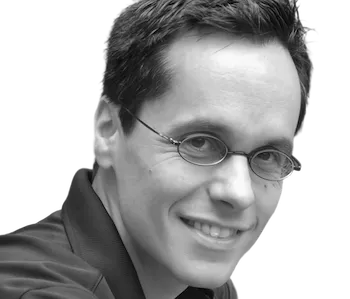
Andrea Artuso Andrade
Tonio Andrade
Tonio Andrade grew up in Salt Lake City, Utah, and has degrees from Reed College and Yale University. He is associate professor of history at Emory University, where he writes on global history and the history of China. Lost Colony is his second book. His first is called How Taiwan Became Chinese (2007). Andrade has also published articles in The Journal of World History, Late Imperial China, International Journal of Maritime History, The Canadian Journal of Sociology, Itinerario, and The Journal of Asian Studies. He lives in Decatur, Georgia, with his wife, Andrea, and his three daughters, Amalia, Sylvia, and Josephine.
Pull this thread
pulls againstpulls alongside
Koxinga's drilled troops advanced in lockstep while the Dutch, inventors of European drill, scattered and ran.
Against JP · All opera is postcolonial, but opera cannot be decolonial. On: Cultural and technical influence in imperial encounters ran outward from metropole to periphery
Against JP · Hollywood's oriental style structures films that appear to have nothing to do with Asia or race at all. On: Cultural and technical influence in imperial encounters ran outward from metropole to periphery
Alongside PG · Cocaine was a legal Andean export until the 1940s, and US Cold War politics made it a criminal trade. On: Cultural and technical influence in imperial encounters ran outward from metropole to periphery
Alongside GS · Islamic science grew from the needs of a new empire and competition among displaced bureaucratic families. On: Cultural and technical influence in imperial encounters ran outward from metropole to periphery
Alongside RB · In the 1950s newly independent states were human rights universality's most ardent champions, while European empires invoked cultural difference. On: Cultural and technical influence in imperial encounters ran outward from metropole to periphery
Alongside OK · Muslim West Africa has an eight-hundred-year written scholarly tradition, and the Sahara was its bridge, not a barrier. On: Cultural and technical influence in imperial encounters ran outward from metropole to periphery
Nearby SB · Nazi imperialism was still imperialism, driven as much by fear of rival empires as by ambition.
Know something the rest of us don't?
Most threads on Rorotoko begin with our invitation. Any thread can begin with a proposal: you write it with the same prompts every thread answers, and we review it.
Propose a thread →