
Brian Boyd
Stalking Nabokov
Stalking Nabokovfocuses always on Vladimir Nabokov and occasionally also on me in persistent pursuit, wielding a variety of nets, in different seasons and terrains, panting with effort while he flutters free.
Nabokov, “God’s own novelist himself” (William Deresiewicz), “the greatest writer ever to make a successful journey across the language frontier” (Salman Rushdie), was not only a novelist and short-story writer, but also an autobiographer, poet, dramatist, screenplay-writer, essayist, reviewer, translator, critic, scholar, lecturer, scientist, chess problem and crossword composer, and even a tennis coach and boxing coach.
In pursuing him over forty years as reader and researcher, I have also played many roles: as annotator, archivist, bibliographer, biographer, butterfly namer, cataloguer, conference-goer and conference organizer, critic, documentary adviser, donee, donor, editor, expert witness, interviewee, interviewer, mentor, reviewer, teacher, translator, trustee, and more.
In some of these roles I wrote the twenty-six essays here, most in the last ten years—some even incorporating material discovered only this year—as I worked, most of the time, on very different writers, from Homer and Shakespeare to Dr. Seuss (Nabokov’s friend, Ted Geisel) and Art Spiegelman.
Nabokov drew details of butterfly anatomy while peering down a microscope.
The portrait in Stalking Nabokov is less microscopic than kaleidoscopic: Nabokov the man, the thinker, the scientist, and above all the writer: storyteller, poet, intuitive psychologist; diarist, humorist, scenarist and stylist; on his own or in conjunction or contrast with Shakespeare, Pushkin, Tolstoy and (you didn’t guess this one) Machado de Assis; and as author of Speak, Memory, Lolita, Pale Fire, Ada, and now, The Original of Laura.
I try to tease out Nabokov’s consistency while also highlighting his variety. I sometimes show the hard lone toil of the artist and the scholar (in this case, me too), and how it relies on or resists the work of others. I show how obsessions, Nabokov’s and mine, need not preclude multiplicity and surprise.
Editor: Erind Pajo

Stalking Nabokov
Brian Boyd Stalking Nabokov Columbia University Press 464 pages, 5 1/2 x 9 1/2 inches ISBN 978 0231158565
Available here →November 8, 2011
20120404-boyd-brian-on-why-lyrics-last-1-1
In a nutshell
The rest of this thread
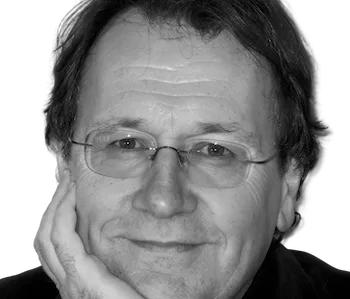
Brian Boyd
Brian Boyd is University Distinguished Professor in the Department of English, University of Auckland. His work on American, Brazilian, English, Greek, Irish, New Zealand and Russian fiction, drama, verse, prose and translation, from epics to comics, has appeared in thirteen languages and won awards on four continents. He is best known as the world’s leading Nabokov scholar, and for his work on evolution and literature.
Pull this thread
Nabokov is a maximalist, not an ironist who stops at irony.
Know something the rest of us don't?
Most threads on Rorotoko begin with our invitation. Any thread can begin with a proposal: you write it with the same prompts every thread answers, and we review it.
Propose a thread →