
Jini Kim Watson
The New Asian City
The final three chapters of The New Asian City each examine in detail one national site and one aesthetic form: Singaporean city poetry, Taiwanese New Cinema, and Korean minjung (people’s or popular) literature.Chapter Five’s analysis of Singapore’s long-time leader Lee Kuan Yew (in power from 1959-1990), and the poets Edwin Thumboo and Arthur Yap, is a good example of the way the last section of the book works. Here, I examine the way writings and speeches by each political leader invoke the newly built infrastructure of the country in order to narrate a national future, while literary and cinematic movements complicate this vision.
Lee Kuan Yew explicitly equates the modernism of the government’s urban renewal program and the cleanliness of the streets with Singapore’s ability to attract foreign investment and build national prosperity. In contrast, the Singaporean poet Arthur Yap writes about such physical changes in a fundamentally different way, revealing the absurdity of a developmental logic that overemphasizes productivity and applies too neatly to every housing block or reclaimed seashore.Most interesting here is the way one can see the battle over the symbolic meaning of urban form, that is, how two different perspectives—the political-developmental and the poetic—each vie to incorporate developmental landscapes into a particular vision of the nation.
A broader aim of this book is to provide a counter-narrative to simplistic accounts of East Asian economic development, especially ones that rely on wrong-headed notions like “Confucian Capitalism” or the “natural” efficiency of the Asian worker.Rather, what was taking place was a very singular arrangement of forces involving the political and urban legacies of colonialism, Cold War-backed authoritarian governments, the advent of export-led development, and changing relationships between country and city. The complexity—and brutality—of that story needs to be understood so that we can properly understand how this region differentiated itself from the rest of the developing world under conditions that could not, and perhaps should not, always be repeated.
In a related sense, the book also functions as a pre-history to our current moment of globalization in which all nations and economies are imagined to be intimately linked as never before, albeit on very uneven terms. What we forget is how these differing terrains—the First World, the different tiers of the developing world—were actively produced and created, largely through the mechanisms of colonialism and in the decades of decolonization following World War II.The New Asian City is the story of how one region of the world developed from a subordinate position vis-à-vis the West, but it is not the only story possible or available. Only by understanding the complex ways that these three sites modernized and reconceptualized their urban fabric can we understand their remarkable development from colonial territories to Asian “miracles.”
Finally, one further goal of this book is to open up new analytic pathways with which to study those latest of Asian miracles, China and India. As I hope The New Asian City demonstrates, the narratives of those megastates—the ongoing battles between city and country, local forms of settlement and migration, and their emerging global and regional roles—must also be excavated and retold in “three-dimensional” form.
Editor: Erind Pajo

The New Asian City
Jini Kim Watson The New Asian City: Three-Dimensional Fictions of Space and Urban Form University of Minnesota Press312 pages, 5 3/8 x 8 3/8 inches ISBN 978 0816675722 hb ISBN 978 0816675739 pb
Available here →May 29, 2012
20120529-watson-jini-kim-on-asian-city-fictions-space-urban-form-3-1
A close-up
The rest of this thread
Jini Kim Watson
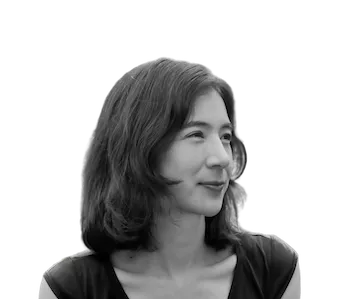
Jini Kim Watson is Assistant Professor of English and Comparative Literature at New York University. She received her Ph.D. in Literature from Duke University in 2006. Prior to this, she received her B.A. from the University of Queensland, Australia, studied architecture at the University of Melbourne, and also taught at Chonnam National University in Gwangju, South Korea. The New Asian City is her first book. She is currently working on a new book concerning representations of dictatorships in postcolonial literature, tentatively titled, Ruling Like A Foreigner.
Pull this thread
The urban form of Seoul, Taipei and Singapore was the instrument of their growth, not its byproduct.
Know something the rest of us don't?
Most threads on Rorotoko begin with our invitation. Any thread can begin with a proposal: you write it with the same prompts every thread answers, and we review it.
Propose a thread →