
Robert L. Bettinger
Orderly Anarchy
The discussion and arguments are generally easy to follow. Even so, my guess is that the casual reader will most likely turn first to the graphics, which were chosen to highlight key parts of the argument or at least the parts most important to me - though the connection might not appear obvious. I particularly like Figure 5.3, in which Ms. Freddie, a Hupa woman, demonstrates the various steps in leaching acorn meal to make it palatable. I chose this series to underscore the importance of the acorn, which was the single most important foodstuff across nearly the whole of California, entailing significant amounts of female labor, most of it expended as acorn was being prepared for consumption, making acorn a back-loaded resource with reduced risk of expropriation.
I am pleased, too, with Box 3.1, illustrating various forms of California and Great Basin seed beaters, the specialized tools connected with intensive seed procurement in these places but nowhere else in ethnographic North America. Here the connection is to the larger argument that the relatively simple aboriginal sociopolitical organizations of these western Native American groups are the culmination of a long evolutionary trajectory characterized by ever-increasing inputs of female labor, and the implications of this for understanding hunter-gatherer lifeways in modern evolutionary perspective.
Orderly Anarchy draws heavily on modern evolutionary theory, including evolutionary game theory and related models that incorporate cultural transmission, but differs from the usual offering in those areas in its careful attention to historical context and detail, and the effect of those on trajectories of development.
Evolutionary theorists are aware of the importance of context and detail, of course, but these are by definition beyond theoretical explanation. I would like to see Orderly Anarchy serve as model for future studies incorporating the effect of evolutionary process and historical circumstance, examining their mutual interaction.
In the last analysis, while theory is essential, it is the historical component that makes Orderly Anarchy a case study about native Californians - real people, living real lives, rather than one-dimensional cutouts interesting only to the extent that they do what theory predicts they should do.
Editor: Judi Pajo

Orderly Anarchy
Robert L. Bettinger Orderly Anarchy: Sociopolitical Evolution in Aboriginal California University of California Press 312 pages, 6 x 9 inches ISBN 9780520283336
Available here →October 19, 2016
20161019-bettinger-robert-on-orderly-anarchy-evolution-aboriginal-californi-3-1
A close-up
The rest of this thread
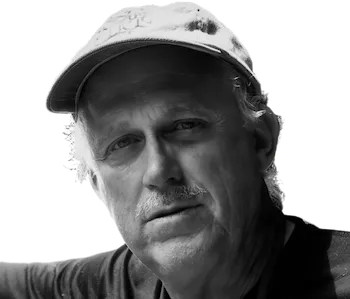
Robert L. Bettinger
Robert L. Bettinger, Distinguished Professor Emeritus of Anthropology at UC Davis, is an authority on ethnographic and archaeological hunter-gatherers, the modeling of their behavior, and analysis of the hunter-gatherer record in the western US and China. He is recipient of the 2007 Society for American Archaeology Award for Excellence in Archaeological Analysis, the 2007 Society for California Archaeology M. A. Baumhoff Special Achievement Award, and 2016 Society for American Archaeology Book Award (Scholarly Category) for Orderly Anarchy: Sociopolitical Evolution in Aboriginal California. In addition he is the author of Hunter-Gatherers: Archaeological and Evolutionary Theory (first edition 1991; lead co-author of second edition 2016), Hunter-Gatherer Foraging: Five Simple Models (2009), and many peer-reviewed book chapters and journal articles.
Pull this thread
Native California's small family bands are a recent development, not a primitive survival.
Know something the rest of us don't?
Most threads on Rorotoko begin with our invitation. Any thread can begin with a proposal: you write it with the same prompts every thread answers, and we review it.
Propose a thread →