
Robert L. Bettinger
Orderly Anarchy
Orderly Anarchy is about hunter-gatherer California specifically but has three broader theoretical implications.
The first is that self-interest is central to much of the human evolutionary trajectory. This becomes clear if it is understood that human populations can grow very large, very fast, and yet did not do so until relatively late in time, even though many of the behavioral or technological innovations directly responsible for that growth are of themselves unproblematic. The storage of food, for example, is not technically demanding, yet develops very late in time in California, owing to the freeloader problem mentioned earlier: that freeloaders benefitted from the extra effort expended by others was a strong disincentive to the acquisition and caching of food by individuals beyond their immediate needs. The privatization of food incentivized its acquisition and storage in bulk and the California population almost immediately exploded. I have argued that the development of agriculture was delayed for the same reasons, until the privatization of grown food incentivized that mode of production, and there are doubtless other examples.
The second implication for theory has to do with the course and scope of human cultural evolution, which has traditionally been viewed with respect to the suite of trajectories leading through agriculture to state-level systems as they emerged in Mesoamerica, South America, Africa, and Eurasia. This is certainly an important trajectory, but it ignores the many equally interesting evolutionary trajectories of groups that were hunter-gatherer from start to finish, as though nothing interesting had happened, nothing of importance had evolved, over the thousands of years these groups were in existence. It was largely to correct this misunderstanding that I wrote Orderly Anarchy.
The third implication has to do with the susceptibility of different foods to expropriation, which has to do with where the bulk of labor is expended in their procurement and processing. The basic contrast is between what I have termed front-loaded and back-loaded resources. Front-loaded resources are costly to acquire and store but easy to prepare for consumption. Salmon, for example, require sophisticated technology to capture (spears, nets, traps), and must be carefully dried to prevent spoilage, but from that point on require relatively little to be made ready to eat. In contrast, back-loaded resources are easy to collect and store, but costly to prepare for consumption. Acorns, for example, are easily collected by hand and stored in some sheltered place, but after that must be processed to remove tannic acid before they are consumed, which is very costly. The difference between the front-loaded salmon and back-loaded acorn has huge implications for expropriation. Because most of the work has already been done, caches filled with front-loaded salmon are much more attractive to freeloaders, thieves, and raiders than are caches filled with the back-loaded acorn, for which most of the work has still to be done. There is evidence that some northern California groups that had access to both selected acorns over salmon because acorns entailed less risk of expropriation. The same logic certainly applies more broadly to agricultural crops and industrial products in both ancient and modern contexts.
Editor: Judi Pajo

Orderly Anarchy
Robert L. Bettinger Orderly Anarchy: Sociopolitical Evolution in Aboriginal California University of California Press 312 pages, 6 x 9 inches ISBN 9780520283336
Available here →October 19, 2016
20161019-bettinger-robert-on-orderly-anarchy-evolution-aboriginal-californi-2-1
The wide angle
The rest of this thread
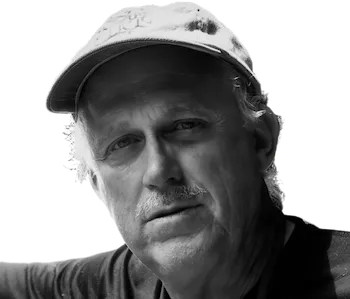
Robert L. Bettinger
Robert L. Bettinger, Distinguished Professor Emeritus of Anthropology at UC Davis, is an authority on ethnographic and archaeological hunter-gatherers, the modeling of their behavior, and analysis of the hunter-gatherer record in the western US and China. He is recipient of the 2007 Society for American Archaeology Award for Excellence in Archaeological Analysis, the 2007 Society for California Archaeology M. A. Baumhoff Special Achievement Award, and 2016 Society for American Archaeology Book Award (Scholarly Category) for Orderly Anarchy: Sociopolitical Evolution in Aboriginal California. In addition he is the author of Hunter-Gatherers: Archaeological and Evolutionary Theory (first edition 1991; lead co-author of second edition 2016), Hunter-Gatherer Foraging: Five Simple Models (2009), and many peer-reviewed book chapters and journal articles.
Pull this thread
Native California's small family-based bands are a recent form, appearing within the last 1,500 years.
Know something the rest of us don't?
Most threads on Rorotoko begin with our invitation. Any thread can begin with a proposal: you write it with the same prompts every thread answers, and we review it.
Propose a thread →