
Frank L. Cioffi
One Day in the Life of the English Language
Picking up a book in a bookstore, a lot of readers look at a book’s opening and closing pages. From these they can get a sense of the basic idea and where it ends up.
If I had to pick a place I’d like reader to open to, it would be pages 286-87, “A Microconclusion.” This starts with a quotation from Agnes Denes’s prose poem, “Human Dust”:He was an artist. He died of a heart attack. He was born fifty years ago ... . He was unhappy and lonely more often than not, achieved 1/10,000 of his dreams, managed to get his opinions across 184 times and was misunderstood 3,800 times when it mattered.
This seems to me unutterably sad—but at the same time, rather typical. Most people are not routinely understood, “when it mattered.” In some ways, this is the tragedy of the contemporary world, or a big part of it.
What I want people to “get” from this book is that using language correctly will help them to be understood, especially when it matters. On page 287, I discuss the situation of an immigrant who killed thirteen people in Binghamton, NY. Apparently he “felt degraded because of his inability to speak English.” Admittedly, it would have made more sense to have attended ESL classes at the local university than murdering thirteen unfortunate souls, but there is some lesson here, I think, for the non-psychotic reader: try to get your language exact. Try to reach people. Using words in a certain manner will help smooth out the rough patches of life, will help make you feel good about yourself and your situation.
Just yesterday I was having a lunch with a friend, and I was complaining about my situation at the college. I said, “You know, I’ve been moved out of the English department, to another floor, and not very many faculty seek me out there.” He said he had had a similar experience at his job. Then he added, “But of course you are no longer the Director of Writing. You used to be a real big shot in the department; now you are just a professor, one among many.” What a wonderful distillation of the problem! Just finding the right words to express it, he made me feel a great deal better. He understood my situation, and he offered words that captured that situation and quelled my anxiety.
As Hillary Clinton said in her first debate, “Words matter.” I quite agree. More than half the people I meet outside of my profession, when learning that I teach college English, confess, “I’ve always been bad at English.” For many people, English grammar is (or was) a nightmare. They might have had a junior high school teacher who was a real martinet and made them feel very stupid and inadequate for not being able, say, to diagram a sentence or identify a subject or a verb. It seems to me that in fact there is a widespread, an endemic, fear of English grammar.
I’d like to start helping to remedy this fear. I would like my book to help disabuse people of the ideas that English is impossible, that grammar is pointless and arcane, and that since only teachers or writers can speak or write correctly, it’s hopeless to even try. In short, in One Day in the Life of the English Language, I am attempting to make grammar accessible and even somewhat fun.
I know that’s a stretch, the “fun” part. But if people listened carefully to language, they would see that it has a lot of potential for fun. In my book I invoke what I call the “absurd universe” phenomenon: this occurs when people misuse English in such a way that they inadvertently invoke something ridiculous, as in “With a husband and five children, her washing machine was running all the time.” Does the washing machine have a husband and five children? Or today on the radio, I heard a researcher introduced as a person “studying the roots of AIDs and Patient O at Kansas State University.” Well, is the researcher only looking at the situation at Kansas State U? No. But ever so briefly, the expression invoked an absurd situation, and while most listeners understood that the researcher was at KSU, and he was studying the worldwide phenomenon of AIDs and Patient O, there was a short interval when another interpretation, a slightly absurd one, edged in. In this interval, I argue, something is lost. I would like people to be more conscious of their language use, more aware that others can easily misinterpret one’s words, or can be momentarily bewildered, which fact impairs communicative efficiency.
In addition, I would like readers to strive toward complexity in their language use. I know that complex sentences have more potential for containing errors of various kinds, but that shouldn’t drive people into simplistic sentence patterns, what I call the “my puppy syndrome” (“My puppy is cute. He has a long tail. He wags it often. I love my puppy”). Many people, fearful of making mistakes, resort to such prose (I saw it recently in a letter of recommendation that a medical doctor wrote for a patient wanting to get into medical school). True, there are fewer mistakes in “my puppy” writing. But it isn’t sufficiently sophisticated or complex to use in most situations where one’s message “matters.” In fact, the message it sends by its very form is that the writer is either nervous about writing, is verbally/intellectually challenged—or has nothing to say.
Finally, too, I want journalists and magazine writers to read this book (many have expressed an interest in doing so, I note), and to recognize that their words matter. How they use language is significant because so many people will be reading what they wrote. In a recent review of this book that Mary Norris wrote in the Times Literary Supplement, Norris addressed head-on some of the problems and questions I had with sentences she had edited and which appeared in the December 29, 2008 New Yorker. While I think that she and I will have to “agree to disagree,” it seemed to me a good sign that she, an editor at a notable weekly magazine, would once again examine some of the sentence she edited, and attempt to offer an explanation for why they were printed as they were. Her answer to this, by the way, is summed up in her review’s title: “Whichcraft.”
Editor: Judi Pajo

One Day in the Life of the English Language
Frank L. Cioffi One Day in the Life of the English Language: A Microcosmic Usage Handbook Princeton University Press 384 pages, 5 x 7 inches ISBN 9780691165073
Available here →December 7, 2016
20161207-cioffi-frank-on-one-day-life-english-language-microcosmic-usage-3-1
A close-up
The rest of this thread
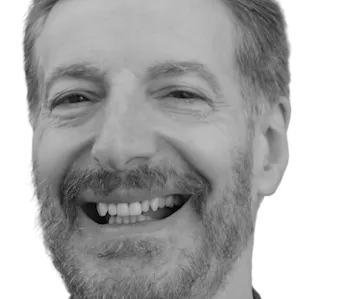
Frank L. Cioffi
Born in Brooklyn, Frank L. Cioffi has taught at Indiana University, Eastern New Mexico University, Gdańsk University, Central Washington University, Princeton University, Bard College, Scripps College, and Baruch College—CUNY, where he is currently Professor of English. His book The Imaginative Argument: A Practical Manifesto for Writers is due out in a revised, second edition from Princeton University Press in the summer of 2017. He is currently working on an article about Robert Frost’s “The Road Not Taken.” He teaches college classes in grammar, science fiction, modern American literature, and writing. He lives in New Jersey with his wife.
Pull this thread
Correctness is worth teaching, because error gets a speaker's ideas dismissed.
Know something the rest of us don't?
Most threads on Rorotoko begin with our invitation. Any thread can begin with a proposal: you write it with the same prompts every thread answers, and we review it.
Propose a thread →