
Aihwa Ong
Fungible Life
The book gives a manifold view of emerging Asian post-genomic science. Each chapter features scientists at work in an adjacent field, constantly challenged by the contingencies of making scientific wagers and fortunes.Americans learn what personalized medicine looks like from Angela Jolie's cancer story reported in The New York Times. But a different notion of personalized medicine prevails in Asian biomedicine, one that customizes therapies at the ethnic/group level.
At stake is not the art of optimizing health, but managing risks and uncertainties that threaten collective life. In emerging Asian contexts, national agendas are scripted into research programs. Medicine is customized less to the person than the group as an affordable way to serve millions menaced by deadly diseases in the developing world. The immediate goal is not to "cure" diseases, but to widen access to therapies that can defer death. Chapter 3, Smoldering Fire, illuminates the efforts by oncologists to match Asian mutations to specific forms of cancer prevalent in the region. We each have our own internal Galapagos of mutations, but by creating ethnic biomarkers, specialists can test drugs that are effective for Asian patients.
Like their patients, doctors are caught up in contrary affects of vulnerability and hope. Because therapies can only douse the flames of tumors, the aim is to change cancer from a fatal to a chronic disease.It is said that bioethical norms are inadequate in the developing world. In Chapter 4, The Productive Uncertainty of Bioethics, Asian researchers draw attention to the inadequacies of bioethical regimes themselves. They argue that "informed consent" makes little sense when tribal chiefs mediate blood sampling in the field. The "ethical" denial of material compensation to "voluntary" but poor donors seems unjustifiable. Another caution is that ethical "best practices" alone do not ensure good science. Reputable researchers, rigorous regulations, and cross-cultural skills, all elements of a biomedical platform, are necessary. Chapter 5, Virtue and the Expatriate Scientists, probes the tensions between science virtue, careerist moves, and civic virtue. People interested in stem cell research can read Chapter 6. At Biopolis, there are star PIs such as Alan Coleman of "Dolly-the-Sheep" fame. But Asian scientists have been at the forefront of developing induced pluripotent stem (iPS) cell technology. This is a high stakes field that fuels an intra-Asian race for new discoveries and national prestige.Chapter 9 brings in BGI Genomics, China, the world's largest sequencing agency, for a comparative look.
The two science centers deploy ethnic-inflected DNA somewhat differently. At Biopolis researchers seek to globally circulate the English ethnic category "Chinese" as a placeless biomarker, but their counterparts at BGI Genomics study genetic variations within the national matrix of Han versus minorities. Groups such as Tibetans are considered gene pools from which therapies can be developed for the Han majority as they anticipate adjusting to a precarious environmental future. The Epilogue dubs the two Asian approaches "DNA bridge" and "Octopus's garden," and compares how they contribute to the transformation of the new life sciences.The constellation of life scientists is now diverse, and they are busy pushing the frontiers of life. New milieus are emerging at the intersection of science, markets, politics and ethics.
How life is discovered, tweaked, decanted, owned, traded, and valued is being decided in Asia as well as in the West.We need to adjust our lens for understanding life and science in contemporary times. The Western-centric view of Global Health implies that global ills can only be (sporadically) managed by Western agencies such as the WHO, the Gates Foundation, or humanitarian NGOs. This view blinds us to the reality that the life sciences are being transformed by many other institutions.In newly affluent Asia, most health interventions are managed by the state. Biopolis is a state-initiative, but it is also weaving a new science ecosystem through public-private partnerships with overseas institutes. Post-SARS, the focus is on mobilizing collaborations, samples, and resources in a fractious region for combating emerging epidemics. Some assistance from the WHO and the U.S. military medical research units arrive during an emergency, but the state supervises the work of virus surveillance, field tests, vaccine development and quarantine in anticipation of biosecurity threats.Life scientists in Asia consider themselves, unlike say in the classic fields of chemistry or physics, at the same starting point as their counterparts in the West.
They quickly adopt, refine methods such as IPS cell technique or gene-editing. They are quite capable of scientific innovations. As in the West, the science is speeding ahead of ethical caution and guidelines, and of the public's understanding.I hope Fungible Life engenders public discussions about life sciences in Asia. Citizens are barely aware of what experts, ensconced in their gleaming aeries, are doing to life itself. Often, a controlled media and limited interest in science have kept the public complaisant and happy to leave life science decisions in expert hands.
At Biopolis, researchers tinker with IPS cells and genetically modify mosquitoes, all for good public ends. In China's diverse and poorly regulated science world, some scientists may seek to design novel life forms for strictly commercial ends. Of course, in the United States, maverick scientists have created synthetic life forms, purportedly to help us adjust to an environmentally damaged world. As the blurring of life and science accelerates, the public anywhere needs to be more informed and consulted.
The life sciences involve, in different degrees, our lives and those of our children. An international consortium of life scientists and individual governments can play a more rigorous role in regulating the conduct of the life science and its myriad goals. Public forums, universities and the media can promote discussions of troubling experiments, the ethical limits therein, and visions of life that are sustainable and spiritual. We need to expand debates about novel life forms that can take on a life of their own.
Editor: Judi Pajo

Fungible Life
Aihwa Ong Fungible Life: Experiment in the Asian City of Life Duke University Press312 pages, 6 x 9 inches9780822362494
Available here →January 18, 2017
20170118-ong-aihwa-on-fungible-life-experiment-asian-city-life-3-1
The wide angle
The rest of this thread
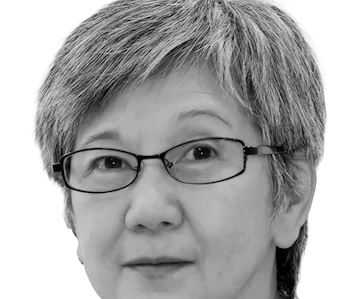
Aihwa Ong
Aihwa Ong is Professor and Robert H. Lowie Distinguished Chair in Anthropology, and the Chair of the Group in Asian Studies at Berkeley, University of California. She is the author of Spirits of Resistance and Capitalist Discipline (1986; 2nd ed., 2010); Flexible Citizenship (1999); Buddha is Hiding (2003); Neoliberalism as Exception (2006); and Fungible Life: Experiment in the Asian City of Life (2016) featured in her Rorotoko interview. She is also the co-editor of Worlding Cities (2011); Asian Biotech (2010), Global Assemblages (2005), and Ungrounded Empires (1997). Her works are translated into European and Asian languages.
Pull this thread
In Singapore's Biopolis and at BGI, personalized medicine means customization to the ethnic group, not the person.
Know something the rest of us don't?
Most threads on Rorotoko begin with our invitation. Any thread can begin with a proposal: you write it with the same prompts every thread answers, and we review it.
Propose a thread →