
Aihwa Ong
Fungible Life
We tend to view cosmopolitan science as a universal form that is practiced in many places. But, does modern knowledge itself become transformed in the midst of its peregrinations? Relatedly, when we talk about "globalization," are we talking about interconnectivity, or about how through interconnectivity we become modern, albeit in distinctive ways?
This is the first book to study genomic science as it is practiced outside the North Atlantic universe. My approach is influenced by the writings of Max Weber, Michel Foucault, and Giles Deleuze and Felix Guattari. While others search for universal theories, I focus on concept-work and ethnographic observation to understand the modern polis and its variability in a globalized world.
I use the concept "global assemblage" to frame my inquiry into the particular conditions of possibility crystallized by the situated interaction of global rational forms and politics and ethics. Global forms such as biotechnologies encounter enigmatic variations in life forms, ecosystems, and life ways.
Through assemblage concepts, we can investigate the ongoing (re)combination of cosmopolitan science, politics, and ethics in shaping a specific milieu. Such a space of inquiry allows us to account for global connectivity and also the heterogeneity of different contexts of emergence. Second, anthropology is about how the micro-practices people engage in configure their worlds. Claude Levi Strauss invokes the bricoleur, the artisan/artist/scientist who uses things at hand to solve problems she encounters in her environment. Like biologists, we tend to investigate how the situated interplay of disparate things -- from the interaction of microbes and genes to the inter-weaving of science and ethics -- help us define problems. Fungible Life asks: how do researchers in their experiments combine existing techniques and beliefs, as well as elements of the past, present, and future? How do science ideas, objects, and practices leave the lab and come to shape the governing of life and living in Asia?
Any scientific endeavor operates at multiple scales and through many networks. Biopolis registers Singapore's shift from being the recipient of overseas science to being a co-producer. There is a transition from British to American styles of medical training. Biopolis enrolls networks that link overseas research institutes such as the Duke University Medical School and the Swiss drug company Novartis. My book shows that anthropology can tell the larger story of how cosmopolitan science becomes universal.
As someone born in Malaysia, I always understood that contemporary milieus are not simply the outcome of history, but shaped by particular combinations of the global and the situated, the rational and the cultural. I have studied the impact of American high tech factories in Malaysia and the influence of neoliberal reasoning on graduated sovereignty and governing practices in Southeast and East Asia. In these different encounters with global forms, "Asia" is a shape-shifter, constantly invoked as malleable space, imaginary, referent, intervention, difference. The rise of bioscience in Singapore and China is only the latest way of being global yet distinctly "Asian."
Editor: Judi Pajo

Fungible Life
Aihwa Ong Fungible Life: Experiment in the Asian City of Life Duke University Press 312 pages, 6 x 9 inches ISBN 9780822362494
Available here →January 18, 2017
20170118-ong-aihwa-on-fungible-life-experiment-asian-city-life-2-1
In a nutshell
The rest of this thread
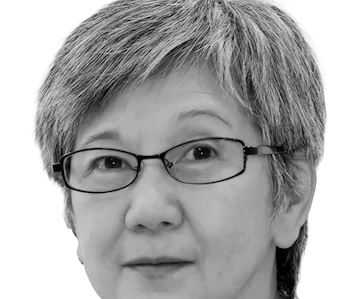
Aihwa Ong
Aihwa Ong is Professor and Robert H. Lowie Distinguished Chair in Anthropology, and the Chair of the Group in Asian Studies at Berkeley, University of California. She is the author of Spirits of Resistance and Capitalist Discipline (1986; 2nd ed., 2010); Flexible Citizenship (1999); Buddha is Hiding (2003); Neoliberalism as Exception (2006); and Fungible Life: Experiment in the Asian City of Life (2016) featured in her Rorotoko interview. She is also the co-editor of Worlding Cities (2011); Asian Biotech (2010), Global Assemblages (2005), and Ungrounded Empires (1997). Her works are translated into European and Asian languages.
Pull this thread
In Singapore and China, personalized medicine means tailoring to the ethnic group, not the person.
Know something the rest of us don't?
Most threads on Rorotoko begin with our invitation. Any thread can begin with a proposal: you write it with the same prompts every thread answers, and we review it.
Propose a thread →