
Renée L. Beard
Living with Alzheimer’s
I’ve always had an affinity for older people. My first job as a teenager was working in a nursing home where I met a woman who had what was then called “Oldtimers.” She was sequestered far away from the nurses’ station and all social spaces because staff and residents alike were convinced that she was “not there.” My experiences told me otherwise and that has stayed with me to this day. Through my undergraduate training, I was drawn to the sociology of aging and followed it through to a Ph.D. in medical sociology. This book is the logical conclusion of my doctoral research project translated for readers beyond my own subspecialty, updated, and including a wider. The primary themes of the book are ageism and the medicalization of memory loss as a specific example of how insidious ageism can be.
In the 1980s, Alzheimer’s disease went from an extremely rare disease found in 50-year-olds to a leading cause of death for older people and replaced what used to be a normal part of aging – senility (or Oldtimers). Since then, the primary topic of interest has been diagnostic tools to identify AD earlier and earlier and even before it is detectable by the average person. I argue that this is an example of medicalization that has not worked particularly well for affected parties. Over 100 years after first being described, we don’t know what causes it or how to classify it, efficacious medications do not exist, and a definitive diagnosis remains possible only upon autopsy.
The other primary theme is ageism. In a culture where people are valued according to youthfulness, social interaction is challenging enough for American seniors with keen memories. When strict normative expectations of communication, interaction and “reality” are also present, then the status of nonperson is ascribed to any individual who is deemed cognitively impaired. What I am arguing is that we – the well-intended public - are the problem. Our own cultural reticence translates too easily into individual unwillingness to join people with dementia where they are. Since we are socialized to believe dementia represents a particularly horrifying state, the biggest barrier to a meaningful life in spite of Alzheimer’s is the fear of unimpaired others. We would do well then, I believe, to learn from my respondents for whom life – while decidedly more challenging – is far from over.
Editor: Judi Pajo

Living with Alzheimer’s
Renée Beard Living with Alzheimer’s: Managing Memory Loss, Identity, and Illness NYU PRESS 336 pages, 6 x 9 inches ISBN 9781479889808
Available here →February 8, 2017
20170208-beard-renee-on-living-with-alzheimers-2-1
In a nutshell
The rest of this thread
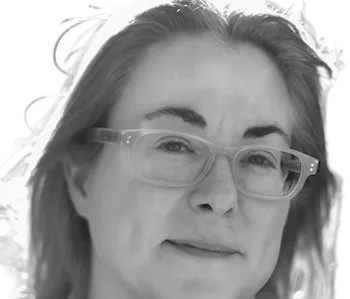
Renée L. Beard
Renée Lynn Beard is Associate Professor in the Department of Sociology and Anthropology at the College of the Holy Cross in Worcester, MA, where she teaches courses on the sociology of health, illness, aging, the family, and research methods. She got her doctorate in medical sociology at the University of California in San Francisco. Her dissertation, Managing Memory: Scientific Facts, Biomedical Identities, and Early Alzheimer’s, was an 18-month ethnography of being evaluated, diagnosed, and living with the early stages of Alzheimer’s disease (AD). After completing her doctoral studies, she spent three years as a National Institute of Aging Postdoctoral Research Fellow at the University of Illinois Chicago. There, she collected more data on the experiences of affected individuals and family members, and she was the site-PI for the cross-national, CDC-funded Brain Health Initiative. She also examined the Alzheimer's disease social movement, clinicians at specialty clinics, and the literature on arts-based therapies for people with dementia. Most recently, she has been following affected couples over time to understand their experiences of AD, especially how perceived marital closeness impacts their respective roles and relationship. She published widely on the subjective experiences of Alzheimer's drawing on illness narratives, including one piece co-authored with a woman who had AD and her husband. Living with Alzheimer's, featured in her Rorotoko interview, was the culminating project of over a decade of research.
Pull this thread
The main barrier to a good life with Alzheimer's is not the disease but other people's fear.
Know something the rest of us don't?
Most threads on Rorotoko begin with our invitation. Any thread can begin with a proposal: you write it with the same prompts every thread answers, and we review it.
Propose a thread →