
Renée L. Beard
Living with Alzheimer’s
I think the prologue does a particularly good job of depicting why people seek evaluation, how they feel during it, and most crucially, what can go wrong in the delivery of the diagnosis. While this example was an outlier in terms of the clinical approach depicted, it is an important lesson for all of us. Despite the best intentions, both clinicians and Association staff often act in ways that are not in the best interest of people seeking evaluation or diagnosed with AD.I am torn between two sections, both being most important to get across: the grueling and dehumanizing experiences of being evaluated (chapter 4) or the more positive account of how people ultimately resist being conflated with their diagnosis (chapter 5). Being evaluated is troublesome for what I call “potential patients” because they are deemed suspect by the very act of seeking evaluation. Yet, so many of my respondents did so simply to get “a baseline” or be told that their forgetfulness was normal or “age-related.” This presumed incompetence was disturbing and distracting for respondents, who felt the cognitive workup amounted to a “degradation ceremony” whereby they were left “socially demoted” essentially upon receipt of the diagnosis. After the initial shock of diagnosis wore off, the reaction to the news was far less dramatic than we might believe it to be. Given their advanced age and shared positive outlook, the biggest barriers to a meaningful life with AD ended up being – in the views of my respondents – the assumptions that generally well-intended social others made of their inability to engage or find value in life any longer. So, on top of the biological realities of dementia, my respondents had the arduous task of also managing the impressions of everyone else, that is, fighting to be seen as “still there” and worthy of interaction rather than simply pitied and dismissed.
So, being diagnosed normalizes awkward behaviors and removes personal blame, which is great, but it also demands identity management to avoid the self-fulfilling prophesy of an Alzheimer’s diagnosis at a time when the “zombie trope” serves as a powerful cultural metaphor for the condition. Part of the problem is that we conflate AD with the late stages, when most diagnosed individuals will die of something else long before they forget to breathe and swallow. The vast majority of people diagnosed with AD do not die from it, and when you take false positives discovered upon autopsy into account, the numbers are even lower. So, while on average they do ultimately maintain meaning in their lives, they do so in spite of the obstacles we present them.
The reason I think these chapters are important is that I think they offer an important and much-needed counter-narrative to the pejorative social assumptions of “life with AD” and show the persistent humanity that I would hope elicits compassion in readers.
I want to increase awareness of the bare consequences of these particular examples of medicalization and ageism. I hope to give academics, practitioners, people with AD and their families – and all of us – a better idea of what life with AD is really like. It doesn’t need to be this way and I hope this book helps me do my small part in changing the way society treats people with AD. We lack a critique of contemporary memory-centeredness and the lived consequences of it. Such introspection has much to say about future improvements in the way people in general and the medical system in particular treat individuals with memory loss. By showing how experiences of dementia are larger than tales of tragedy can capture, I am questioning the very legitimacy of the Alzheimer’s Industrial Complex itself.
Those who are currently seniors and/or live with dementia – and all of us as we ourselves age – would be best served by removing our tendency to universalize all aging experiences. Such homogenizing in such a gendered, race-based and class-divided society is not only a mistake but tolerates neglect of the most deeply disenfranchised among us and ignores the need for meaningful change on the societal level. I see my book as an appeal to broader acceptance of difference, concerning experiences of aging and Alzheimer’s, but also in general. Diagnosed individuals fight hard to maintain a sense of social worth. If we are going to label people with AD earlier and earlier, then at the very least in recompense we should make sure that the social discourse as well as the infrastructure set up to serve them (both in the early phase but particularly in the later stages) be based upon their experiences, views and values with an appreciation for their unique social and relational contexts.
If we continue to proceed without caution, then we might destroy the precious little space within which we as modern humans can age meaningfully. My book offers a timely counterpoint. Through interrogating our societal horror of Alzheimer’s, and aging – dare I say death - more broadly and showing more accurate portrayals of life with the condition, I hope the counter-narrative offered in my data advances global, public and sociological understandings of what has been framed as the most dreaded disease of our time. If we want to bring some humanity to memory loss, then it would behoove us to remember what Mrs. W, a 72-year-old widow, told me a year after being diagnosed: “I’m still the same person I’ve always been. It’s just that now I’m me with Alzheimer’s.” And, at the end of the day, who among us would want to be seen any differently?
Editor: Judi Pajo

Living with Alzheimer’s
Renée Beard Living with Alzheimer’s: Managing Memory Loss, Identity, and Illness NYU PRESS 336 pages, 6 x 9 inches ISBN 9781479889808
Available here →February 8, 2017
20170208-beard-renee-on-living-with-alzheimers-3-1
The wide angle
The rest of this thread
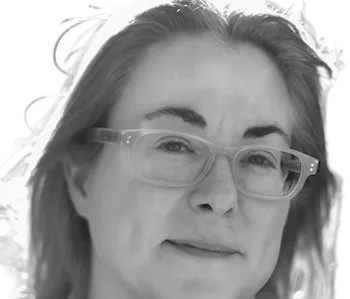
Renée L. Beard
Renée Lynn Beard is Associate Professor in the Department of Sociology and Anthropology at the College of the Holy Cross in Worcester, MA, where she teaches courses on the sociology of health, illness, aging, the family, and research methods. She got her doctorate in medical sociology at the University of California in San Francisco. Her dissertation, Managing Memory: Scientific Facts, Biomedical Identities, and Early Alzheimer’s, was an 18-month ethnography of being evaluated, diagnosed, and living with the early stages of Alzheimer’s disease (AD). After completing her doctoral studies, she spent three years as a National Institute of Aging Postdoctoral Research Fellow at the University of Illinois Chicago. There, she collected more data on the experiences of affected individuals and family members, and she was the site-PI for the cross-national, CDC-funded Brain Health Initiative. She also examined the Alzheimer's disease social movement, clinicians at specialty clinics, and the literature on arts-based therapies for people with dementia. Most recently, she has been following affected couples over time to understand their experiences of AD, especially how perceived marital closeness impacts their respective roles and relationship. She published widely on the subjective experiences of Alzheimer's drawing on illness narratives, including one piece co-authored with a woman who had AD and her husband. Living with Alzheimer's, featured in her Rorotoko interview, was the culminating project of over a decade of research.
Pull this thread
The main barrier to a meaningful life with Alzheimer's is the fear of unimpaired others, not the disease.
Know something the rest of us don't?
Most threads on Rorotoko begin with our invitation. Any thread can begin with a proposal: you write it with the same prompts every thread answers, and we review it.
Propose a thread →