
Ousmane Oumar Kane
Beyond Timbuktu
I hope that a just browsing reader would read all the epigraphs of the prologue, the nine chapters of the books, and the epilogue because they either illustrate a main argument of a chapter or a major misconception about Africa that I seek to correct. My main claim is that Africa has a long intellectual tradition in Arabic or African languages in the Arabic script. But racial stereotypes and colonial hegemonic discourses obscured that tradition.
For example in the epigraph of the prologue, I cite African former Ghanaian Head of State Kwame Nkrumah who, in his installation address as the Chancellor of the University of Ghana in 1961 lamented that the destruction of West African centers of learning by foreign invaders. Indeed in 1591, a Moroccan expedition of thousands of troops heavily armed attacked the Songhay Empire of which Timbuktu was a part precipitating its collapse. They confiscated thousands of books and manuscripts. Three centuries afterward, the French troops led by Commander Archinard conquered the Islamic State founded by Umar Tall in 1889. They then confiscated thousands of manuscripts and moved them to the French Bibliothèque nationale where they are still preserved. In 2013, during the French counteroffensive to liberate Northern Mali occupied by Islamists, the latter burnt or stole thousands of manuscripts.
I also hope that browsing readers would read pages 1 to 6 of the book, which are largely autobiographical. I believe that my own personal and family history, which prompted me to me write this book, reflects to a large extent the transformations that the Islamic scholarly tradition underwent in Africa since the colonial encounter.
In 1964, Nigerien intellectual Abdou Moumouni, after whom the first university of independent Niger was named, published a state-of-the-art study of education in Africa, identifying its strengths and weaknesses. He argued forcefully that the reform of the educational system of Africa was a priority. Five decades after the publication of Moumouni’s work, knowledge production is still fragmented, and the current educational system is still not fully capable of integrating the different intellectual traditions. The problem with this knowledge divide is of course not specific to West Africa. The issue of knowledge divides in the world was the subject of the first World Social Science Report (ISSC-UNESCO 2010). Of the problems posing an obstacle to the accumulation, transmission, and use of knowledge in different societies, the report cites inequalities and asymmetries as the paramount factors. These are no doubt questions confronting West Africa in particular. The divide between intellectuals educated in European languages and in intellectuals in African languages and in particular Arabophones—needs to be bridged in order to make the intellectual legacy of the African continent legible and to build a solid foundation for education in the new millennium.
The implications of this book are potentially vast. First and foremost, my hope is that many people in Africa and beyond will come to be aware and proud of the fact that Africa is home to the world’s oldest university and a truly impressive intellectual tradition that is underappreciated. I hope that by showcasing the history, rigor, and vitality of this tradition, that others will come to appreciate everything it has offered the world in the past and still has to offer. Additionally, I hope that this work will help to bridge the considerable gap left by a skewed Eurocentric perspective on Africa and African intellectual history and allow a greater collaboration between the vibrant Islamic and Western intellectual traditions that have taken root in Africa and that have benefitted me personally.
Editor: Judi Pajo

Beyond Timbuktu
Ousmane Oumar Kane Beyond Timbuktu: An Intellectual History of Muslim West Africa Harvard University Press 296 pages, 6-1/8 x 9-1/4 inches ISBN 9780674050822
Get the book →February 15, 2017
20170215-kane-ousmane-on-beyond-timbuktu-intellectual-history-muslim-3-1
The wide angle
The rest of this thread
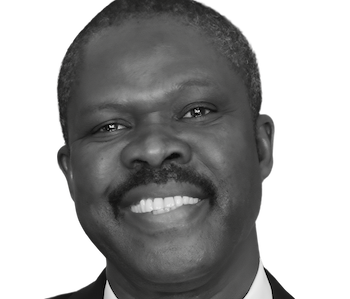
Ousmane Oumar Kane
Ousmane Oumar Kane is Prince Alwaleed Bin Talal Chair on Contemporary Islamic Religion and Society at the Harvard Divinity School and Professor of Near Eastern Languages and Civilizations at the Faculty of Arts and Sciences at Harvard University since July 2012. He received a Bachelor of Arts in Arabic and a Master in Islamic Studies from the Institut national des langues et civilisations orientales at the University of the Sorbonne Nouvelle, and an M. Phil and a Ph.D in Political Science and Middle Eastern Studies from the Institut d'Etudes Politiques de Paris. He is the author of Beyond Timbuktu: An Intellectual History of Muslim West Africa, featured in his Rorotoko interview, as well as The Homeland is the Arena: Religion, Transnationalism and the Integration of Senegalese Migrants in America (Oxford University Press, 2011) and Muslim Modernity in Postcolonial Nigeria: A Study of the Society of the Removal of Innovation and Reinstatement of Tradition (Brill, 2003).
Know something the rest of us don't?
Most threads on Rorotoko begin with our invitation. Some begin with a proposal. Both use the same prompts and the same editing, with your own pages in the archive. Proposed threads carry a small Sponsored label and a fee.
Propose a thread →