
Ousmane Oumar Kane
Beyond Timbuktu
Among the contemporary debates to which this book seeks to contribute, African historiography and cosmopolitanism are paramount. In his Philosophy of History lectures, German philosopher Georg Wilhelm Friederich Hegel claimed that Africa “is no historical part of the World,” and described it as “Unhistorical” and an “Undeveloped Spirit.” He also separated North Africa because it was rather related to Asia and Europe. Unfortunately, much of Western scholarship in the past and present discourse echoes or has been informed by Hegel’s prejudiced perspective.
A huge body of literature on African history has refuted the Hegelian claim, and this book demonstrates how Africa was indeed a historical part of the world proven by its integration into world political economy for over a millennium, the great empires and civilizations that flourished in Africa before foreign invasions, and the higher rates of literacy and scholarship in West Africa at some periods than could be found in contemporary Europe. Yet most of postcolonial African historiography sought to write African history using either in colonial languages, oral tradition, and archeology. This book highlights another category of sources: writings in Arabic languages or in African languages written in the Arabic script. The history of Arabic writing in Africa spans a period of 800 years and West African Muslim scholars cite in their works authors from a variety of regions, including Turkey, India, North and West Africa, Persia, and Al-Andalus, which is evidence that they have for centuries participated in a global network of intellectual exchange. In addition, while Europeans since Hegel have long viewed the Sahara as a formidable barrier that makes North Africa more akin to the Middle East or Mediterranean Europe, the political, economic, and scholastic networks documented in this book are often centered around the Sahara and highlight how those living around the desert have for centuries used it as a bridge to form these large regional networks.
This leads to the other important debate to which this book seeks to contribute: cosmopolitanism. Black Africa has been represented in academia as well as in popular representations as a continent of warring tribes. One of the main challenges of nation building, so the story goes, was to create a sense of belonging among different tribes separated by colonial and post-colonial boundaries. This has been so well documented that it has become, if not the single story, at least the dominant narrative. This book argues that large sections of West African peoples have, in the past and the present, proven their ability to transcend parochial identities and differences in a common cause and have indeed claimed their independence of thought and common destiny. More than anything else, this is embodied in a long literary tradition that has been obscured by European colonial hegemonic discourses of the past century, which tended to represent black Africa essentially as a continent of orality and obscured its literary tradition.
Finally, this book is a bit autobiographical for me as my family and I are part of this proud tradition of Islamic and Arabic scholarship. I draw heavily from my personal experience growing up in the traditional Islamic educational system, my involvement with Arabophone education, and the schools run by my family that embrace both Islamic and modern, secular educational models. My own professional career has been the product of both Western, Europhone education and West African, Arabophone education, so it has been a pleasure documenting and presenting the latter side so the wider world can learn what it has to offer just as I have from my youth.
Editor: Judi Pajo

Beyond Timbuktu
Ousmane Oumar Kane Beyond Timbuktu: An Intellectual History of Muslim West Africa Harvard University Press 296 pages, 6-1/8 x 9-1/4 inches ISBN 9780674050822
Get the book →February 15, 2017
20170215-kane-ousmane-on-beyond-timbuktu-intellectual-history-muslim-2-1
In a nutshell
The rest of this thread
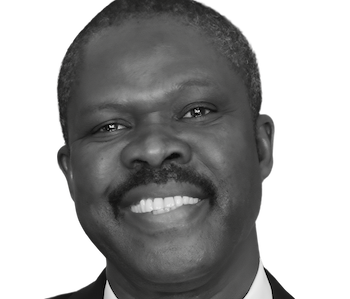
Ousmane Oumar Kane
Ousmane Oumar Kane is Prince Alwaleed Bin Talal Chair on Contemporary Islamic Religion and Society at the Harvard Divinity School and Professor of Near Eastern Languages and Civilizations at the Faculty of Arts and Sciences at Harvard University since July 2012. He received a Bachelor of Arts in Arabic and a Master in Islamic Studies from the Institut national des langues et civilisations orientales at the University of the Sorbonne Nouvelle, and an M. Phil and a Ph.D in Political Science and Middle Eastern Studies from the Institut d'Etudes Politiques de Paris. He is the author of Beyond Timbuktu: An Intellectual History of Muslim West Africa, featured in his Rorotoko interview, as well as The Homeland is the Arena: Religion, Transnationalism and the Integration of Senegalese Migrants in America (Oxford University Press, 2011) and Muslim Modernity in Postcolonial Nigeria: A Study of the Society of the Removal of Innovation and Reinstatement of Tradition (Brill, 2003).
Know something the rest of us don't?
Most threads on Rorotoko begin with our invitation. Some begin with a proposal. Both use the same prompts and the same editing, with your own pages in the archive. Proposed threads carry a small Sponsored label and a fee.
Propose a thread →