
Dag Nikolaus Hasse
Success and Suppression
If you were asked to name some famous figures of Renaissance culture, you would probably name Leonardo, Michelangelo or Erasmus. But you could have mentioned some Arabic names too. There was an Arabic side to the European Renaissance, which is hardly known today. Arabic scientists and philosophers were mandatory reading at many Renaissance universities, especially in medicine, philosophy and astrology. On the book market of the time, Latin translations of Arabic scientific works were very successful. New, often multi-volume editions of these works steadily poured forth from presses in Venice, in Lyon, in Basle. The great names of Arabic science – Avicenna, Averroes, Mesue, Rhazes – were to be found everywhere on the academic bookshelves of Renaissance Europe. Every educated person knew these names.
This is the success side of the story. But there is also a suppression side to it. There was open opposition to Arabic traditions in Western culture, especially from humanists and church officials. Radical humanist scholars, in their enthusiasm for a return to the Greek and Latin sources, polemicized against Arabic science and demanded that university curricula be purged of Arabic authorities. As a result, these authors disappeared from many university curricula of medicine in the early sixteenth century – only to return, at least partially, at the end of the century.
In philosophy, the Arabic writer Averroes gave rise to a deep division among Renaissance intellectuals. He had dedicated partisans and bitter enemies. Many university professors believed Averroes to be the new Aristotle, but humanists protested against his lack of Greek; church officials against his alleged denial of personal immortality. In 1489 and 1513, the Bishop of Padua and the Lateran Council issued condemnations of select theses by Averroes. The effect can be traced in the intellectual biographies of some of Averroes’ partisans. But Averroes continued to be read and admired until the end of the sixteenth century.
The attempts to suppress Arabic traditions left clear traces in Renaissance scientific culture. Medicine, philosophy and astrology, the three areas of Renaissance learning most clearly influenced by Arabic sources, were greatly transformed by the polemical impact, with considerable gains and losses. The Arabic traditions lost their dominating position in many areas and subareas, in spite of the great success of some Arabic theories that we can still observe in the Renaissance. In this sense, the Renaissance is the period in which the West began to forget its debt to Arabic culture.
My book is about this double story of success and suppression.
Editor: Judi Pajo

Success and Suppression
Dag Nikolaus Hasse Success and Suppression: Arabic Sciences and Philosophy in the Renaissance Harvard University Press 688 pages, 6-1/8 x 9-1/4 inches ISBN 978 0674971585
Available here →April 5, 2017
20170405-hasse-dag-on-success-suppression-arabic-sciences-philosophy-1-1-1
In a nutshell
The rest of this thread
Bayerischer Rundfunk
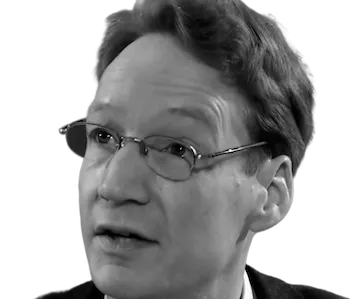
Dag Nikolaus Hasse
Dag Nikolaus Hasse is Professor of the History of Philosophy at the University of Würzburg, Germany. His publications include Avicenna’s De anima in the Latin West (The Warburg Institute, 2000) and Latin Averroes Translations of the First Half of the Thirteenth Century (Olms, 2010). He is the director of two long-term research projects: Arabic and Latin Glossary, Würzburg, and Ptolemaeus Arabus et Latinus, Munich. In 2016, he was awarded the Gottfried Wilhelm Leibniz Prize of the German Research Foundation.
Pull this thread
pulls againstpulls alongside
Arabic authorities were driven out of Renaissance curricula for being Arabic, not because their theories were superseded.
Against RF · AI will shrink the pool of material eligible for intellectual property protection and drain value from protection itself. On: Copying and imitation are a lapse from originality rather than constitutive of making
Against DS · Every single-factor answer to genius is wrong on its own, because each is half of a paradox. On: Copying and imitation are a lapse from originality rather than constitutive of making
Alongside MO · Forgery is a legitimate artistic practice, and the forgery is the masterpiece's dark double. On: Copying and imitation are a lapse from originality rather than constitutive of making
Alongside ER · Sake has never been a fixed tradition, and pairing it with particular foods is a recent import from wine culture. On: Copying and imitation are a lapse from originality rather than constitutive of making
Alongside MB · Herding is not mindless, but it is now maladaptive more often than adaptive, so contrarians need institutional protection. On: Copying and imitation are a lapse from originality rather than constitutive of making
Alongside AJ · Copyright, patents and the idea of intellectual property itself came out of fights over piracy. On: Copying and imitation are a lapse from originality rather than constitutive of making
Know something the rest of us don't?
Most threads on Rorotoko begin with our invitation. Any thread can begin with a proposal: you write it with the same prompts every thread answers, and we review it.
Propose a thread →