
Caleb Everett
Numbers and the Making of Us
Readers will see that from the outset of the book, I try to convey the ways in which numbers are filtered into our lives in pervasive and often undetected ways. Everything from our perception of time to our self-esteem is impacted by the culturally specific means we use to quantify things.
Consider the case of time, highlighted in the first chapter: We have minutes and seconds not because of something that exists in the physical universe, but because we hold on to the detritus of long-dead languages in Mesopotamia, namely unusual base-60 number systems that were used by speakers in that region millennia ago.
In the first chapter I highlight ways in which particular number systems impact our lives, while presaging some of the major points of the book. I note that languages vary dramatically in the kinds of numbers they use, and some languages have few or no numbers. I also point out that number systems are usually based around decimal, vigesimal, and quinary patterns because most (but not all) numbers were developed after people recognized correspondences between the quantities of their fingers and other items in their surroundings.
However, humans arrived at such recognitions in haphazard ways that were only concretized and disseminated through and across cultures via number words. This dissemination ultimately reshaped the human story. These and other points are hinted at in the first chapter, and explored more fully later in the book.
I hope the book gives readers a better appreciation of how so many central aspects of their own lives are dependent on the invention of the cognitive tools we call numbers. The story of numbers is also illustrative a larger theme: what makes humans so special is not simply our innately given intelligence, but the cognitive tools we acquire from each other––often across generations––and then subsequently refine.
An interrelated pragmatic goal of the book is to bring heightened awareness to the crucial role that anthropological linguistics can play in elucidating the human narrative, helping us to better understand how we got where we are now as a species. Anthropological linguistics sits at the nexus of the study of language, human cognition, and culture, and relies on findings from other diverse fields like neuroscience and archaeology. The claims in the book are based on findings from all these diverse fields, but rest most heavily on the study of diverse languages around the world.
I also hope that the book gives readers a better sense of the insights diverse cultures can give us, even those cultures that do not wield numerical technologies like ours. There is a temptation to exoticize small groups of indigenes, and to see their reduced reliance on numbers as less natural or, simply, weird. In fact, they represent more faithfully the bulk of our species’ history, since most numerical technologies are a relatively recent innovation. They offer an important window through which we can look and discover more about ourselves.
Finally, I hope one of the consequences of the book is that readers will reflect on the fact that so many of the “essential” numerical features of their lives, from time-telling to the measurement of their net worth, are not shared by all people.
Editor: Judi Pajo
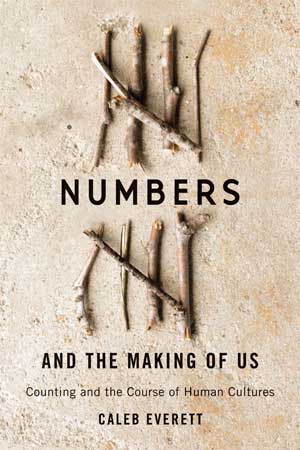
Numbers and the Making of Us
Caleb Everett Numbers and the Making of Us: Counting and the Course of Human Cultures Harvard University Press 312 pages, 5-1/2 x 8-1/4 inches ISBN 978 0674504431
Available here →June 26, 2017
20170621-everett-caleb-on-numbers-making-us-counting-course-human-cultures-3-1
A close-up
The rest of this thread
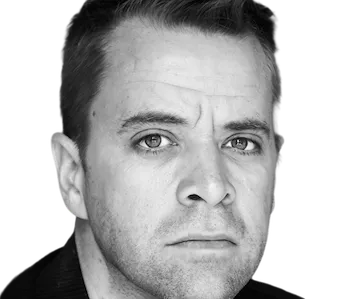
Caleb Everett
Caleb Everett is Professor and Chair of Anthropology at the University of Miami. He is an anthropological linguist with a PhD in linguistics from Rice University. Numbers and the Making of Us is his second book. His first book, Linguistic Relativity: Evidence across Language and Cognitive Domains, was published in 2013. He has published articles in venues ranging from general science journals like Proceedings of the National Academy of Sciences to more specialized linguistic journals like Studies in Language. He is a member of the inaugural class of Andrew Carnegie Fellows. His work has been covered in many news outlets.
Pull this thread
Numbers are an invention, not a faculty.
Know something the rest of us don't?
Most threads on Rorotoko begin with our invitation. Any thread can begin with a proposal: you write it with the same prompts every thread answers, and we review it.
Propose a thread →