
Ralph Armbruster-Sandoval
Starving for Justice
I would hope that readers would flip to chapter two, titled “Speak About Destruction.” In the mid-1980s, a band called “Time Zone,” featuring former Sex Pistols lead singer Johnny Rotten and hip-hop artist Afrika Bombatta, released their most popular hit titled “Speak About Destruction.” Its lyrics include these lines: “Speak about destruction. The rich get richer, the poor get poorer, nationalities fighting amongst each other. Why? Because the system tells you to.”
The 1980s and 1990s were destructive. Key gains that people of color, workers, queer people, and students made some two decades earlier were being rolled back. Outside the United States, especially in Latin America, people’s everyday lives were harsh, as mass repression existed particularly in nations such as Guatemala and El Salvador. In South Africa, millions pressed for abolition of apartheid, with activists all over the world working in solidarity for that same cause.
Chapter two chronicles what was going on in the world, in the United States, and in California. It identifies the larger coyuntura or conjunctural moment that existed in the early 1990s that led up to these three hunger strikes. In Frantz Fanon’s memorable words, 1994 was the “year of the boomerang,” when marginalized communities rose up, with arms initially in Chiapas, with bodies on university campuses in California. Fanon’s comment suggests, as Malcolm X once stated, the “chickens have come home to roost.”
Relatively powerless people can only be pushed around for so long before they say “no.” Within that “no” is a powerful “yes”—a yes to a world without poverty, injustice, violence, racism, and sexism. Thus, what these students were saying was NO. They were screaming for a new world, putting their bodies and lives at risk. They were willing to die so that they and others could simply live.
So often people say “one person can’t really do anything,” but this book indicates otherwise. All these hunger strikes were collective. Oftentimes we associate hunger strikes with an iconic, heroic individual, but these actions could not exist without many other people making flyers, negotiating with powerful officials, creating solidarity networks, and so on.
The students on these campuses were relatively successful. They slowed down the machine and brought about greater dignity to those on the margins. And yet, much has happened over the past twenty-five years. A quarter-century has nearly passed since these hunger strikes took place.
One could reasonably argue similar conditions that existed in the 1990s continue today; in fact, things might have gotten worse. Given this situation, students and many others are putting their bodies on the line. They have a deep desire and hunger for justice. One could only hope that they will succeed. The stakes are extremely high—perhaps amongst the highest they have ever been.
This madness must stop now before it’s too late. As singer-songwriter Jackson Browne said in the 1980s, there are “lives in the balance,” people are “under fire.” I hope that people walk away from reading this book feeling inspired that despite it all change is possible. Another world, another university is possible!
Editor: Judi Pajo

Starving for Justice
Ralph Armbruster-Sandoval Starving for Justice: Hunger Strikes, Spectacular Speech, and the Struggle for Dignity University of Arizona Press 320 pages, 6 x 9 inches ISBN 978 0816532582
Available here →September 18, 2017
20170918-armbruster-sandoval-ralph-on-book-starving-for-justice-hunger-3-1
A close-up
The rest of this thread
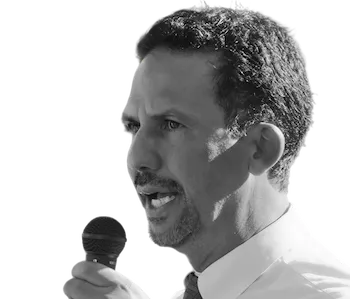
Ralph Armbruster-Sandoval
Ralph Armbruster-Sandoval is a professor in the Chicana and Chicano Studies Department at the University of California, Santa Barbara (UCSB). He is the author of two books, Globalization and Cross-Border Labor Solidarity in the Americas (Routledge, 2005) and Starving for Justice: Hunger Strikes, Spectacular Speech, and the Struggle for Dignity (University of Arizona Press, 2017), which is featured in his Rorotoko interview. He is currently working on a new book on the Chicana/o Movement in Los Angeles, post-1960s.
Pull this thread
The hunger strike was pioneered by force-fed suffragists, though the men who used it later are the ones lionized.
Know something the rest of us don't?
Most threads on Rorotoko begin with our invitation. Any thread can begin with a proposal: you write it with the same prompts every thread answers, and we review it.
Propose a thread →