
Ralph Armbruster-Sandoval
Starving for Justice
Starving for Justice examines three hunger strikes that took place in the 1990s on university campuses. Twenty years ago, Chicana/o, Latina/o students at UCLA, UC Santa Barbara, and Stanford stopped eating. Anti-immigrant measures like Proposition 187, mass incarceration, rising racial and economic inequality, globalization, budget cuts, and higher tuition costs morally outraged many. Having exhausted all other mechanisms for redressing their grievances, they embraced César Chávez’s perhaps mostly widely-known and controversial tactic for creating social change—the fast or “hunger strike.”
Chávez’s initial fast lasted twenty-five days in 1968. Before he died in April 1993, the iconic and sometimes autocratic labor and civil rights leader endorsed a long-standing demand to create a Chicano Studies Department at UCLA. Several days after his death, UCLA Chancellor Charles Young rejected this proposal, which Chicana/o students, faculty, and community members had been making for twenty-five years. Young’s decision, along with a nonviolent demonstration that resulted in nearly one hundred arrests, essentially lit the match that sparked a two-week long hunger strike at UCLA.Approximately one year later, Chicana/o, Latina/o students at UC Santa Barbara, the first UC campus to establish a Chicano Studies Department in 1970, went on a nine-day hunger strike. Besides calling for a stronger department with more faculty and a graduate program in Chicano Studies, these students demanded more resources for recruiting and retaining eligible Chicana/o high school students, banning table grapes from campus, creating a community center in nearby Isla Vista, and maintaining critical “safe spaces” where Chicana/o, Latina/o students had met for generations.
Just one day before this strike ended, another one emerged at Stanford. Unlike the other two public universities, this action took place on a highly prestigious private and generally quite conservative campus. When Provost Condoleezza Rice fired beloved and long-time Stanford administrator Cecilia Burciaga, Chicana/o, Latina/o students fought back. This action, along with other racist incidents on campus, sparked a three-day hunger strike that involved four Chicana students. Like their counterparts at UCLA and UCSB, these students called for creating a Chicano Studies Department, eliminating table grapes, and building a community center in East Palo Alto where many Latina/o campus service workers lived.
Editor: Judi Pajo

Starving for Justice
Ralph Armbruster-Sandoval Starving for Justice: Hunger Strikes, Spectacular Speech, and the Struggle for Dignity University of Arizona Press 320 pages, 6 x 9 inches ISBN 978 0816532582
Available here →September 18, 2017
20170918-armbruster-sandoval-ralph-on-book-starving-for-justice-hunger-1-1-1
In a nutshell
The rest of this thread
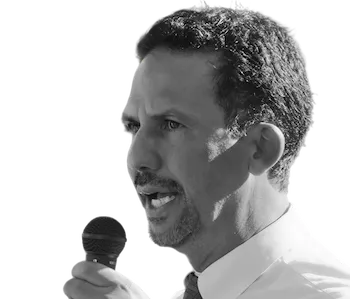
Ralph Armbruster-Sandoval
Ralph Armbruster-Sandoval is a professor in the Chicana and Chicano Studies Department at the University of California, Santa Barbara (UCSB). He is the author of two books, Globalization and Cross-Border Labor Solidarity in the Americas (Routledge, 2005) and Starving for Justice: Hunger Strikes, Spectacular Speech, and the Struggle for Dignity (University of Arizona Press, 2017), which is featured in his Rorotoko interview. He is currently working on a new book on the Chicana/o Movement in Los Angeles, post-1960s.
Pull this thread
The hunger strike was pioneered by women, though men get the credit.
Know something the rest of us don't?
Most threads on Rorotoko begin with our invitation. Any thread can begin with a proposal: you write it with the same prompts every thread answers, and we review it.
Propose a thread →