
Garrett L. Brandon
Autopsy of a Crime Lab
“That’s not my fingerprint, your honor,” said the defendant, after FBI experts reported a “100-percent identification.”
They were wrong.
The judge sided with the FBI and ordered the defendant, Brandon Mayfield detained as a material witness to terrorism. Mayfield knew that he was innocent. The FBI placed Mayfield under twenty-four-hour surveillance, and then arrested him. Mayfield’s lawyer counseled him that he could be detained indefinitely and might face the death penalty. Then, on May 20, 2004, the prosecutor stood up in court and told the judge something unexpected: that morning the government “received some information from Spain” which “casts some doubt on the identification.” Spanish authorities “determined completely” that the print belonged to a known Algerian terrorist. The FBI agreed to release Mayfield, dropped all charges a few days later, apologized, and a federal investigation followed.
We tend to all assume that evidence like fingerprint evidence is nearly infallible. Fingerprint comparisons are fallible, however, including because of a lack of objective standards and the influence of bias. Autopsy of a Crime Lab is the first book to catalog the sources of error and the faulty science behind a range of well-known forensic evidence, from fingerprints and firearms to algorithms.
This book poses questions that should be asked in courtrooms every day: Where are the studies that validate the basic premises of widely accepted techniques such as fingerprinting? How can experts testify with 100-percent certainty about a fingerprint, when there is no such thing as a 100-percent match? Where is the quality control in the laboratories and at the crime scenes? Should we so readily adopt powerful new technologies like facial recognition software and rapid DNA machines? And why have judges been so reluctant to consider the weaknesses of so many long-accepted methods?
Editor: Judi Pajo

Autopsy of a Crime Lab
Brandon L. Garrett Autopsy of a Crime Lab: Exposing the Flaws in Forensics University of California Press 264 pages, 6 x 9 inches ISBN 9780520389656
Available here →March 29, 2023
20171009-garrett-brandon-on-book-end-rope-killing-death-penalty-revive-criminal-justice-1-1-1
In a nutshell
The rest of this thread
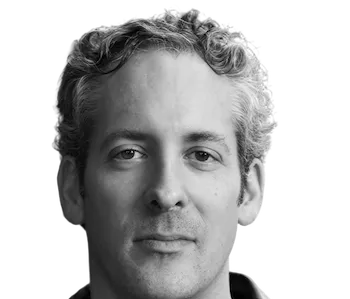
Garrett L. Brandon
Brandon L. Garrett is the Justice Thurgood Marshall Distinguished Professor of Law and White Burkett Miller Professor of Law and Public Affairs at the University of Virginia School of Law. His research and teaching interests include constitutional law, civil rights, criminal law and procedure, and habeas corpus. Garrett’s work, which includes several books and numerous articles, has been widely cited by courts, including the U.S. Supreme Court, lower federal courts, state supreme courts, and courts in other countries.
Pull this thread
Fingerprints, bitemarks, firearms and hair analysis have never had their founding premises validated, so an expert's 100-percent identification is unsupportable.
Know something the rest of us don't?
Most threads on Rorotoko begin with our invitation. Any thread can begin with a proposal: you write it with the same prompts every thread answers, and we review it.
Propose a thread →