
Garrett L. Brandon
Autopsy of a Crime Lab
Consider the 1982 “bite mark case” in Newport News, Virginia, that resulted in a murder conviction and death sentence for Keith Allen Harward, who was incarcerated for 33 years before being exonerated by DNA analysis. That story is told in Chapter 2 of the book. Readers will be shocked to hear how flawed forensic analysis leads to the conviction of innocent people and how little has changed in response to such wrongful convictions.
One dentist testified to “a very, very, very high degree of probability those teeth left that bite mark,” referring to Keith Harward’s teeth. Three times “very” must be a really good match. The dentist added, “My conclusion would be that with all medical certainty, I feel that the teeth represented by these models were the teeth that made these bite marks.”
“There are no differences?” asked the prosecutor. “I found absolutely no differences.”
Next, a second dentist testified that it was a “practical impossibility that someone else would have all [the] characteristics in combination.” Again, the prosecutor asked him to elaborate. He said that he had found “with reasonable scientific certainty, Mr. Harward caused the bite marks on the leg.” The prosecutor asked, “If you look hard enough, could you find someone with similar teeth, theoretically?” “I sincerely doubt that,” responded the dentist.
This testimony was incredibly forceful. The jury convicted Harward in September 1982 and sentenced him to death. After an appeal on a sentencing issue, in 1986, Harward was convicted at a second trial and sentenced to life without parole. By now, six different dentists had all said he made the bite marks.
By the early 2000’s, Harward had given up on appeals and post-conviction challenges. Another inmate, though, told him about the Innocence Project, and he sent a letter. The Innocence Project took his case and obtained access to crime scene material for DNA testing. The swabs taken from the victim, in multiple places, all shared a single male DNA profile. That profile belonged to another person, also a sailor on the USS Vinson. That man died in prison in Ohio over a decade before, while serving time for burglary and kidnapping. Harward was released in 2016, after thirty-three years in prison.
What went wrong? We now know that not only were the dentists making exaggerated claims, but they were flat-out wrong that all of those details matched Harward’s teeth. What are the chances that six dentists separately reached the same false conclusion? They may have all been biased by pressure from police, and by each other. Before his first trial, Harward had been arrested in an altercation with his girlfriend, where she grabbed him and he bit her arm. She dropped the charges. But the police and prosecutors clearly decided he was a “biter,” and that may have encouraged the dentists to change their story to fit what the prosecutors wanted: a conviction. The dentists convicted an innocent man and let a murderer go free. Yet, at the time, the “bite mark case” was celebrated as a triumph of forensics.
This book examines cases like this and the scientific concerns that underlie them. The National Academy of Sciences, in an important 2009 report, concluded that there needs to be more research “to confirm the fundamental basis for the science of bite mark comparison.” They said that it has “not been scientifically established” that human dentition is unique. The scientists who wrote an influential 2016 White House report concluded that since no valid studies of error rates have been done, bite mark techniques were simply not valid. Yet, to this day, judges have not stepped in to put an end to this troubling forensic testimony.
Back in 2009, the National Academy of Sciences concluded: “With the exception of nuclear DNA analysis … no forensic method has been rigorously shown to have the capacity to consistently, and with a high degree of certainty, demonstrate a connection between evidence and a specific individual or source.” The system implications of this critique of common forensic methodologies used by law enforcement have never been fully grappled with. As this book describes, there is a need for an overhaul of forensics to restore the faith placed in forensic analysis by the criminal justice system.
The National Academy of Sciences report warned that a “lack of independence” in crime labs can damage the objectivity of forensic science. Yet very few labs in the United States are independent. We need to regulate crime labs, to make them independent of law enforcement, with sound quality controls, and accountability to the public. This book describes examples where labs have made the leap to embrace scientific methods and accountability. Forensic science has received a wake-up call, due to wrongful convictions, lab audits and scandals, and scathing reports by the broader scientific community. Fortunately, there is now a clear a path to reform.
Editor: Judi Pajo

Autopsy of a Crime Lab
Brandon L. Garrett Autopsy of a Crime Lab: Exposing the Flaws in Forensics University of California Press 264 pages, 6 x 9 inches ISBN 9780520389656
Available here →March 29, 2023
20171009-garrett-brandon-on-book-end-rope-killing-death-penalty-revive-criminal-justice-3-1
A close-up
The rest of this thread
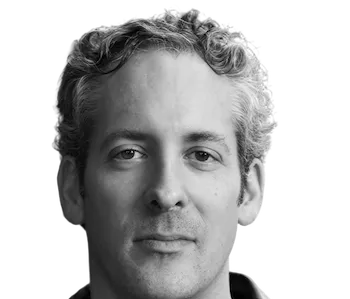
Garrett L. Brandon
Brandon L. Garrett is the Justice Thurgood Marshall Distinguished Professor of Law and White Burkett Miller Professor of Law and Public Affairs at the University of Virginia School of Law. His research and teaching interests include constitutional law, civil rights, criminal law and procedure, and habeas corpus. Garrett’s work, which includes several books and numerous articles, has been widely cited by courts, including the U.S. Supreme Court, lower federal courts, state supreme courts, and courts in other countries.
Pull this thread
The forensic techniques courts rely on daily have never had their founding premises validated.
Know something the rest of us don't?
Most threads on Rorotoko begin with our invitation. Any thread can begin with a proposal: you write it with the same prompts every thread answers, and we review it.
Propose a thread →