
Michael J. Ryan
A Taste for the Beautiful
I had always been struck by beauties in animals, whether that be the extravagantly colored fish in my childhood aquarium, the long-tailed ornamental pigeons we raised as teenagers, or the cacophony of frog choruses I was introduced to as a college student. Thus, it was no surprise that I seem destined to study animal behavior and evolution.
Each of the more than 5000 species of frogs has its own mating call that males sing endlessly during the breeding season to attract females. We know that the brain of females was tweaked by evolution so females find the calls of their own males more attractive than the calls of males of other species.
To my ear, however, even males of the same species sound a bit different from one another. Yes, they all sound like the same species but some males call faster, have deeper voices, or add acoustic ornaments to their calls. Does all of this variation mean anything to the females? By combining observations in tropical rainforests, experiments in which females were “asked” to tell us which calls they preferred, and neurobiological studies of the female brain, we began to understand that not only do males sound different from one another but the females’ aesthetic preferences for certain sounds drive the evolution of these sexual displays. We now know that the females’ aesthetic preferences drive the evolution of all kinds of sexual beauty in the animal kingdom.
We also now know that animals have “hidden preferences.” The sexual brain contains an “unexplored landscape” of such preferences. There are many traits that the female brain would find attractive but males have yet to evolve these traits. This is not idle speculation: I review numerous studies that detail how males evolve traits that match these previously hidden preferences. I then turn to our own species and discuss how various items from Barbie dolls to pornography result from our own search to uncover our own hidden preferences.
Not only can preferences be hidden, but when they are drawn out of hiding and begin to be expressed we see that they can also be quite fickle. I explain how biological clocks, as well as the closing time at bars, influence how females assess the attractiveness of potential mates. Peer pressure is another potent force promoting fickleness. Although we are all familiar with peer pressure, the reader will be surprised at the degree to which our social milieu can so quickly change our view of beauty, and how the same thing happens in fishes, birds, and mammals.
I apply this brain-based perspective to consider our own appreciation for “beauty” in a grander sense, as it applies beyond sex. Why is a rainbow “beautiful,” why does the mere refraction of light into bands of color inspire awe? Viewing beauty in all domains through the brain is bound to give us a better understanding of why beauty matters so much.
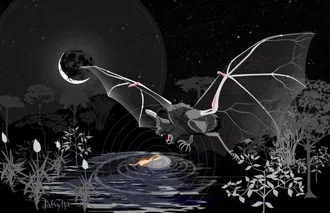
Illustration by Daymond Kyllo.
Editor: Judi Pajo

A Taste for the Beautiful
Michael J. Ryan A Taste for the Beautiful: The Evolution of Attraction Princeton University Press 208 pages, 6 x 9 1/4 inches ISBN 978 0691167268
Available here →January 8, 2018
20180108-ryan-michael-on-book-taste-beautiful-evolution-attraction-2-1
The wide angle
The rest of this thread
.webp)
Merlin Tuttle
Michael J. Ryan
Michael J. Ryan is the Clark Hubbs Regents Professor in Zoology at the University of Texas, Austin, and a Senior Research Associate at the Smithsonian Tropical Research Institute in Panama. Ryan received his Bachelor’s degree at Glassboro State College, his MS at Rutgers University, his PhD at Cornell University, and was a Miller Postdoctoral Fellow at the University of California, Berkeley. Ryan is a fellow of the American Academy of Arts and Sciences, the American Association for the Advancement of Science, the Guggenheim Foundation, and the Institute of Advanced Studies in Berlin.
Pull this thread
Sexual beauty is a property of the female brain judging it, not of the ornament.
Know something the rest of us don't?
Most threads on Rorotoko begin with our invitation. Any thread can begin with a proposal: you write it with the same prompts every thread answers, and we review it.
Propose a thread →