
Éloi Laurent
Measuring Tomorrow
I think the chapter on health is the perfect introduction for any reader interested in what goes on in our contemporary societies and wondering how this book would change her/his vision.
The most striking fact about the fate of humanity in the twentieth century concerns health, not growth: we have seen a greater improvement in human health in the second half of the twentieth century than at any moment in all human history, i.e., the last seven million years. Life expectancy skyrocketed between 1900 and 2000; a century described (and rightly so) as eminently violent and destructive. According to historical data gathered by the late Angus Maddison, during the twentieth century, life expectancy increased, on average, five times more than in the millennium that preceded it.
Moreover, simple metrics such as life expectancy or mortality rates tell us a whole different story about what has happened in a given country in the last thirty years than just growth. Take the US. The recent discovery by economists Angus Deaton and Anne Case of very high mortality rates among middle-aged whites in the United States, all the while GDP was growing, is proof that health status must be studied and measured regardless of a nation’s perceived wealth status. How is it that the richest country in the world in terms of average income per capita, a country that devotes more of its wealth to health than any other, comes close to last in the rankings with comparable countries in terms of health outcomes? Use different indicators, as I do in the chapter devoted to health, and the solution to the American health puzzle quickly becomes apparent: the ballooning of inefficient private spending has led to a system where the costs are huge compared to its performance.
The healthcare reform initiated by Barack Obama in 2009 can actually be explained by the desire to amend a health system in which the human and economic cost has become unbearable. If this reform was to be destroyed, the cost would no doubt skyrocket again.
I hope this book becomes an accelerator of the well-being and sustainability transition already under way. This transition received international recognition in September 2015, when the United Nations embraced a “sustainable development goals” agenda in which GDP growth plays only a marginal role. In the US, scores of scholars and (some) policy makers increasingly realize the importance of paying attention to inequality rather than just growth. China’s leaders acknowledge that sustainability is a much better policy target than explosive economic expansion. Pope Francis is also a force of change when he writes in the encyclical Laudato si, published in June 2015, “[w]e are faced not with two separate crises, one environmental and the other social, but rather with one complex crisis which is both social and environmental,” and urges us to abandon growth as a collective horizon. Influential newspapers and magazines such as The Economist and The New York Times recently ran articles arguing that GDP should be dropped or at least complemented. Local transitions are happening all over the planet, from Copenhagen to Baltimore, Chinese provinces to Indian states. But we need to change our behaviors and attitudes faster, because the great race of the 21st century between human intelligence and human greed is currently being lost. Measuring well-being, resilience, and sustainability has the power to change the way we see the world, what we do in it, and what we do to it.
Editor: Judi Pajo

Measuring Tomorrow
Éloi Laurent Measuring Tomorrow: Accounting for Well-Being, Resilience, and Sustainability in the Twenty-First Century Princeton University Press 240 pages, 6 x 9 1/4 inches ISBN 978 0691170695
Available here →January 29, 2018
20180129-laurent-eloi-on-book-measuring-tomorrow-accounting-well-being-3-1
A close-up
The rest of this thread
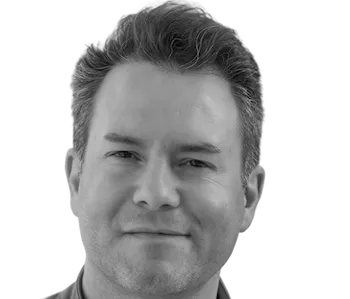
Éloi Laurent
Éloi Laurent is a Senior Economist at OFCE (Sciences Po Centre for Economic Research, Paris) and Professor in the School of Management and Innovation in Sciences Po. A macroeconomist by training, his current work focuses on environmental sustainability, well-being, and social ecology. He is the author or editor of twelve books (five translated into several languages), four governmental reports, and a hundred articles published in French and international journals. He has a background in policy making as a former parliamentary assistant in the National Assembly (Paris) and aide to the French Prime Minister and an extensive international academic experience, most recently as a Visiting Professor at the University of Montreal and Visiting Scholar and Visiting Professor at Harvard University. He currently teaches new indicators of well-being, resilience, and sustainability and ecological economics at Stanford University and Sciences Po.
Pull this thread
GDP's relevance is actively declining, and well-being, resilience and sustainability should replace growth as the collective horizon.
Know something the rest of us don't?
Most threads on Rorotoko begin with our invitation. Any thread can begin with a proposal: you write it with the same prompts every thread answers, and we review it.
Propose a thread →