
Dean Keith Simonton
The Genius Checklist
Three points need to be made about how this book covers the subject. First, although the overview is restricted to creative genius—and thus ignores genius in politics, war, and religion—the coverage of creativity itself is very broad. Virtually all domains of creative achievement are treated one way or another, from the most precise mathematical sciences to the most emotive forms of expressive poetry. This breadth is illustrated by the creative geniuses whose lives and works are drawn upon for illustrations that permeate the entire book: Nicolaus Copernicus, Isaac Newton, Marie Curie, Charles Darwin, William James, René Descartes, Miguel de Cervantes, Fyodor Dostoyevsky, Sylvia Plath, Ludwig van Beethoven, Hildegard von Bingen, Michelangelo, Pablo Picasso, Grandma Moses, Orson Welles, Thomas Edison, Steve Jobs—and dozens more! If that list seems to have overlooked a personal favorite genius, please check the book’s index before emailing me to complain.
Second, although I’m a research psychologist by training and profession, the coverage of creative genius is truly interdisciplinary in scope.
Every science that has contributed to the science of genius has its say. So, besides psychology, the contributions of psychiatry, anthropology, sociology, and economics are appropriately presented. In addition, psychology itself is represented by its diverse subdisciplines, including cognitive, personality, developmental, and social. This inclusiveness is absolutely required in any attempt to capture the full complexity of this phenomenon. As in the ancient proverb of the blind Brahmins and the elephant, creative genius is the elephant and the Brahmins are the diverse disciplines and subdisciplines—each appraising a distinct aspect of the beast. Here’s what all the Brahmins told me.
Third, by framing the science of genius in terms of nine paradoxes, I can more easily maintain a balanced representation of the findings. Too often trade books, and monographs as well, adopt one-sided takes on complicated issues, particularly when those issues are highly controversial. An archetypal instance is the enduring “nature-nurture” issue: Are human beings the product of their genes or their environments? This either-or controversy is manifested in the classic question of whether genius is born or made. Tip 3 then advises “Start out as a zygote with super genes / Carefully pick your home and school!” Of course, this advice is ridiculous. But it also underpins a conversation about how every creative genius is inevitably an intricate construction of both genetic endowment and environmental influences. That’s one reason why they’re so rare!
It should be obvious by now that my treatment of creative genius is extremely broad.
That breath is nothing new. It reflects a wide-ranging research program that I began in the mid-1970s. That research includes studies of historic geniuses in almost every imaginable domain of human achievement: politics, war, technology, science, philosophy, literature, music, and the visual arts. Furthermore, my work has been published in the professional journals of several disciplines besides various subdisciplines of psychology, namely, education, neuroscience, psychiatry, anthropology, sociology, political science, history, literary studies, physics, engineering, and statistics. Indeed, I’ve had broad interests ever since childhood!
Editor: Judi Pajo

The Genius Checklist
Dean Keith Simonton The Genius Checklist: Nine Paradoxical Tips on How You Can Become a Creative Genius MIT Press 336 pages, 5 3/8 x 8 inches ISBN 978 0262038119
Available here →April 10, 2019
20190410-simonton-dean-on-book-genius-checklist-nine-paradoxical-tips-2-1
The wide angle
The rest of this thread
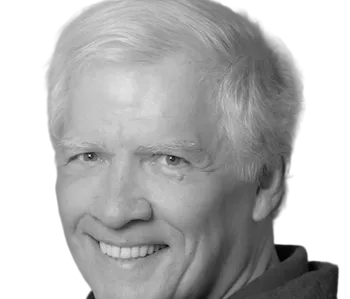
Dean Keith Simonton
Dean Keith Simonton (Harvard Ph.D. 1975) is now Distinguished Professor Emeritus of Psychology at the University of California, Davis. His more than 560 publications apply quantitative analyses to historical and biographical data regarding genius, creativity, and leadership. Honors include the William James Book Award, the George A. Miller Outstanding Article Award, the Theoretical Innovation Prize in Personality and Social Psychology, the Sir Francis Galton Award for Outstanding Contributions to the Study of Creativity, the Rudolf Arnheim Award for Outstanding Contributions to Psychology and the Arts, the E. Paul Torrance Award for Creativity, and three Mensa Awards for Excellence in Research.
Pull this thread
Every single-factor answer to genius is wrong on its own, because each is half of a paradox.
Know something the rest of us don't?
Most threads on Rorotoko begin with our invitation. Any thread can begin with a proposal: you write it with the same prompts every thread answers, and we review it.
Propose a thread →