
William L. Silber
The Story of Silver
The most important practical lesson of the book comes from Franklin Delano Roosevelt’s attempt to use silver as a political weapon to achieve domestic objectives while ignoring international consequences.
During the Great Depression, after the price of silver hit a record low of 24¢ an ounce, Democratic Senator Key Pittman of Nevada, the powerful chairman of the Senate Foreign Relations Committee, urged President Roosevelt to restore the white metal’s full monetary status. In exchange, Pittman promised the support of fourteen senators from western mining states for Roosevelt’s controversial New Deal legislation. FDR agreed and responded with a series of purchase programs for silver by the U.S. Treasury that ultimately doubled the price of the white metal.
The higher price attracted silver from the rest of the world, especially from China, whose currency was backed by the precious metal, and ultimately forced China to abandon the silver standard when that country was most vulnerable. It was 1935 and China, led by American ally Chiang Kai-shek, faced an internal threat from Mao Tse-tung’s communist insurgents, as well as an external threat from Imperial Japan. Roosevelt’s Treasury secretary, Henry Morgenthau, worried that China’s insecure government, weak economy, and susceptibility to Japanese aggression made her especially vulnerable to the dislocations arising from American silver policy. Morgenthau was right to worry. Roosevelt’s pro-silver program to please western senators helped the Japanese military subjugate a weakened China and boosted Japan’s march towards World War II, demonstrating the danger of formulating domestic policy without considering international consequences.
It is a cautionary lesson for putting America First today, especially since the fallout from such narrow-minded policymaking may not materialize until it is too late, just like in the 1930s.
Editor: Judi Pajo
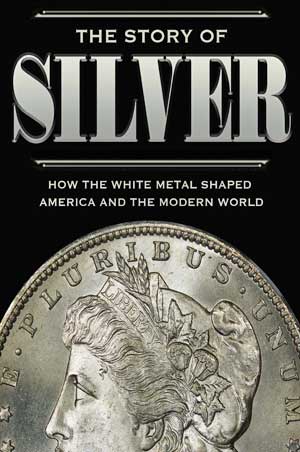
The Story of Silver
William L. Silber The Story of Silver: How the White Metal Shaped America and the Modern World Princeton University Press 328 pages, 6 1/8 x 9 1/4 inches ISBN 978 0691175386
Available here →May 8, 2019
20190508-silber-william-on-book-story-silver-how-white-metal-shaped-america-2-1
The wide angle
The rest of this thread
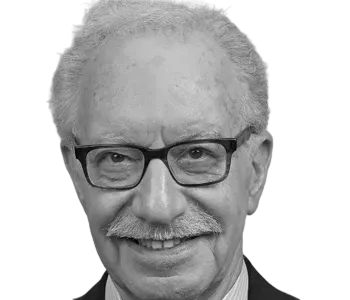
William L. Silber
William L. Silber is the Marcus Nadler Professor of Finance and Economics at the Stern School of Business, New York University. He was voted Professor of the Year by MBA students in 1990, 1997, and 2018, and was awarded NYU's Distinguished Teaching Medal in 1999. In the past he managed an investment portfolio for Odyssey Partners, was a Senior Vice President, Trading Strategy, at Lehman Brothers, was a Senior Economist with the President's Council of Economic Advisors, and was a member of the Economic Advisory Panel of the Federal Reserve Bank of New York. He holds an M.A. (1965) and Ph.D. (1966) from Princeton University and is a graduate of Yeshiva College (1963). He has written eight books, including a biography of former Federal Reserve Chairman, Paul A. Volcker, entitled VOLCKER: The Triumph of Persistence (Bloomsbury, 2012). The biography was named the China Business News 2013 Financial Book of the Year, was a finalist in the Goldman Sachs and Financial Times 2012 Business Book of the Year Award, was named “One of the Best Business Books of 2012” by Bloomberg Businessweek, and was listed as “One of 2012’s Great Leadership Books” by the Washington Post.
Pull this thread
Roosevelt's silver purchases drained China of silver, forced it off the silver standard in 1935, and helped Japan subjugate it.
Know something the rest of us don't?
Most threads on Rorotoko begin with our invitation. Any thread can begin with a proposal: you write it with the same prompts every thread answers, and we review it.
Propose a thread →