
Lesley A. Sharp
Animal Ethos
I’ve long been interested in the moral underpinnings of human life on collective (shared) and personal (private) levels of experience. Indeed, the “ethics” of everyday life—or what Gregory Bateson referenced as ethos—is a foundational concern within anthropology. The discipline boasts robust analytic and methodological approaches to the inherent messiness of human life, and over the past two decades I have investigated how a range of involved parties think through and respond to the moral challenges of human organ transfer, highly experimental visions of organ replacement, and, most recently, animal science.
These are complex, specialized, and hierarchical worlds. Much of my work is driven by the premise that answers lie not solely with a few elite specialists (for instance, surgeons, who perform transplant surgeries, or the principle investigators in labs), but with a host of still other—though often unrecognized—experts. Within laboratories, they range from postdoctoral students to undergraduate interns, lab-based veterinarians and veterinary assistants, and lab animal caretakers to the technicians who clean animals’ cages. All parties are engaged in the daily moral project of animal science, and Animal Ethos is an effort to disentangle a range of behaviors, emotions, and responses to the everyday aspects of human-animal encounters in such realms.
For example, as a medical anthropologist, I am especially interested in how codified rules regarding “animal welfare,” which spans such key domains as animal housing practices, feeding procedures, and breeding, culling, and killing, translate into daily regimens of “care” in domains where interspecies encounters are inescapable. The volume Care in Practice: On Tinkering in Clinics, Homes and Farms (2010, Transcript-Verlag) edited by Annemarie Mol, Ingunn Moser, and Jeanette Pols, has proved revelatory because of the editors’ insistence that “care” be employed analytically and across species. I’m especially interested in the emotional consequences of working with animals on a daily basis, or what I reference as the “sentimental structures” of affective laboratory labor.
Although lab science is rife with taboos that prohibit emotional attachment (for instance, in many labs, animals are deliberately numbered and not named in efforts to objectify them), labs are replete with eclectic practices that defy these taboos and that signify emotional attachment not as aberrant but widespread, ranging from the subversive to the mundane. Such practices enable one to witness an unfolding of how moral thought is put into action, and thereby transform the ethos of knowledge production in experimental work. I emphasize here that this is a creative domain marked by serendipitous responses that exemplify efforts to “think outside the box.”
In some instances, these efforts can prove transformative to animal well-being, looping back to reconfirm one’s personal moral core; other parties openly defy regulations, as evidenced in ongoing efforts either to memorialize dead animals or to rescue still other creatures from euthanasia by adopting them out to the public; at still other moments, if we attend to the moral histories that inform animal welfare, we encounter fascinating and, sometimes, peculiar efforts to enrich animals’ lives, perhaps best illustrated by the widespread insistence that non-human primates, like humans, are avid television viewers.
Editor: Judi Pajo

Animal Ethos
Lesley A. Sharp Animal Ethos: The Morality of Human-Animal Encounters in Experimental Lab Science University of California Press 312 pages, 6 x 9 inches ISBN 978 0520299252
Available here →May 15, 2019
20190515-sharp-lesley-on-book-animal-ethos-morality-human-animal-encounters-2-1
The wide angle
The rest of this thread
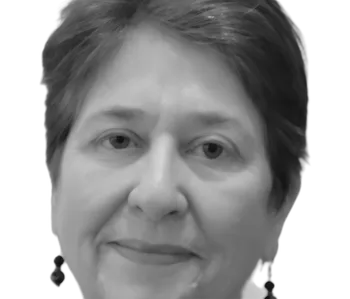
Lesley A. Sharp
Lesley Sharp received her doctorate in medical anthropology from the joint program of the University of California, Berkeley, and the University of San Francisco. She is the author of six monographs: her earliest work addresses indigenous healing and mortuary practices in Madagascar; later work investigates the transformative, sociomoral dimensions of human organ transfer and associated domains of highly experimental research; and her current work is on the moral underpinnings of lab animal science. Sharp holds the Barbara Chamberlain & Helen Chamberlain Josefsberg ’30 Professorship in Anthropology at Barnard College; she is also a Senior Research Scientist in Sociomedical Sciences at the Mailman School of Public Health, Columbia University, and a Fellow of the Center for Animals and Public Policy of the Cummings School of Veterinary Medicine, Tufts University.
Pull this thread
Asking whether animal science is ethical misses its moral life, which shows in how lab workers talk about animals.
Know something the rest of us don't?
Most threads on Rorotoko begin with our invitation. Any thread can begin with a proposal: you write it with the same prompts every thread answers, and we review it.
Propose a thread →