
Lesley A. Sharp
Animal Ethos
For a reader who is most interested in browsing the book’s contents, there are several points of entry. For those unfamiliar with my work, they’d probably find the Introduction (“Moral Entanglements of Experimental Animal Science”) informative (although, perhaps, dry!) reading, because it sets up key theoretical frameworks that inform the rest of the book. For an account of the curious history of television in labs, I recommend Chapter 2, “Why Do Monkeys Watch TV?” The most difficult chapter for me to write was the third one, “The Lives and Deaths of Laboratory Animals,” which stands alone as an “An Interlude” in the middle of the book. This chapter takes as its premise the inevitability of animal death (widely referred to as “sacrifice” in lab science) because the vast majority of research protocols require that research animals be killed once their involvement in a project comes to an end. Chapter 5, “The Animal Commons,” is my own effort to think outside the box by considering how the prohibition on animal sharing might be altered so as to alter both the ethical and moral premises and consequences of experimentation.
My personal favorites, though, are Chapters 1 (“The Sentimental Structures of Laboratory Life”) and 4 (“Science and Salvation”), because it’s here that I wrestle with the interspecies complexities of intimacy, affect, and emotion. Chapter 4 also allowed me to address mourning and memorial practices; those familiar with my previous research know of my longstanding interest in end-of-life issues and mortuary practices.
One can never predict how one’s work will be received. What has intrigued me thus far, in the few months since the release of Animal Ethos, is the interest it has sparked among lab-based personnel, especially those whose day-to-day work concerns lab animal care and welfare. I have received requests to participate in discussions and initiatives about how to think creatively about lab practices as well as how to speak publicly about realms of research, and associated daily work, that involved parties assume are highly stigmatized.More specifically, researchers and other lab personnel are reluctant to tell others—including close friends and family—about any work that involves animal experimentation.
Their interest and invitations stand in stark contrast to my earlier work on organ transplantation: as I soon learned there, biomedical personnel express faint interest in reading analyses of their professional work, whereas involved lay parties, such as the recipients of transplanted organs and the kin of deceased donors, are avid readers, including anthropological studies of their lives.
On yet another front, I’ve been surprised by the responses I’ve encountered among members of my own profession: whereas successful anthropological field research is based on the premise of cultural relativism, a project that addresses the lives and deaths of research animals exposes a fragile line demarcating where one’s own moral principles can eclipse a professional ability to suspend one’s judgment of a specialized social domain.
In several instances I’ve faced the perplexing question, “why don’t you tell us how to think?” My purpose, however, is not to craft others’ moral frameworks but, instead, to open up a world that is troubled on a daily basis by the messiness of the moral. The lesson here is that animals—especially research animals—inspire highly emotional responses in many of us, regardless of one’s training and profession.
Editor: Judi Pajo

Animal Ethos
Lesley A. Sharp Animal Ethos: The Morality of Human-Animal Encounters in Experimental Lab Science University of California Press312 pages, 6 x 9 inches ISBN 978 0520299252
Available here →May 15, 2019
20190515-sharp-lesley-on-book-animal-ethos-morality-human-animal-encounters-3-1
A close-up
The rest of this thread
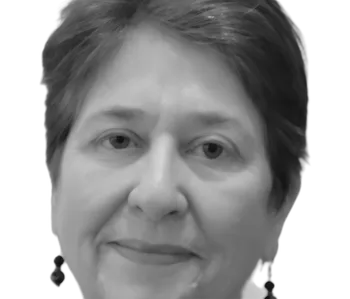
Lesley A. Sharp
Lesley Sharp received her doctorate in medical anthropology from the joint program of the University of California, Berkeley, and the University of San Francisco. She is the author of six monographs: her earliest work addresses indigenous healing and mortuary practices in Madagascar; later work investigates the transformative, sociomoral dimensions of human organ transfer and associated domains of highly experimental research; and her current work is on the moral underpinnings of lab animal science. Sharp holds the Barbara Chamberlain & Helen Chamberlain Josefsberg ’30 Professorship in Anthropology at Barnard College; she is also a Senior Research Scientist in Sociomedical Sciences at the Mailman School of Public Health, Columbia University, and a Fellow of the Center for Animals and Public Policy of the Cummings School of Veterinary Medicine, Tufts University.
Pull this thread
Asking whether animal science is ethical misses its moral life, which shows in how lab workers talk about animals.
Know something the rest of us don't?
Most threads on Rorotoko begin with our invitation. Any thread can begin with a proposal: you write it with the same prompts every thread answers, and we review it.
Propose a thread →