
André Millard
Equipping James Bond
For the average movie goer who thinks of James Bond as the secret agent with the gadgets, I would suggest Chapter 11 “Gadgets” This chapter works through Bond’s equipment film by film, filling in the development of each technology and how its use in the film compared with the reality of espionage. This chapter also tells the story of how the producers of the films managed to acquire the latest devices used by the armed forces and secret services. Bond had many fans among the world’s intelligence services and when agents were not showing some of their newest toys to the film’s producers, they were inquiring about obtaining some of the gadgets they had noticed in the latest 007 film.
The tiny rebreather device used in Thunderball which allows Bond to swim underwater for long periods brought in many enquiries from the world’s intelligence services (even though it was simply put together by the film’s prop department and could never work).
Both Russian and American intelligence officers reported that during the heyday of Bondmania in the 1960s and 1970s their operatives often asked them “Why don’t we have all those neat toys and technical gadgets that Q makes for Bond?” This book shows that art can influence life.
For the hard-core Bond fan—the person who not only sees all the films but also buys the merchandise—Chapter 16 “Keeping Up With the Times” should be required reading.
This chapter follows the commercialization of the James Bond character into a consumer brand and explains how the Bond films became a potent force in advertising high-end luxury goods. Some of Bond’s critics have called his adventures a wealth fantasy. Fleming included the brand names of what he called “quality products” in the Bond books because he wanted his hero to have the best of everything, from the soap he uses to the car he drives. As the Finlandia vodka advert pointed out “James Bond is only associated with the best things in life, the best cars, the best women, and the best vodka.”
As the films became more popular any product showcased in Bond’s hands enjoyed a huge surge in sales. Fleming told Sean Connery that the product placements were “nothing but padding” but now they are essential both to the Bond formula and to the financing of the films. With budgets of each film reaching up to $300 million, the financial contributions of the brand partners are essential. In the latter part of the twentieth century the typical Bond villain moved from the bad guys of World War 2 and Cold War to corporate criminals such as successful industrialists like Hugo Drax (Moonraker) and media moguls like Elliot Carver (Tomorrow Never Dies). It is ironic that the world’s most famous secret agent has become a highly paid huckster for corporate interests.
Taken as a whole, the Bond film franchise has provided a primer in the technology of weapons of mass destruction. The films faithfully followed the development of dangerous technologies, from conventional atomic bombs and every declension of missiles through to bacterial and chemical warfare and finally to “the little man with the heavy suitcase” in Fleming’s words: “The most deadly saboteur in history.”
In following the development of Bond’s gadgets and the technology that underlies them, this book examines the boundary between fantasy and reality in the equipment of espionage. Bond’s amazing feats of derring-do can only be carried out by super heroes with the assistance of computer-generated graphics. Yet such is the potency of the Bond character that any gadget he uses is given the air of technological authenticity no matter how outrageously it defies logic and science.
The producers of the films claimed that Bond’s gadgets represented “science fact not science fiction,” and in some cases they presented futuristic technology, from GPS to the Space Shuttle, in Bond’s hands well before these wonders became part of our daily lives.
So it would be premature to dismiss all of Bond’s gadgets as fantasies when some of the more futuristic technology presented in the films, such as the ubiquitous smart phone, are now a reality.
Bond’s equipment often represents the future of consumer technologies. Video-recording and smart phones were in his hands long before they became commercially available. Similarly, he also uses and faces the most advanced weapons. The producers of the Bond films can rightly claim to have introduced the laser to global audiences and have educated millions of people in the development of this technology as a weapon.
At the same time that Bond enjoys the equipment of the future he must also face the threat of this technology in the wrong hands. The Bond villain must change with the times, from the Hitler-like madmen who want to rule the world of the 1960s through to terrorists and cyber hackers of the twenty-first century. Each decade brings a different threat, and it is always embedded in new technology.
In this way the Bond canon of books and films act as a mirror to our anxieties about new technology, articulating the threat—whether it is the menace of artificial intelligence or the remote control for Bond’s BMW that befuddles Q in Tomorrow Never Dies—that Bond will meet and ultimately defeat. The fight against evil has moved into the internet and cyberspace, against malicious hackers and digitally enhanced villain.
Bond’s missions always bring him face to face with a world brought to the edge of extinction by dangerous new technology. And they always climax with him triumphing over the machine. That is why the films obligatory ending is always the destruction of the villains’ lair, along with the equipment inside it. The key to Bond’s enduring appeal is that he maintains the ingenuity and resilience of the human race while wielding the latest gadgets that technology can offer. The gadgets give him an edge, but the ultimate triumph is of the resourceful individual using his wits rather than a photogenic piece of branded equipment.
Thus in the last chapter of the book, or the last reel of the film, Bond saves the world with a screw driver or by one finger typing a command to change the course of deadly missile.
We the audience are certain that our hero will thwart the cunning plans of the villain and save the world. And when he does, we are comforted that human agency will no doubt triumph over the machine.
So this book provides an explanation for our sixty-year love affair with a fictional character. James Bond reassures us that humankind will always find a way to negate the threat of new technology and return to the status quo. No matter how great the menace of futuristic technology, we know that in the end tranquility will be restored by a hero created out of the experiences and values of Great Britain in the 1940s.
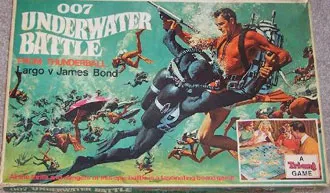
James Bond Board Game
Editor: Judi Pajo

Equipping James Bond
André Millard Equipping James Bond: Guns, Gadgets, and Technological Enthusiasm Johns Hopkins University Press 224 pages, 6 x 9 inches ISBN 978 1421426648
Available here →July 24, 2019
20190724-millard-andre-on-book-equipping-james-bond-guns-gadgets-3-1
A close-up
The rest of this thread

André Millard
Andre Millard is a Professor of History at the University of Alabama in Birmingham. His academic interests are in the history of technology and its relationship with popular culture. Millard was an editor of the Thomas A. Edison Papers for many years and has published books about Edison the inventor and businessman, and on some of the most influential inventions, such as recorded sound and motion pictures. Millard is also interested in the popular culture of the 1960s, especially the electric guitar and Beatlemania.
Pull this thread
The gadgets explain Bond's sixty-year survival, since every film shows a resourceful individual beating dangerous technology in criminal hands.
Know something the rest of us don't?
Most threads on Rorotoko begin with our invitation. Any thread can begin with a proposal: you write it with the same prompts every thread answers, and we review it.
Propose a thread →