
Françoise Baylis
Altered Inheritance
On December 30, 2019, the Chinese scientist Jiankui He was sentenced to three years in jail and fined three million yuan. His crime? Creating the world’s first CRISPR-edited babies. My book Altered Inheritance offers an ethical perspective on the science and politics leading up to the births of these children.CRISPR (pronounced “crisper”) is the acronym for clustered regularly interspaced short palindromic repeats. This new technology allows scientists to remove, add or alter DNA in living organisms. Scientists are excited about this technology because it is faster, more accurate, more efficient and cheaper than previous genome editing technologies.
With this technology scientists can make genetic changes to our somatic cells (changes that die with us), or changes to our germ cells (changes that we pass on to our children). Somatic cells are all of our non-reproductive cells and changes to these cells are not heritable – meaning they will not be passed down through the generations. Germ cells are our reproductive cells – gametes (egg and sperm) and the cells that make gametes. Changes to these cells are heritable. As well, heritable genome editing can involve the use of early stage embryos.
Both types of human genome editing can be used for health-related reasons (treatment or prevention) or non-health related reasons. The genetic changes could be for treating patients, preventing disease transmission, or pursuing various enhancements.
In exploring questions about the ethics and governance of human genome editing, I discuss the potential benefits, harms and wrongs of this technology. In this discussion I pay attention to the unique potential harms to women research participants. I then invite the reader to consider: the merits of ‘slow science’, which is about taking time to reflect on the BIG questions; the role of experts in policy making; the value of a global moratorium on heritable human genome editing; and the importance of broad societal consensus in deciding where to from here.
In my view, the human genome belongs to all of us and we should all have a say in whether, and if so how, to pursue genome editing technology. All of us – scientists, science funders, civil society (including non-governmental and not-for-profit organizations, community groups, indigenous groups, charitable organizations, and faith-based organizations), interested citizens who are not formally aligned with any interest group, artists, and biohackers – need to think carefully about “what kind of world we want to live in” and whether human genome editing technology can help us to build that world.
Altered Inheritance is a call to action. A call for scientists to slow down and exercise their moral imagination. A call for all of us to take collective responsibility for our biological and social future.
Editor: Judi Pajo

Altered Inheritance
Françoise Baylis Altered Inheritance: CRISPR and the Ethics of Human Genome Editing Harvard University Press 304 pages, 5 1/2 x 8 1/4 inches ISBN 978 0674976719
Available here →February 5, 2020
20200205-baylis-francoise-on-book-altered-inheritance-crispr-ethics-human-1-1-1
In a nutshell
The rest of this thread
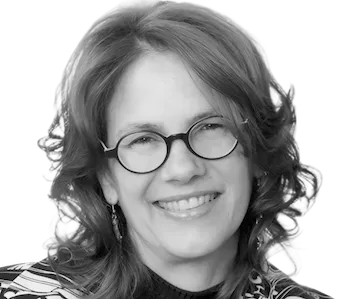
Françoise Baylis
Françoise Baylis is University Research Professor at Dalhousie University. She is a philosopher whose innovative work in bioethics has stretched the very boundaries of the field. She is a member of the Order of Canada and the Order of Nova Scotia, as well as a Fellow of the Royal Society of Canada and a Fellow of the Canadian Academy of Health Sciences. Baylis was one of the organizers of, and a key participant in, the 2015 International Summit on Human Gene Editing. She is a member of the WHO Expert Advisory Committee on Developing Global Standards for Governance and Oversight of Human Genome Editing.
Pull this thread
The human genome is the common heritage of humanity, so heritable editing is too important to leave to scientists.
Know something the rest of us don't?
Most threads on Rorotoko begin with our invitation. Any thread can begin with a proposal: you write it with the same prompts every thread answers, and we review it.
Propose a thread →