
Françoise Baylis
Altered Inheritance
If someone were fanning through the pages of this book at a local bookstore or library, I would encourage them to peruse the first chapter “Targeting a Single Gene: Huntington’s Disease” which is focused on somatic cell genome editing (non-heritable genome editing) and then to look at chapter three, “Babies by Design,” which is focused on heritable germline genome editing.
The first chapter tells the story of Boston police officer Joe O’Brien, his diagnosis of Huntington’s Disease, and the subsequent knowledge that two of his four adult children have inherited the disease. Typically, people die of this progressive brain disorder within fifteen to twenty years after the onset of symptoms. In the coming years, all three will experience involuntary jerking and twitching movements, emotional difficulties, disorganized thinking, problems with walking, coordination, and balance, as well as cognitive and emotional impairment, followed by an early death.
This fictional story, which is told in a novel written by Lisa Genova, is followed by the true story of Jane Mervar. Her husband (Karl Mukka) and daughter (Karli Mukka) have died of Huntington’s Disease. She is left to care for her daughters, Jacey and Erica, both of whom have juvenile Huntington’s Disease. The point of these two stories is to make clear that there are important potential benefits with somatic cell genome editing, if we ever learn to use this technology to treat patients afflicted with serious debilitating, life-threatening diseases.
Chapter three, “Babies by Design” is not about treating patients, it is about genetically manipulating embryos and gametes to have the children we desire. This chapter reviews the history of assisted human reproduction and the early days of genetic selection. It explains how we are moving from “selection” to “design.”
The first genome-edited babies were twins born in October 2018. Their birth became public knowledge in late November 2018. Jiankui He, the architect of the experiment, thought it would be desirable for children to have immunity to HIV infection. He enrolled couples where the male partner was HIV positive and he genetically modified their embryos in vitro to confer resistance to HIV. The experiment involved making modifications to the CCR5 gene. In 2019, a third child was born of this experiment.
Also in 2019, a Russian scientist by the name of Denis Rebrikov announced that he intended to follow in Jiankui He’s footsteps. He planned to do the research with couples where the woman was HIV positive. When he could not find HIV positive women who wanted to get pregnant and to participate in his proposed research, he changed targets. He announced an interest in modifying the GJB2 gene responsible for a type of hereditary deafness.
Efforts to design future generations raise challenging ethical questions. Who decides which traits are desirable and should be introduced, and which traits are undesirable and should be eliminated? At the embryo stage, what is the difference between eliminating traits and eliminating people with those traits (which begins to look like eugenics)? Why expose possible future children to unknown harm from heritable human genome editing by manipulating them at the embryonic stage when these beings do not have to be made, manipulated, and then brought into existence?
If these sorts of questions are of interest, the reader will enjoy chapter three and will be able to think critically about the ethical issues raised in relation to the use of this same technology in somatic cells to treat patients who are suffering.
Should we be excited, cautious, or fearful about designing future children? Should we be aggressively trying to take over the human evolutionary story by genetically modifying our descendants? Is it reasonable to think that designing the (near) perfect human is a project we should embrace? Or, do we need to introduce strong global regulations to prohibit, or seriously limit, efforts to control the biology of future generations?
We need time to think carefully and critically about such questions. More precisely, we need “time to consult, to deliberate, to question, to investigate, to interpret, and to respond.” For this, we need slow science.
But slow science is a challenge insofar as it is clearly in tension with dominant practices in science where there is increasing competition and corporatization in response to the political and commercial drive to build knowledge economies. But at what cost do we keep racing about without knowing or understanding where we are racing to? In November 2018, after the surprise revelation that genome-edited twins had been born, the Organizers of the Second International Summit on Human Genome Editing called for a translational pathway forward — a roadmap from basic research in the laboratory to future research in humans. But do we know which direction is forward? And, who decides?
Though I worry about some of the negative consequences of rampant populism, my answer to this question is “all of us.” This book aims to improve science literacy and ethics literacy so as to broaden the conversation. The longer-term goal is to shift the power dynamics so that the important questions we need to ask and answer about our future are not the purview of select elites.
If we are not able to make this shift, dire predictions of a future bifurcated world may well come to pass – assuming we are able to effectively tackle the current problems of climate change and still inhabit this planet. Consider, for example, the future depicted in the 1997 film GATTACA where there are ‘valids’ (persons who are genetically enhanced) and ‘in-valids’ (persons who are naturally born). Allowing those with economic, social, political, and geographical privilege to entrench their privilege in their DNA — thereby increasing the genetic gap between the ‘haves’ and the ‘have-nots’ — cannot be a good thing, anymore that the current and ever-increasing economic divide between the 1% and the masses. Ultimately these kinds of divides do not bode well for any of us.
Editor: Judi Pajo

Altered Inheritance
Françoise Baylis Altered Inheritance: CRISPR and the Ethics of Human Genome Editing Harvard University Press 304 pages, 5 1/2 x 8 1/4 inches ISBN 978 0674976719
Available here →February 5, 2020
20200205-baylis-francoise-on-book-altered-inheritance-crispr-ethics-human-3-1
A close-up
The rest of this thread
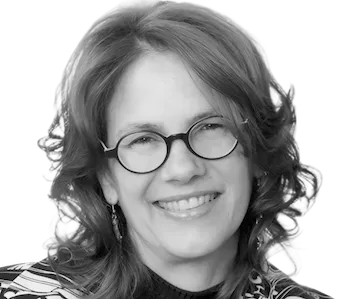
Françoise Baylis
Françoise Baylis is University Research Professor at Dalhousie University. She is a philosopher whose innovative work in bioethics has stretched the very boundaries of the field. She is a member of the Order of Canada and the Order of Nova Scotia, as well as a Fellow of the Royal Society of Canada and a Fellow of the Canadian Academy of Health Sciences. Baylis was one of the organizers of, and a key participant in, the 2015 International Summit on Human Gene Editing. She is a member of the WHO Expert Advisory Committee on Developing Global Standards for Governance and Oversight of Human Genome Editing.
Pull this thread
The human genome belongs to all of humanity, not to scientists.
Know something the rest of us don't?
Most threads on Rorotoko begin with our invitation. Any thread can begin with a proposal: you write it with the same prompts every thread answers, and we review it.
Propose a thread →