
Lucas Richert
Break On Through
As we reflect on the #MeToo era, Weinstein, Epstein, and other deeply unseemly characters, it’s important to note that women’s issues and mental health were embedded in radical mental medicine over 50 years ago. Feminism and sexual politics in the late 1960s and 1970s were a vital part of the way that people reassessed gender-based hierarchies in the mental health establishment. As we look back, I think that’s significant.
Here’s just a few examples. First off, psychoanalysis and psychopharmacological interventions were criticized strongly; both Freud’s focus on sexual fantasies and the use of “mother’s little helpers” (benzodiazepines) came under fire. Critics drew from second-wave feminism to refocus on the role of women in mental health.Radicals, secondly, criticized psychiatry for reinforcing notions of the dutiful mother and obedient housewife, suggesting psychiatry (and pharmaceuticals, yes) were a means to control women.
Those women who did not behave “properly” risked ending up in psychiatric care and chemically sedated. Works like Betty Friedan’s The Feminine Mystique suggested that mass tranquilizer use during the 1950s had pacified women and had facilitated women assenting to the limits imposed on them.
Dr. Phyllis Chesler, a hugely important figure, was especially persuasive and one of the more interesting characters to write about. In 1969 she established the Association for Women in Psychology, completed her PhD at the New School for Social Research, and became a practicing psychotherapist in New York City.Chesler pushed the limits of the conventional patient-therapist relationship. And thereby challenged men in the profession. “Are you sure you want to sleep with your psychotherapist?” she asked New York magazine readers in June 1972, a time when none of the major American mental health associations had enacted ethical codes disallowing sexual encounters on the treatment couch. The article was called “The Sensuous Psychiatrist” and it illuminated the often unspoken, exploitative aspects of therapy in the late 1960s and 1970s. It featured a distinguished, silver-haired older man embracing a young, attractive woman as they reclined together on a leather couch. (Kind of creepy.)
The article focused on the potential abuse of authority, gender inequalities, and the need to think more critically about the ways in which patients interacted with mental health service providers. Chesler wrote that “most doctor-patient sex” was a “psychological form of such ‘incest’ as well as being medically unethical and legally questionable.” According to Chelser, numerous psychoanalysts believed a turn-on might actually have therapeutic uses. Sadly, she was right. Many therapists regarded sex with patients—a romp on the couch—as a potentially “productive element of the therapeutic process.”Due to Chesler, new codes were created.
The American Psychiatric Association declared sexual activity with patients unethical in 1973, followed by the American Psychoanalytic Association. The American Association of Sex Educators, Counselors, and Therapists trailed in 1975. The American Psychological Association followed suit in 1977.
As a side note, I think that readers would be intrigued by the focus on psychedelic drugs and cannabis in the book. My discussion about cannabis/LSD/MDMA in American mental health should help us better understand current discussions about these substances.I devote all of chapter six to the history of “substances” that we would normally associate with the counterculture in the 1960s and 1970s. Like marijuana or psychedelics. These drugs were entangled with mental health practice – and were heavily debated. It’s my trippiest chapter.
And I hope that it gets readers to think about how they think about drugs. (I didn’t make a mistake here!)Mental health is an emotionally charged issue. And rightly so. Given the World Health Organization’s recent warnings that mental illness will become the planet’s most common illness in the next two decades, it is not surprising that mainstream, preventative, and alternative approaches to mental illness are attracting attention.
For instance, in 2018, the UK-based Wellcome Trust Foundation, advocated a “radical new approach” to mental health treatment because “different disciplines use different measurement scales, there are inconsistent approaches to diagnosis and treatment, and there’s a lack of shared data.”
This is important to recognize. That the current discussion about mental health is ongoing – and it’s got a long history. Whether we’re plumbers or pediatricians or politicians, we should understand that some debates happen over and over. Or what was once considered radical is pretty obvious.
Raymond Waggoner, the president of the 16,000-member strong APA in 1968, asserted that “change was a catchword in American life” and the APA ought to be more “action-oriented.” He added: “We should not be afraid to be social activists,” and psychiatry ought to play a more “constructive role in our future society.”Fifty years later we still struggle with mental health policy. And we could all get a bit more “action-oriented.”
Editor: Judi Pajo
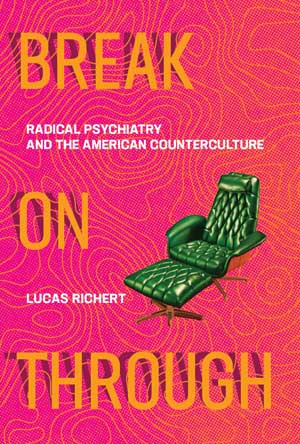
Break On Through
Lucas Richert Break On Through: Radical Psychiatry and the American Counterculture MIT Press 224 pages, 6 x 9 inches ISBN 978 0262042826
Available here →February 12, 2020
20200212-richert-lucas-on-book-break-on-through-radical-psychiatry-american-3-1
A close-up
The rest of this thread
Lucas Richert
Lucas Richert is the George Urdang Chair in the History of Pharmacy at the University of Wisconsin-Madison. He is the author of Conservatism, Consumer Choice and the Food and Drug Administration during the Reagan Era: A Prescription for Scandal (Lexington, 2014), which won the Arthur Miller Centre First Book Prize in 2015; Strange Trips: Science, Culture, and the Regulation of Drugs (MQUP, 2019); and, most recently, Break on Through: Radical Psychiatry and the American Counterculture (MIT Press, 2019). Richert also co-hosts the Drugs, Addiction, and Recovery podcast for the New Books Network.
Pull this thread
The consequential radicalism in American psychiatry came from a caucus inside the APA, in the 1970s rather than the 1960s.
Know something the rest of us don't?
Most threads on Rorotoko begin with our invitation. Any thread can begin with a proposal: you write it with the same prompts every thread answers, and we review it.
Propose a thread →