
Marilyn Strathern
Relations
I turn a question about concepts into an enquiry concerning English language usage of, and thus terms for, relations. Anyone considering how English speakers deploy ‘relation’ and ‘relations’ will find contradictions, illogicalities, overlaps, and all kinds of ambiguities in the way speakers switch between diverse connotations in the terms they use, and move across meanings, inferences, applications, and so forth. The task of understanding what is going on is frequently interpreted as clarifying speakers’ usages for them. This is not the intention here.
Many disciplines explicitly aim to clear the air by cleaning up words and terms in preparation for defining the concepts they deploy. Others rely on protocols of data collection that purify the material they work with. By contrast, the anthropological intervention I am proposing focuses on real time usage. It is in slippages in the way terms are used that other concepts form, and what from a purist point of view look like contaminations may turn out to underlie crucial dispositions or values. Think, for example, of the positive tenor that ‘making relations’ or ‘having a relationship’, can convey. What does that coloring do for using the term in scholarly discourse?
And if the early modern philosopher John Locke is accused of confusions, what work (cultural, political, normative work) is confusion doing?
In the past I have been very liberal in articulating relations in the context of studying Melanesian societies, where, as it happens, people did not themselves require special terms to articulate the interdependence of phenomena. Indeed I am talking about a mode of articulation that matters to me very much as a person, although this is not an autobiographical account by any stretch of the word. Rather the account outlines what a colleague once called an ‘expersonated’ (as opposed to an impersonated) self, one’s self known through one’s usages and practices, and specifically apropos the concept of relations through the tools of one’s trade.
If there is a story to be told of how (as a concept) relations in English came to have the purchase it does, some of it may have begun precisely when English speakers started calling family members by existing but then exclusively logical or narrational terms for connections, namely relations and relatives. By contrast with most European languages, this remains a vernacular idiosyncrasy. There is nothing new in such small barriers to translation. That said, teasing out this particular vernacular idiosyncrasy leads to interesting questions about what it is that concepts carry with them, and thus the limits and limitations of their usefulness. English usage seemingly dovetails concrete ways of thinking of about persons, as an exercise in kin-making, with an abstract comprehension of relations, as an exercise of knowledge-making. One wants to ask what kind of world makes such a twinning possible.
Editor: Judi Pajo

Relations
Marilyn Strathern Relations: An Anthropological Account Duke University Press 280 pages, 6 x 9 inches ISBN 978 1478008354
Available here →April 4, 2020
20200408-strathern-marilyn-on-book-relations-anthropological-account-2-1
The wide angle
The rest of this thread
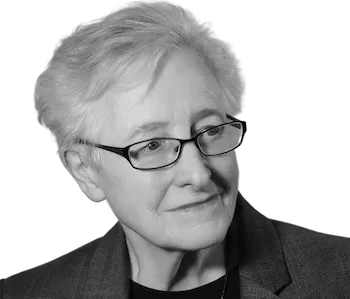
Photo Carletti for Balzan Prize
Marilyn Strathern
Marilyn Strathern is Emeritus Professor of Social Anthropology, and Life Fellow of Girton College, University of Cambridge. She made her name with comparative theorizing on Melanesia (The Gender of the Gift), and (as in After Nature) with critical interventions in debates stimulated by the Western paradigms of nature-culture and individual-society.
Pull this thread
Anthropology's concept of the relation privileges similarity, so it blocks expression of cosmologies that relate through difference.
Know something the rest of us don't?
Most threads on Rorotoko begin with our invitation. Any thread can begin with a proposal: you write it with the same prompts every thread answers, and we review it.
Propose a thread →