
Edward Ashford Lee
The Coevolution
I am an engineer. I design and build things that never before existed (mostly software, these days). For most of my life, I thought these things were my personal creations, the progeny of my brain. I have since come to realize that this illusion is a bit like being proud of the bag of groceries I just brought home from the grocery store, as if that were my own personal accomplishment. As the coronavirus calamity has so dramatically underscored, my role in that accomplishment is miniscule. The intricate (and fragile) supply chain that delivers an amazing variety of goods from global agriculture, food processing, paper product manufacturing, and chemical processing; the transportation system built on centuries of development of ships, railroads, roadways, and trucks; and the socio-economic system that organizes the thousands of workers down to the kind soul that bags my groceries, all make my meager accomplishment pale.
The same is true of the software artifacts I “create.” The laptop computer that I work with; the programming languages, integrated development environments, and compilers that I use; the wealth of help that is readily available to me through Wikipedia, Google search, and Stack Overflow, all make those few lines of code that I write a paltry permutation in a massive interconnected ecosystem. Even so, those few lines of code must be the result of my own cognitive creative processes, right?
In my book, I use the term “digital creationism” for the idea that technology is the outcome of a top-down intelligent design process, where every aspect comes from a conscious, deliberate decision made by a human creator. I offer an alternative view, where humans are the sources of mutation in a Darwinian evolution, where the technologies that procreate most effectively are the ones that survive, and where the technologies that survive shape the humans who further mutate the technology. Those who fear that we will lose control of artificial intelligence will not be reassured by the possibility that we are coevolving and therefore never really had control.
The question of whether machines can—or even should—be considered as living beings unleashes a torrent of other difficult questions. Are digital artifacts capable of living and reproducing on their own, without the help of humans? What are their mechanisms for reproduction, heredity, and mutation? Will they match or exceed human intelligence? Are they capable of self-awareness or even free will? Are they capable of ethical action? These are all hard questions. Most of them can equally well be asked about humans, as philosophers have been doing for millennia.
My book does not offer easy answers. I hope, however, that readers will come away with a better understanding of the questions. Perhaps too, wrestling with these questions will lead us to a better understanding of our human tangle with technology.
Editor: Judi Pajo
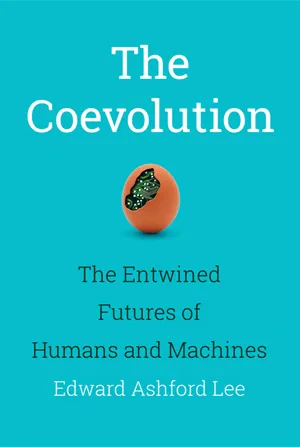
The Coevolution
Edward Ashford Lee The Coevolution: The Entwined Futures of Humans and Machines The MIT Press 384 pages, 6 x 9 inches ISBN 978 0262043939
Available here →May 20, 2020
20200520-lee-edward-on-book-coevolution-entwined-futures-humans-machines-2-1
The wide angle
The rest of this thread
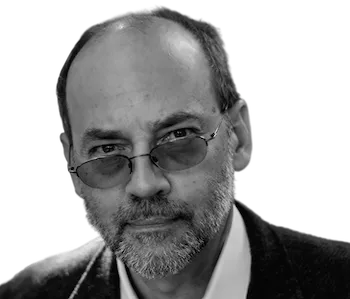
Rusi Mchedlishvili
Edward Ashford Lee
Edward Ashford Lee has been working on software systems for 40 years and has recently turned to philosophical and societal implications of technology. After education at Yale, MIT, and Bell Labs, he landed at Berkeley, where he is now Professor of the Graduate School in Electrical Engineering and Computer Sciences. His research focuses on cyber-physical systems, which integrate computing with the physical world. He is author of several textbooks and two general-audience books, Plato and the Nerd: The Creative Partnership of Humans and Technology (2017) and The Coevolution: The Entwined Futures and Humans and Machines (2020).
Pull this thread
Digital technology is not designed, it evolves alongside the humans who change it.
Know something the rest of us don't?
Most threads on Rorotoko begin with our invitation. Any thread can begin with a proposal: you write it with the same prompts every thread answers, and we review it.
Propose a thread →